High-Performance Aluminium Fenestration Systems
Engineered to international AS 2047, AAMA, CE, and Florida Hurricane impact building envelope specifications.
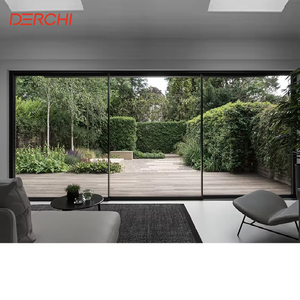
As2047 Australian Windows And Doors Double Glazed Stacker Doors Commercial Exterior Patio Panoramic Aluminum Sliding Doors
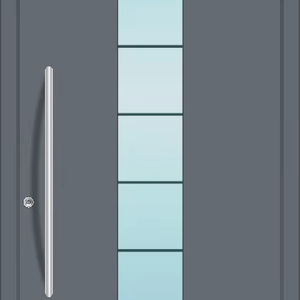
Casement Exterior French Doors Florida Hurricane Proof Laminated Safety Glass Waterproof Impact Resistant Aluminium Door
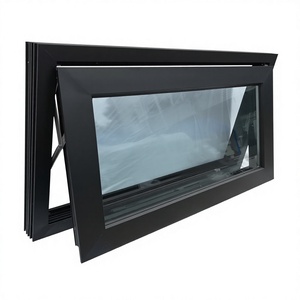
Aluminum Alloy Louver Folding Vent Window Stainless Steel Soundproof Hurricane Proof Energy Star Qualified 5-Year Warranty For
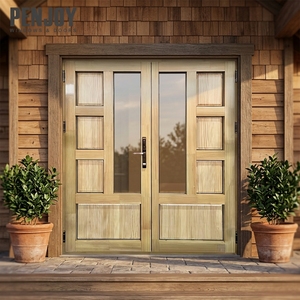
PENJOY High-End Luxury Villa Aluminum Clad Wood French Doors Entry Exterior Soundproof Thermal Break Energy Saving Modern
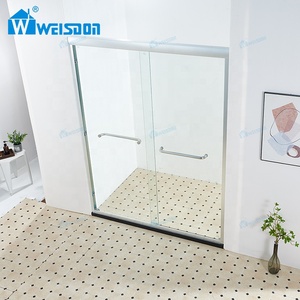
OEM ODM Chrome Brushed Nickel 5+5mm Laminated Tempered Glass Hotel Aluminum Alloy Framed Double Sliding Shower Door
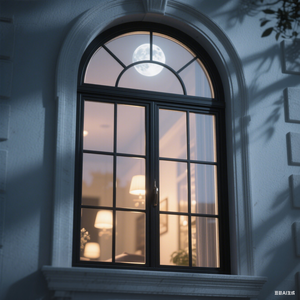
European Style Custom Aluminum Casement Windows Double Glazed Tilt Turn Design for Kitchen Bay Swing French Window Transom
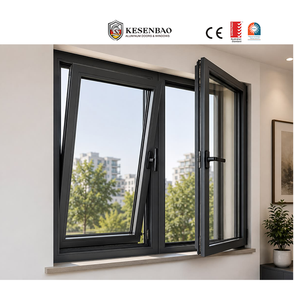
Double Glazed Aluminum Turn and Tilt Aluminium Casement windows Thermal Break System for Energy Efficient Villa Homes
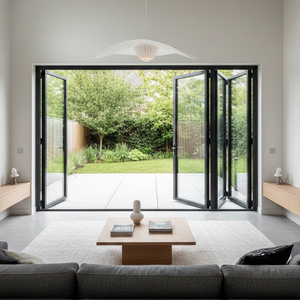
G88 Series Thermal Break Bi-Fold Door 120x99 Inch Energy Saving Aluminum Entry Door Modern Patio Doors for Canadian Housing
1. Metallurgy and Advanced Surface Coating Engineering
In modern commercial architecture and high-performance fenestration, specifying aluminium-coated windows is no longer a purely cosmetic decision. The longevity of an extruded aluminium building envelope depends entirely on the chemical cohesion between the 6063-T5/6063-T6 virgin aluminium billet substrate, chemical pre-treatment conversions, and the cured polymer exterior film. Low-tier window fabricators frequently compromise on chemical wash pretreatments, resulting in micro-blistering, intergranular filiform corrosion, and chalking within 24 to 36 months of exterior atmospheric exposure.
Top-tier suppliers utilize multi-stage chrome-free pre-treatments (compliant with Qualicoat and GSB international standards) before applying polymer coatings. For projects facing severe ultraviolet index (UVI) radiation or saline coastal air—such as Southeast Asian coastlines, Australian shorelines, or Florida marine environments—the window system must be coated under stringent specifications. Architectural fluorocarbon coatings formulated with 70% Polyvinylidene Fluoride (PVDF) resins (such as Kynar 500 or Hylar 5000) offer an impenetrable fluoropolymer carbon-fluorine bond, resisting atmospheric sulfur, photochemical degradation, and chalking across life spans exceeding 30 years.
In contrast, standard polyester powder coatings applied without architectural cross-linking resins degrade rapidly under marine thermal cycling. To ensure complete envelope longevity, DERCHI applies computerized multi-axis electrostatic spray systems ensuring uniform dry-film thickness (DFT) of 40–50 microns for architectural powder coatings, and 30–40 microns for 2-coat or 3-coat liquid fluoropolymer PVDF systems, eliminating profile corner thinning and micro-porosity.
| Coating System Type | Standard Benchmark | Dry Film Thickness (DFT) | Salt Spray Resistance | Primary Application Environment |
|---|---|---|---|---|
| Architectural PVDF (Fluorocarbon) | AAMA 2605 / Qualicoat Class 3 | ≥ 30 μm (2-coat) / ≥ 40 μm (3-coat) | 4,000+ Hours | Coastal, High-UV Tropical, Extreme Commercial High-Rise |
| Super-Durable Powder Coating | AAMA 2604 / Qualicoat Class 2 | 60 - 80 μm | 3,000 Hours | Urban Mid-Rise, Luxury Villas, Inland Commercial |
| Class I Architectural Anodizing | AAMA 611-14 / ISO 7599 | ≥ 25 μm (0.7 mil) | 3,000+ Hours | Modern Minimalist Commercial, Marine Environments |
| Standard TGIC Polyester | AAMA 2603 | 50 - 70 μm | 1,000 Hours | Low-Rise Interior or Sheltered Inland Residential Only |
2. Manufacturing Scale & Structural Integrity: The DERCHI Advantage
Based in Foshan, Guangdong, Guangdong Dejiyoupin Doors and Windows Co., Ltd. (DERCHI) operates as an elite tier-1 fenestration manufacturer with over 25 years of specialized engineering. Spanning a cutting-edge 180,000 square-meter smart production base and staffed by more than 600 industry specialists, DERCHI bridges the gap between massive industrial throughput and bespoke architectural precision.
Our integrated manufacturing line features automated CNC double-head precision cutting centers, automatic 45-degree angle crimping presses with pressurized two-component structural epoxy injection, and automated robotic insulated glass unit (IGU) assembly lines. By maintaining total internal oversight of billet extrusion, precision thermal-break insertion (Polyamide PA66 GF25), CNC corner milling, surface treatment curing, and hydrostatic air-water barrier testing, DERCHI maintains dimensional tolerances within ±0.5 mm across oversized sashes.
AS 2047 N6 Wind Pressure Rating
Our window and door systems undergo third-party laboratory cyclonic testing, achieving N6 rating (>4500 Pa ultimate strength), fully compliant with Australian AS 2047 and AS 1288 structural engineering standards.
Hurricane Impact Certified
Engineered for high-velocity hurricane zones (HVHZ), utilizing heavy-gauge 6063-T6 frames with SentryGlas (SGP) laminated glass panels tested under ASTM E1886/E1996 and Florida TAS 201/202/203 protocols.
Full-Chain BIM & CAD Support
Our dedicated engineering department provides complimentary architectural shop drawings, structural wind-deflection calculations, and BIM models tailored directly to door schedules for developers globally.
3. Global Procurement Trends: The 2025–2030 Structural Outlook
B2B fenestration procurement is undergoing a fundamental structural transition. Real estate developers, commercial general contractors, and government institutional buyers no longer make purchasing decisions based exclusively on unit cost. The following four macro procurement trends are shaping international trade in aluminium coated windows:
1. Strict Carbon Accounting and Recycled Billet Verifications (EPD & CBAM): With the European Union's Carbon Border Adjustment Mechanism (CBAM) and North American LEED v4.1 operational standards, buyers require Environmental Product Declarations (EPDs). Primary smelting of bauxite releases up to 16 kg of CO2 per kg of raw aluminium. In response, tier-1 suppliers utilize low-carbon hydroelectric aluminium billets or guaranteed ≥60% post-consumer recycled alloys, slashing embodied carbon to under 4 kg CO2/kg Al.
2. Decoupled Multi-Cavity Thermal Break Engineering: Energy codes across North America (ASHRAE 90.1-2022) and Europe (EnEV / GEG) mandate building envelope U-values under 1.2 W/m²K. Solid extruded profiles are obsolete; modern procurement focuses on 34mm to 45mm multi-chamber fiberglass-reinforced polyamide (PA66 GF25) thermal struts filled with polyurethane or aerogel insulation to eliminate thermal conduction paths entirely.
3. Prefabricated Unitized Façade Integration: Escalating on-site construction labor costs in Australia, Canada, and the United States are driving developers toward prefabricated unitized fenestration modules. Commercial windows must arrive on-site pre-glazed, pre-sealed, and with integrated flashing sub-sill assemblies, shifting 85% of envelope QA/QC from chaotic job sites to factory cleanrooms.
4. Smart-Building and Concealed Motorization Architecture: Commercial architects increasingly specify concealed perimeter motorized actuators connected to Building Management Systems (BMS). Windows must incorporate integrated concealed wiring chases, micro-sensors for indoor air quality (IAQ) automated purging, and multi-point concealed mechanical locking nodes capable of handling wind suction over 3.5 kPa.
4. Next-Gen Technological Evolution in Fenestration Systems
The evolutionary trajectory of architectural aluminium fenestration is distinguished by three major technical breakthroughs in material science, seal geometry, and acoustic isolation:
High-Precision Aerogel & Continuous Warm-Edge Spacers: Traditional aluminium spacer bars within double-glazed units acted as acoustic and thermal short-circuits, resulting in edge-of-glass condensation. Next-generation systems leverage flexible silicone structural foam warm-edge spacers infused with molecular sieve desiccants. Combined with argon or krypton inert gas fills (≥90% concentration), edge condensation is virtually eliminated, raising the internal surface temperature by up to 8°C in sub-zero climates.
EPDM Co-Extrusion and Vulcanized Continuous Gasket Arrays: Air leakage accounts for up to 40% of building envelope heating and cooling losses. Cutting-edge window engineering replaces disconnected PVC rubbers with vulcanized EPDM (Ethylene Propylene Diene Monomer) continuous loop gaskets. Utilizing central drainage baffles and pressure equalization chambers, our systems achieve Class 4 airtightness (≤0.5 m³/h·m at 100 Pa) and zero water penetration under 600 Pa dynamic wind pressure.
Acoustic Attenuation via Heterogeneous Lamination: Urban noise pollution necessitates high Sound Transmission Class (STC) and Outdoor-Indoor Transmission Class (OITC) window ratings. By pairing asymmetrical glass panes (e.g., 6mm tempered exterior + 16mm argon cavity + 8.76mm acoustic PVB laminated interior), the system breaks sound wave frequency resonance, dropping sound transmission by up to 42 decibels (dB), vital for hotels and luxury urban condominiums.
Frequently Asked Questions for B2B Importers
Clear, technical guidance addressing engineering standards, import logistics, and quality assurance.
Q1: How does AAMA 2605 PVDF coating compare to standard powder coating?
AAMA 2605 represents the pinnacle of liquid architectural coatings, requiring 70% fluoropolymer resin (Kynar 500 / Hylar 5000). It withstands 4,000 hours of continuous salt spray and 10 years of Florida weathering without significant color fade. Standard powder coatings (AAMA 2603) typically resist only 1,000 hours of salt spray and degrade rapidly in coastal or high-UV environments.
Q2: What certifications are required for exporting windows to North America and Australia?
For Australia, products must possess formal test reports verifying AS 2047 (window assembly performance for deflection, air infiltration, water penetration, and ultimate strength) and AS 1288 (structural safety glazing). For North America, products require NFRC certification for thermal values (U-factor, SHGC, VT) and AAMA/WDMA/CSA 101/I.S.2/A440 ratings, alongside TAS 201/202/203 for Florida HVHZ impact zones.
Q3: How does DERCHI ensure sea freight moisture protection and prevent corner damage?
Every window sash is secured with structural protective corner caps, fully shrink-wrapped with moisture-impervious film, cushioned with high-density EPE foam buffers, and packed inside fumigated custom plywood crates. Crates are loaded into shipping containers utilizing steel cable bracing and heavy-duty dunnage air bags, preventing maritime transit shift and saltwater corrosion.
Q4: Can DERCHI match bespoke architectural color schedules and two-tone finishes?
Yes. Utilizing state-of-the-art dual-color thermal strip crimping lines, we can extrude and finish the interior and exterior aluminium profiles independently. This allows an exterior architectural AAMA 2605 fluorocarbon finish (e.g., custom RAL 7016 Anthracite Grey) to match the external facade, while providing a warm woodgrain powder coat or clean anodized finish on the interior.
Accelerate Your Commercial Fenestration Schedule
Submit your architectural drawings, window schedules, or structural wind load specifications. Our direct factory engineering team will generate detailed shop drawings, structural calculations, and a comprehensive B2B quotation within 24 hours.