Technical Sourcing & Procurement Dossier
Engineered Heritage Fenestration for Global Projects
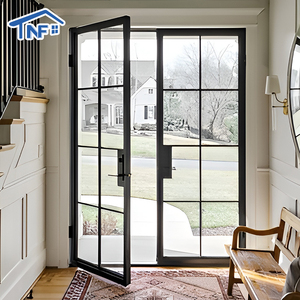
Aluminium Crittall-style French doors and industrial heritage glazing systems represent the convergence of early-twentieth-century industrial aesthetics and twenty-first-century facade engineering. Sourcing precision-fabricated steel-look fenestration requires a comprehensive evaluation of profile alloy metallurgy, thermal performance barriers, multi-point lock integration, and compliance with stringent international standards including CE, AS 2047, and ISO 9001.
180,000㎡
Manufacturing Infrastructure
600+
Engineering Specialists
100+
International Patents & Testing
25+
Years Industry Provenance
Engineering Whitepaper • Material Selection Criteria
Anatomy of Modern Aluminium Crittall-Style Fenestration
Traditional hot-rolled steel Crittall systems carry severe inherent liabilities: extreme weight requiring structural subframe reinforcement, poor baseline thermal conductivity resulting in condensation buildup, and susceptibility to electrolytic corrosion. Modern extruded architectural aluminium alloys (specifically 6063-T5 and 6063-T6) resolve these structural vulnerabilities while replicating authentic historical sightlines.
Ultra-Narrow Astral Sightlines
Authentic Crittall aesthetics demand slender stile and rail dimensions without compromising wind-load resistance. By utilizing primary billet 6063-T6 architectural aluminium with precision corner cleating and mechanical crimping, face widths are kept as narrow as 30mm to 38mm. The internal glazing bars (astragals) are applied via true-divided light assemblies or bonded structural muntin bars with duplex spacer systems inside the double-glazed units, preventing thermal bridging while delivering a genuine heritage industrial grid shadow-line.
Polyamide Thermal Barriers
Uninsulated steel or monolithic aluminium doors suffer high thermal conductance, failing modern energy codes (ASHRAE 90.1, Title 24, and European Building Regulations). State-of-the-art aluminium Crittall French doors integrate multi-chambered, glass-fiber reinforced polyamide 6.6 (PA66 GF25) thermal insulating strips. This architectural barrier breaks the thermal continuum between exterior and interior envelope profiles, preventing internal condensation, reducing overall U-values down to ≤ 1.4 W/m²K, and accommodating varying seasonal expansion rates.
Sealing Integrity & Water Shedding
Historical French doors are notoriously vulnerable to driving rain infiltration at the meeting stiles and threshold rebate. Precision manufacturing eliminates these weak points through co-extruded EPDM cellular sealing gaskets configured in continuous dual- or triple-barrier weather-stripping layouts. Thresholds can be specified as flush interior transition strips or engineered drop-down seal mechanisms with concealed weeping drainage channels, verified under static air infiltration and water penetration laboratory standards.
Strategic Horizon 2026–2030
Emerging Trends in Heritage Architectural Procurement
International contractors, luxury hospitality developers, and architectural specifiers are navigating a shifting landscape characterized by rigorous embodied-carbon benchmarks, smart security integration, and specialized structural glass assemblies.
Material Science
Low-Carbon Recycled Extrusions
BREEAM, LEED v4, and regional net-zero directives are compelling facade engineers to specify secondary or renewable-powered hydro-smelted aluminium billets. Leading exporters are providing certified Environmental Product Declarations (EPDs), proving profile alloy carbon footprints of under 4.0 kg CO&sub2;e per kg of aluminium extruded, without compromising tensile strength or anodic oxidation consistency.
Acoustic & Solar
Acoustic Laminated & Vacuum Glazing
The convergence of industrial French door styling with high-density urban living requires high sound attenuation. Procurement schedules are transitioning from basic double glazing to asymmetric laminated glass units containing acoustic PVB or acoustic ionoplast interlayers, achieving Sound Transmission Class (STC) ratings above 42 dB while keeping profile depths compact.
Mechatronics
Concealed Multi-Point Mechatronic Locking
Traditional surface-mounted shoot bolts compromise sightline purity and are incompatible with modern smart home and building management automation. The next-generation procurement focus centers on fully concealed motorized multi-point locks embedded entirely within the slim narrow stiles, supporting biometric authentication, automated scheduling, and dry-contact building automation signals.
Finishing Tech
Super-Durable Architectural Powder Coatings
To emulate the historic tactile matte finish of sandblasted and waxed carbon steel, specifiers increasingly mandate Qualicoat Class 2 or AAMA 2604/2605 compliant architectural powders. These fluoropolymer and hyper-durable polyester coatings resist intense UV radiation, chalking, and coastal marine corrosion (tested for over 3,000 hours of continuous acetic salt spray testing).
Logistics Protocol
Modular Pre-Glazed Sub-Frame Consignments
On-site glazing of delicate multi-pane Crittall grids is notoriously labor-intensive and prone to seal failures. Exporters are shifting toward fully factory-glazed and pre-hung assemblies with CNC-milled matching steel or aluminium buck sub-frames, reducing on-site installation timelines by up to 65% and preventing glass distortion from substrate settlement.

Enterprise Manufacturing Backbone
Guangdong Dejiyoupin Doors and Windows Co., Ltd. (DERCHI)
As one of the Top 10 recognized door and window manufacturing enterprises in China, DERCHI brings over 25 years of specialized engineering to the global architectural stage. Operating from our central 180,000-square-meter state-of-the-art production base in Foshan, Guangdong, our team of more than 600 skilled technicians, metallurgists, and CAD/BIM engineers deliver end-to-end bespoke solutions.
Our export systems are rigorously tested and comply with international building codes. Backed by over 100 patents and international certifications, DERCHI systems have performed reliably across North America, Australia, the Middle East, and Southeast Asia—highlighted by prominent appearances at international engineering exhibitions including WORLDBEX.
AS 2047 N6 Certified
CE Conformity
ISO 9001 Quality System
UL Fire-Rated Options
AAMA Verified
Direct Port Logistics: Seamless containerized shipping from South China ports (Nansha, Yantian, Shekou) directly to major global gateways.
Procurement Knowledge Base
Frequently Asked Questions by Commercial Specifiers
Direct technical and commercial answers addressing common engineering challenges, structural certifications, and supply chain management protocols.
How do aluminium Crittall-style French doors compare mechanically and thermally to traditional hot-rolled steel?
Aluminium Crittall-style doors engineered from architectural 6063-T6 alloys provide substantial performance advantages over traditional hot-rolled carbon steel. Standard steel is approximately three times heavier than aluminium, creating severe dead loads on lintels and structural headers that require costly structural retrofits. Thermally, solid steel has high thermal conductivity (~50 W/mK), which creates cold bridges, causes frame condensation, and risks mold formation. Modern thermally broken aluminium profiles integrate high-performance polyamide insulating struts (PA66 GF25), lowering overall assembly U-values to under 1.4 W/m²K while completely preventing condensation. Furthermore, aluminium naturally forms a protective oxide layer that, when paired with Qualicoat marine-grade architectural finishes, eliminates the chronic rust and paint-peeling liabilities inherent to steel in coastal or humid regions.
What glazing configurations are available for acoustic isolation and extreme wind-load resistance?
DERCHI offers configurable glazing pockets accommodating overall glass thicknesses ranging from 24mm up to 48mm. For coastal projects exposed to high wind pressures and tropical storms, our fenestration has successfully achieved AS 2047 N6 performance standards, incorporating structural silicone wet-glazing alongside laminated impact glass units (e.g., 6mm tempered + 1.52mm SGP/PVB interlayer + 6mm tempered). For luxury residences and urban hotel projects prioritizing sound reduction, acoustic-laminated double glazing filled with 90% Argon gas can achieve sound transmission losses of Rw 38 dB to 44 dB, significantly improving internal occupant acoustic comfort.
How are the decorative Crittall glazing grids assembled to maintain structural and weather tightness?
We provide two distinct grid assembly configurations based on your design and performance requirements. The first is True Divided Lite (TDL), where individual double-glazed units are glazed into separate profile apertures; this creates traditional depth but introduces more sealing perimeters. The second, and most specified for external performance, is Simulated Divided Lite (SDL). In SDL assemblies, an expansive, continuous insulated glass unit (IGU) provides structural airtightness and thermal efficiency, while high-tensile aluminium astragal bars are mechanically secured to the interior and exterior faces using industrial structural bonding tapes. Inside the insulated glass unit, internal duplex spacer bars are aligned flush beneath the external bars, producing an authentic multi-pane shadow effect without risking perimeter water ingress.
What surface finishing standards and testing parameters ensure durability against salt-air corrosion?
All profile extrusions are pre-treated through multi-stage acid etch processes and coated in strict compliance with AAMA 2604/2605 or Qualicoat Class 2 specifications. For coastal installations located within 1 km of marine coastlines (such as island resorts or oceanfront villas), we offer enhanced pre-anodizing treatments prior to powder application, or anodized finishes up to 25 microns thick. These treatments are verified by continuous 3,000-hour neutral salt spray (ASTM B117) and cyclic corrosion testing, preventing filiform corrosion, blistering, and UV color degradation.
What is the standard manufacturing lead time, packing protocol, and overseas freight arrangement?
Upon final sign-off of our detailed CAD shop drawings and hardware schedules, typical factory manufacturing lead times range from 25 to 35 calendar days, depending on project scale and custom color requirements. To ensure zero-defect arrivals across transoceanic routes, products are protected with protective surface films, corner protectors, waterproof polyethylene wraps, and enclosed within fully framed non-coniferous fumigated wooden crates. Consignments are loaded directly into 20GP or 40HQ sea containers at our Foshan facility for direct maritime transit to your specified destination port under CIF, FOB, or DDP terms.
Initiate Your Commercial Sourcing Consultation
Submit your door schedules, architectural elevations, or structural tender specifications. Our technical engineering desk will prepare custom CAD details, thermal calculations, and factory-direct export proposals within 24 business hours.
Send an Inquiry