AS2047 Double Glazed
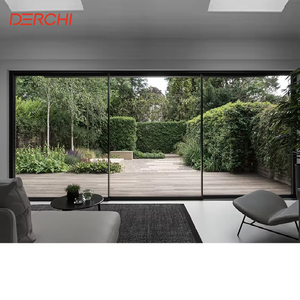
Precision-manufactured in our 180,000 m² Foshan production base. Rigorously tested to Australian AS 2047, European CE, and North American NFRC/CSA standards for residential, hospitality, and high-security architectural developments.
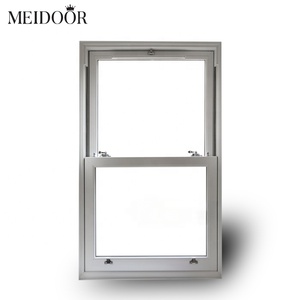
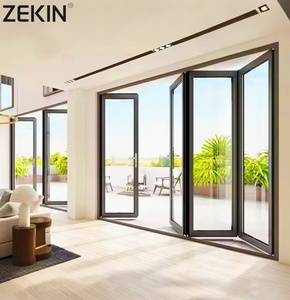
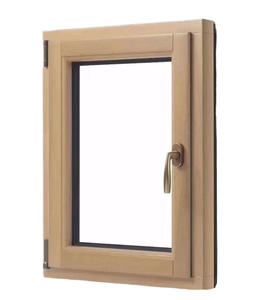
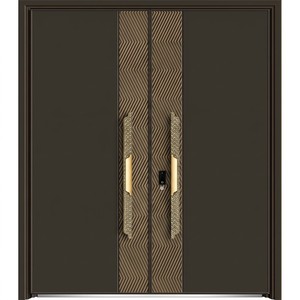
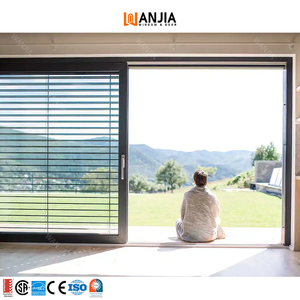
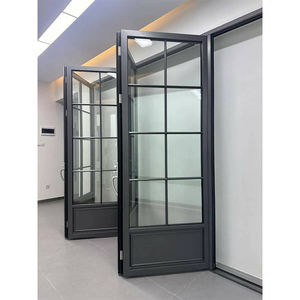
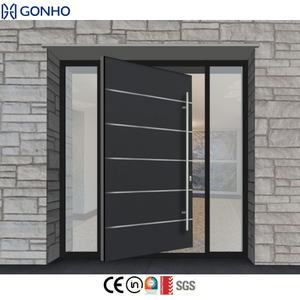
In modern architectural fenestration, the specification of security barriers has transitioned from crude, utilitarian wrought-iron bars to precision-extruded aluminium grill door assemblies. For commercial developers, luxury villa builders, and institutional procurement teams, choosing a certified aluminium grill door supplier requires an acute technical evaluation of profile alloys, tensile yield strength, anodizing/powder-coating mil-thickness, and impact dissipation kinetics. When engineered properly, high-performance aluminium security grill doors protect structures against forced intrusion, high-velocity cyclone debris, and relentless saline corrosion while delivering uncompromised aesthetic value and natural daylighting.
Our engineering division at DERCHI (Guangdong Dejiyoupin Doors and Windows Co., Ltd.) establishes an exacting benchmark utilizing virgin architectural 6063-T5 and structural 6061-T6 aluminium billets. Unlike inferior recycled scrap extrusions that suffer from microscopic voids and uneven iron contamination, our prime extrusions feature minimum web thicknesses ranging from 2.0 mm to 3.5 mm across primary structural stiles and bottom rails. This robust substrate accommodates concealed multi-point mortise lock systems, reinforced stainless steel internal corner cleats, and marine-grade security mesh inserts without structural deflection under excessive torque or wind load conditions.
To eliminate galvanic corrosion—the fatal flaw in poorly manufactured grill doors where dissimilar metals interact—our assembly protocol incorporates high-density polyamide insulating gaskets and fluoropolymer-coated stainless steel mechanical fasteners. This barrier isolates the architectural aluminium frame from the high-tensile 304 or 316 marine-grade stainless steel wire mesh infill, guaranteeing that coastal resort installations in high-salinity zones (such as Cebu, Phuket, Da Nang, and Miami) retain structural integrity without pitting or galvanic oxidization for decades.
| Performance Parameter | Commercial Grade (Standard Supplier) | DERCHI Architectural Tier (AS 2047 / CE Certified) | Strategic Benefit for Specifiers |
|---|---|---|---|
| Aluminium Alloy & Temper | Secondary 6063-T4 Scrap Ingot | Prime 6063-T5 / Structural 6061-T6 Extrusion | Superior tensile strength (>215 MPa) & crack resistance |
| Profile Wall Thickness | 1.2 mm – 1.4 mm | 2.0 mm – 3.0 mm Reinforced Heavy-Gauge | Zero sash sag over wide spans; anti-jemmy forced entry resistance |
| Grill / Mesh Infill Spec | Expanded Aluminum / 201 Stainless Mesh | 0.8 mm – 1.0 mm High-Tensile 316 Marine Stainless Mesh | Passes AS 5039 Knife Shear, Dynamic Impact, and Jemmy Tests |
| Surface Treatment Integrity | Standard Powder Coat (<45 μm) | AkzoNobel / PPG PVDF / Qualicoat Class 2 (70–90 μm) | Resists 3,000+ hours neutral salt spray testing without blistering |
| Locking Mechanism | Single-point deadbolt latch | German-Engineered 3-to-5 Point Hook & Shoot-Bolt System | Interlocking security pins distribute lateral impact across full frame |
| Thermal & Acoustic Barrier | Non-thermally broken hollow frame | Polyamide PA66 GF25 Thermal Break with EPDM Gaskets | Substantially lowers U-values (≤1.8 W/m²K) and acoustic STC ratings >36 dB |
Extruded with internal reinforcing ribs and dedicated hardware screw spline chambers, preventing strip-out under cyclic operational fatigue and resisting heavy crowbar prying.
Features mechanical wedge-lock clamping retaining systems that mechanically lock 0.9 mm 316 stainless woven mesh into the perimeter frame without exposed screws or rivets.
Independently verified to withstand tropical typhoon wind pressures, ultimate limit state loads up to 4500 Pa, and extreme water ingress prevention during monsoons.
Headquartered in Foshan, Guangdong—the world epicenter of architectural aluminium engineering—DERCHI delivers turnkey door and window solutions for commercial developers, general contractors, and luxury estates worldwide.
Our in-house technical engineering department provides custom shop drawings, wind-load structural calculations, and 3D BIM integration matching strict door schedule specs.
Certified to Australian AS 2047, European CE, ISO 9001 Quality Management, and UL Fire Resistance, ensuring immediate code approval by municipal building inspectors.
Consolidate your aluminium grill doors, luxury pivot doors, interior timber doors, and motorized garage portals into unified, floor-by-floor containerized export shipping.
Demonstrated market presence with acclaimed exhibitions at the Philippines WORLDBEX 2025, serving prestigious developers throughout Southeast Asia, Australia, and the Americas.
The global architectural fenestration sector is experiencing a paradigm shift driven by stringent decarbonization directives, escalating climate-induced extreme weather occurrences, and the rapid convergence of smart IoT access ecosystems. Procurement managers, quantity surveyors, and architectural consultants are no longer assessing suppliers based solely on initial FOB ex-factory pricing. Instead, life-cycle carbon accounting, holistic maintenance cycles, and integrated multi-point digital hardware readiness now dominate corporate RFP requirements.
A prominent procurement trajectory is the mandate for low-carbon, circular aluminium. Modern green building frameworks—including LEED v4.1, BREEAM, and Green Star—increasingly enforce strict Embodied Carbon caps on building envelopes. As a result, Tier-1 suppliers must provide verified Environmental Product Declarations (EPDs) demonstrating the use of hydro-powered smelted aluminium billets or high-ratio post-consumer closed-loop recycled billets. By sourcing aluminium extruded with renewable hydro energy, project specifiers can achieve an embodied carbon reduction of up to 65% compared to coal-fired alternatives without sacrificing metallurgical tensile purity.
Commercial developers are shifting evaluation models from unit procurement costs to 25-year TCO. Marine-grade aluminium grill doors eliminate timber repainting, swelling rot, and structural steel rust remediation cycles in humid and coastal geographies.
Factory-routed internal stiles pre-machined for motorized multipoint locks, facial recognition sensors, and remote building access protocols now replace post-installation site drilling that routinely voids manufacturer corrosion warranties.
Tier-1 contractors demand pre-hung, factory-tested assemblies where frames, hinges, precision grills, and weatherstrips arrive fully calibrated on steel A-frames, cutting on-site installation labor and cycle times by up to 40%.
Historically, building occupants were forced to compromise between security and aesthetic transparency. Traditional mild steel burglar grilles cast heavy shadows, suffered from weld-joint oxidation, and obstructed views. The ongoing technological evolution in aluminium grill doors is defined by three fundamental innovations:
1. Ultra-Slim Sightline Engineering with High-Modulus Alloys: Advancements in metallurgical alloying enable profile engineers to optimize extrusion cross-sections. By utilizing micro-alloyed 6063-T6 with precise silicon and magnesium control, modern profiles achieve moment of inertia ratings comparable to traditional bulky profiles while shaving visible frame widths down to 45 mm. This slimline aesthetic satisfies contemporary minimalist architectural trends without compromising forced-entry resistance.
2. Thermally Broken Security Envelopes: High-performance security doors now integrate 24 mm to 34 mm glass fiber reinforced polyamide (PA66 GF25) thermal insulating strips. This engineering breakthrough allows an exterior aluminium security grill to seamlessly interface with an insulated interior double-glazed insulated glass unit (IGU). During blistering summer conditions or harsh winters, this prevents thermal bridging, eliminates interior condensation puddles, and dramatically lowers the building's overall HVAC operational costs.
3. Advanced Nanotechnology & Fluoropolymer Coatings: Surface science has eliminated chalking and fading. DERCHI's proprietary pre-treatment involves multi-stage acid etching and chromate-free zirconium passivation, followed by electrostatically applied Qualicoat Class 2 architectural powders or PPG fluoropolymer PVDF coatings. These surface treatments withstand solar ultraviolet degradation, environmental airborne industrial sulfur, and intense coastal salt spray (ASTM B117 standards) exceeding 3,000 continuous hours.
Direct technical clarifications addressing engineering tolerances, international certifications, hurricane wind loads, and cross-border project logistics.
Planning an upcoming residential estate, commercial resort, or high-security residential development? Send us your opening schedules, architectural elevation drawings, or bill of quantities. Our senior fenestration engineers will provide certified CAD shop drawings, wind load calculations, and comprehensive FOB/CIF pricing within 24 hours.