Interior / Kitchen
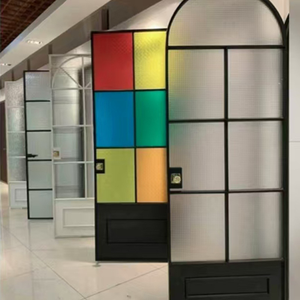
Arch Modern Flush Glass Aluminum French Doors with Grilles
Kitchen / Bath
Arch Profile
Flush Glass
Explore our precision-machined kitchen stable doors, thermal-break bifold systems, and weather-resistant entrance units. Built from architectural 6063-T6 aluminum alloys and validated across residential, villa, and commercial culinary setups.
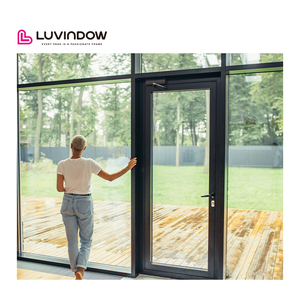
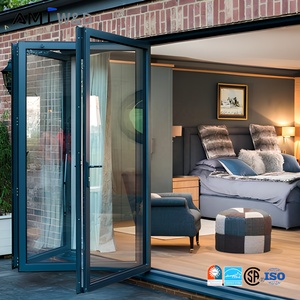
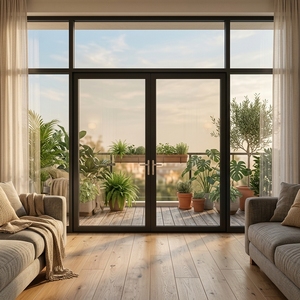
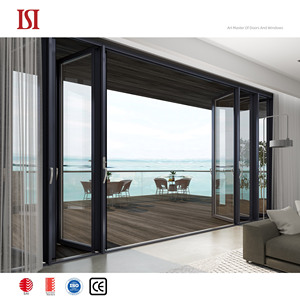
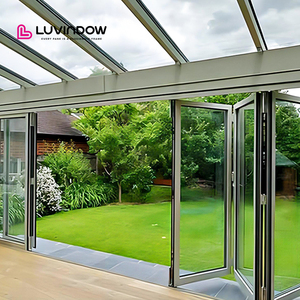
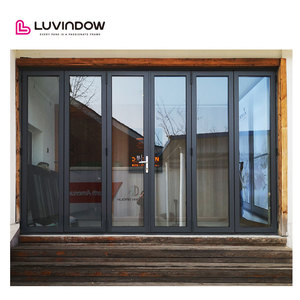
Traditional timber Dutch doors often fail in kitchen environments due to high moisture, cooking grease, and thermal transfer between interior cooking zones and exterior patios. Below is our engineering analysis of why precision-extruded aluminum alloys represent the modern architectural benchmark.
A true kitchen stable (Dutch) door features horizontally split sashes. The upper leaf opens independently to facilitate rapid exhaust of kitchen steam, pungent cooking aromas, and grease fumes, while the lower leaf remains locked to secure children and pets or maintain a physical threshold against ground-level debris.
Kitchen doors act as critical boundary dividers between climate-controlled luxury interiors and unconditioned exterior elements. By pressing 24mm to 34mm fiberglass-reinforced polyamide (PA66 GF25) strips between inner and outer 6063-T6 aluminum extrusions, we eliminate thermal bridging, preventing condensation, sweating, and structural heat loss.
The primary vulnerability of lower-grade stable doors is water and air leakage along the horizontal middle junction where upper and lower sashes meet. Our engineering uses a proprietary vulcanized stepped EPDM compression seal system with internal drainage baffles, ensuring full AS 2047 and NFRC weather compliance.
When specifying doors for culinary and outdoor-transition zones, architects and commercial developers evaluate lifecycle maintenance, structural stability under steam, and airtightness performance.
| Evaluation Parameter | DERCHI Thermal Aluminium Stable Door | Solid Hardwood (Oak/Iroko) | uPVC / Vinyl Stable Door | Standard Non-Thermal Aluminium |
|---|---|---|---|---|
| Moisture & Steam Resistance | Immune Zero absorption, no swelling | Poor Absorbs steam; sashes stick/warp | Immune Water-resistant | Immune Resistant to rot |
| Thermal Insulation (U-Value) | Superior $U_w \le 1.4\text{ W/m}^2\text{K}$ (PA66) | Good Natural wood insulation | Moderate Multichambered insulation | Very Poor Severe thermal bridging & sweat |
| Structural Integrity & Sagging | High 6063-T6 alloy, corner keys welded | High Risk Heavy split leaves sag over time | Moderate Plastic flexes under summer heat | High Rigid metallic frame |
| Maintenance & Cleanability | Minimal Wipe-clean fluorocarbon coating | Intensive Annual re-varnishing & sanding | Low Discolors with kitchen grease | Minimal Powder-coated surface |
| Horizontal Mid-Rail Air Seal | Tested N6 Vulcanized EPDM compression | Variable Relies on felt or brush strips | Poor Prone to seal compression set | Moderate Rubber strip seals |
| Lifecycle Service Expectancy | 35+ Years Engineered for project lifespans | 10–15 Years (weather dependent) | 12–18 Years (brittleness risks) | 25+ Years |
Direct from procurement dialogues across North America, Europe, Australia, and Southeast Asia: here is how architectural demand for kitchen fenestration is evolving.
Modern luxury villas and urban townhomes prioritize multi-functional fenestration. Kitchen stable doors satisfy both passive daylighting demands and micro-climate airflow regulation, allowing open-top cooking airflow while keeping ground-level pets secure.
Developers are moving away from bulky, traditional country-style profiles toward ultra-slim architectural frames with edge-to-edge flush tempered glass, concealed multipoint gearboxes, and hidden 3D-adjustable hinges that preserve clean lines.
With stringent global building codes like Title 24, Australian NCC, and EU EPBD, stable doors must maintain airtightness envelope testing ($<0.5\text{ m}^3/\text{h}\cdot\text{m}^2$). Thermal breaks and argon-filled Low-E laminated units are now baseline procurement requisites.
B2B specifications increasingly request factory-integrated magnetic reed switches, biometric deadbolts on the lower leaf, and automatic motorized upper-sash opening tied into smart kitchen ventilation and hood extraction systems.
Coastal and tropical resort projects demand Qualicoat Class 2 fluorocarbon (PVDF) powder coating or 25-micron architectural anodizing to ensure zero pitting or surface degradation from saline marine atmospheres and harsh kitchen grease cleaners.
General contractors increasingly demand unified architectural matching: coordinating kitchen stable doors, patio bifolds, interior wooden doors, and garage entries under one verified OEM factory to harmonize color batches and guarantee lead times.
Operating under our globally recognized brand DERCHI, Guangdong Dejiyoupin Doors and Windows Co., Ltd. stands as one of China's Top 10 premium door and window manufacturing leaders. Based in Foshan's premier industrial cluster, we specialize in high-performance aluminum doors, thermal-break stable doors, panoramic pivot doors, and specialized architectural entry solutions.
From custom single-villa commissions in North America to mega-scale residential resorts across Southeast Asia, our factory-direct model eliminates intermediate distributors, ensuring stringent quality control, project-tailored CAD/BIM shop drawings, and competitive manufacturing economics.

When issuing an RFP or RFQ for aluminium kitchen stable doors, evaluating the following engineering parameters prevents costly job-site retrofits and post-handover warranty claims.
Ensure profiles are virgin 6063-T6 or 6061-T6 aluminum alloys. Inferior remelted or scrap scrap alloys contain impurities that lead to micro-fissures during CNC milling and premature inter-crystalline corrosion under moist kitchen conditions.
Kitchen doors face heightened risk of thermal shock from interior stove tops and physical impact from cooking pans or pets. Always specify certified double or triple IGUs with toughened (tempered) glass or PVB acoustic laminated panels.
Stable doors possess double the hardware components of standard casements: four to six heavy-duty 3D adjustable friction hinges, dual shootbolts, and an integrated transition latch. Demand test reports certifying minimum operational duty cycles.
In-depth engineering and logistical answers to common technical queries from importers, residential architects, project engineers, and builders.
Our kitchen stable doors feature a multi-stage stepped rebated interlock extrusion. When both sashes are closed, three continuous lines of co-extruded EPDM marine gaskets compress tightly under multipoint cam latches. In addition, an internal micro-drainage channel built into the lower rail directs any wind-driven rainwater to concealed exterior weep holes, preventing internal leaks even under typhoon-level wind pressure.
Yes. Every DERCHI aluminium stable door comes equipped with an internal flush mechanical coupling bolt. When engaged, this bolt rigidly locks the upper and lower sashes together, allowing the door to swing as a single, unified panel for everyday entry. Disengaging the coupling bolt allows the top sash to swing open independently for ventilation.
Kitchens experience rapid swings in humidity, steam, and airborne cooking oils. Timber doors absorb moisture, leading to warping, sticking sashes, and finish breakdown. uPVC has a high coefficient of thermal expansion, causing large panels to warp in hot weather. Thermal-break aluminium combines structural rigidity with zero moisture absorption, resisting grease buildup while eliminating internal thermal transfer.
For standard residential single-leaf stable doors, we accommodate widths up to 1200mm (47 inches) and heights up to 2600mm (102 inches) with 2.0mm wall-thickness structural profiles. Double-leaf stable configurations (French Dutch doors) can span up to 2400mm wide. Custom arch profiles, decorative colonial bars, frosted/reeded privacy glass, and integrated stainless steel insect screens are fully custom-manufacturable.
We provide architectural-grade powder coatings (AkzoNobel / Tiger Drylac) meeting AAMA 2604/2605 specifications, multi-layer fluorocarbon (PVDF) finishes for extreme marine environments, and high-resolution wood-grain heat-transfer sublimation that delivers the visual warmth of oak or teak without timber's maintenance overhead.
Custom engineering and shop drawing sign-off takes 3 to 5 business days. Production runs typically take 25 to 35 days depending on profile finish and glass specifications. For export shipping, doors are fully assembled or knocked-down (KD), protected with PE protective film, foam edge corner protectors, bubble-wrap layers, and crated inside fumigated export-grade OSB wooden crates for container transit.
Send your architectural schedules, opening dimensions, or custom project drawings. Our dedicated fenestration engineers will provide tailored structural recommendations, thermal performance models, and factory-direct pricing within 24 hours.