Thermal Break
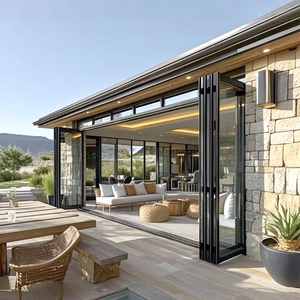
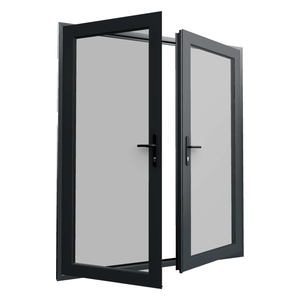
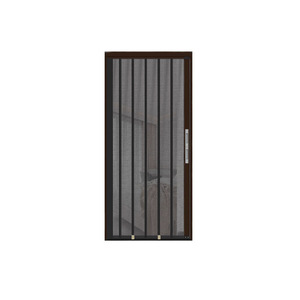
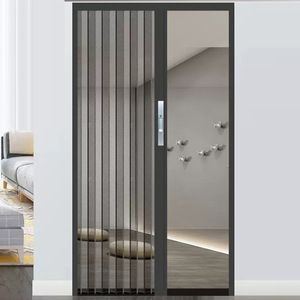
NFRC Thermal Break Aluminum Folding Door Large Folding Patio Doors Exterior with Retractable Insect Screen
- NFRC Certified
- Multi-Leaf Bi-Fold
- Integrated Screen
Review our field-tested architectural mesh doors engineered by Guangdong Dejiyoupin Doors and Windows Co., Ltd. (DERCHI). Built with aviation-grade 6063-T6 aluminum alloys and high-tensile 304/316 marine security mesh to deliver verified forced-entry delay and weather resistance.
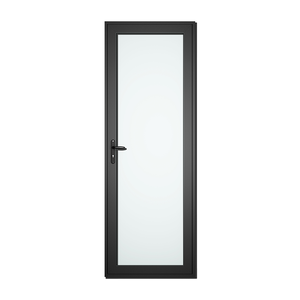
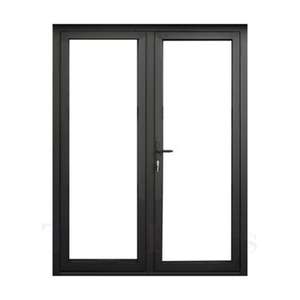
In modern architectural fenestration, an aluminium mesh door serves as both the building's physical defense perimeter and its primary ventilation interface. B2B specifiers, real estate developers, and façade engineers require structural integrity that resists violent mechanical forced entry while sustaining severe coastal humidity, UV degradation, and storm surges.
At Guangdong Dejiyoupin Doors and Windows Co., Ltd. (DERCHI), our entry door systems utilize heavy-wall 6063-T6 or 6061-T6 architectural aluminum alloy extrusions with profile thicknesses exceeding 2.0mm to 3.0mm at high-stress anchoring points. Coupled with high-tensile woven mesh, these doors resolve the historical conflict between unrestricted airflow, optical transparency, and physical barrier defense.

Understanding the performance deltas between woven marine stainless steel mesh, heavy diamond aluminum grilles, and conventional fly screens is vital for drafting compliant project specifications.
| Evaluation Metric | 316 Marine Stainless Mesh (0.9mm) | Expanded Diamond Aluminium Grille | Retractable Pleated Fiber Mesh | Standard Fiberglass Flyscreen |
|---|---|---|---|---|
| Primary B2B Function | Anti-Theft, Cyclone & Pest Shield | Visible Deterrent Security Grille | Concealed Insect Barrier | Basic Mosquito & Insect Screen |
| Tensile Yield Strength | ≥ 950–1100 MPa | 220–280 MPa (Aluminium Alloy) | Non-Structural Fabric | < 50 MPa (Polymer/Glass) |
| AS 5041 Knife Shear Test | Passed (3 consecutive slicing passes) | Not Applicable (Grille pattern) | Failed Instantly | Failed Instantly |
| AS 5041 Dynamic Impact (100J) | Passed ≥ 5 Consecutive Blows | Passed (Deflection < allowable limit) | Failed on First Contact | Failed on First Contact |
| Salt Spray Corrosion (ASTM B117) | 3,000+ Hours Flawless | 1,500 Hours (Powder Coated) | 800 Hours (Polymer frame) | 500 Hours (Mild oxidation) |
| Natural Airflow & Transparency | High Open Area (~42%), Clean Vista | Interrupted View (Grille Bars) | Semi-Transparent Accordion | Maximum Airflow, Low Durability |
| Target Project Scope | Luxury Villas, Resorts, Coastal Estates | Suburban Residential, Balconies | Interior Patio Folding Portals | Low-Budget Tenancy Housing |
Recognized as one of the Top 10 premium architectural door and window manufacturers in China, DERCHI operates on an industrial scale calibrated to satisfy Tier-1 international general contractors, commercial developers, and luxury homebuilders across North America, Australia, and Southeast Asia.
Operating from our headquarters in Shishan Town, Nanhai District, Foshan—the world’s epicenter of aluminum fabrication—DERCHI integrates complete vertical manufacturing. From billet casting, thermal extrusion, and CNC precision multi-axis milling to automated tension-mesh crimping, robotic powder coating, and pre-shipping assembly testing. Every main door assembly conforms to stringent AS 2047, CE, ISO 9001, and AAMA specifications.
Tested at independent NATA-accredited laboratories to achieve the ultimate N6 cyclone rating, resisting cyclonic positive/negative wind pressures in excess of 4500 Pa with zero structural failure or mesh pullout.
Eliminates traditional galvanic-vulnerable surface screws. Our patented continuous wedge-clamping mechanism embeds the stainless mesh into the aluminum frame with uniform perimeter pressure.
Automated electrostatic powder coat lines utilize AkzoNobel Interpon D2525 hyper-durable coatings, delivering exceptional resistance against color fading, chalking, and coastal humidity.
Procurement heads, real estate funds, and project quantity surveyors are restructuring their vendor requirements. The convergence of smart IoT access, micro-climate resilience, and sustainability regulations is redefining how commercial developers procure security entrance systems.
The global entry door market is transitioning from manual deadbolts to motorized 3-point and 5-point smart locking mechanisms concealed entirely inside the aluminum stile. Buyers now mandate direct integration with smart home automation (Matter, Zigbee, KNX), featuring 3D facial recognition, biometric finger-vein scanning, and mobile NFC encryption integrated directly into the structural frame without weakening security.
Historically, mesh doors were simple secondary screen barriers installed outside solid doors. Next-generation procurement specs demand all-in-one dual-chassis doors: an insulated glass primary unit paired with a thermal break security mesh frame. By integrating 24mm to 34mm reinforced Technoform polyamide insulating bars, manufacturers achieve U-values under 1.6 W/m²K while maintaining AS 5039 security ratings.
Modern villa architecture requires monumental entrance heights (reaching 3.5m to 4.2m) with minimal frame profiles. The engineering frontier centers on high-load floor pivot systems supporting up to 500kg per leaf while slimming vertical frame profiles down to 45mm. Mesh tensioning must remain rigid across oversized sashes without visible sagging, bowing, or acoustic rattling during high winds.
With LEED, BREEAM, and DGNB environmental ratings dictating multi-million dollar property valuations, Tier-1 developers require Environmental Product Declarations (EPD). Factories utilizing low-carbon aluminium billets smelted using renewable hydro-power, combined with closed-loop VOC recovery systems during powder coating, will capture the lion's share of institutional B2B contracts.
Our in-house design engineering department provides free 2D/3D CAD shop drawings, wind load calculations, and BIM Revit files for luxury residential and hospitality tenders.
Answers to technical, regulatory, shipping, and engineering questions posed by real estate developers, contractors, and project architects.
The definitive difference lies in chemical composition and resistance to pitting corrosion. AISI 316 stainless steel contains 2.0% to 3.0% molybdenum, which substantially enhances resistance to chloride ion attacks in coastal salt-spray and industrial sulfur environments. While 304 stainless mesh performs well in inland dry climates, installations located within 15 kilometers of coastlines, beaches, or industrial zones must strictly utilize 316 marine-grade wire. At DERCHI, our 316 mesh undergoes 3,000-hour continuous salt spray testing (ASTM B117) with zero surface pitting or structural wire degradation.
Compliance requires passing three brutal physical tests: the Dynamic Impact Test (withstanding consecutive 100-Joule blows delivered by a standardized lead-sphere pendulum), the Jemmy Levering Test (multi-directional pry-bar mechanical loads applied around locking points), and the Knife Shear Test (three continuous passes of an industrial blade under constant vertical load). DERCHI achieves this by combining heavy-gauge 6063-T6 aluminum perimeter profiles (wall thickness ≥ 2.2mm), patented mechanical clamp retainers, high-tensile 316 wire mesh (1000+ MPa yield strength), and multi-point deadbolts with anti-jemmy flange stiles.
When dissimilar metals like stainless steel and aluminum come into direct electrical contact in the presence of an electrolyte (such as humid air, coastal mist, or rain), rapid galvanic corrosion consumes the aluminum frame. DERCHI engineers prevent this through complete dielectric isolation. Every mesh perimeter is jacketed in high-density non-conductive Santoprene or EPDM isolation gaskets, and fastened with non-metallic retention wedges. Zero metal-to-metal contact occurs, preserving the structural frame for decades even in Southeast Asian and Caribbean tropical conditions.
Because we control complete extrusion, machining, and fabrication operations across our 180,000 sqm campus, we offer 100% bespoke dimensional flexibility. Our primary typologies include single-leaf hinged entrance doors, French double entry portals, heavy-duty single/multi-panel sliding security screens, multi-leaf bi-fold patio mesh walls (up to 12 meters wide), and monumental oversized pivot doors up to 4.2 meters high. Custom hardware prep for major European mortises (Hoppe, Roto, GU, Siegenia) or North American smart deadbolts is CNC routed before surface coating.
Export shipments undergo a five-layer protection sequence: First, high-tack protective film covers all powder-coated and anodized surfaces. Second, heavy foam corner protectors safeguard frame joints. Third, the entire door is vacuum-wrapped in pearl cotton moisture-barrier sheets. Fourth, assemblies are nested inside five-layer corrugated cartons with edge guards. Finally, all units are packed into fumigated ISPM-15 compliant fully enclosed solid plywood crates or steel shipping racks designed for seamless forklift handling at project unloading docks.
For standard extrusion profiles and architectural colors (Matte Black, Dark Bronze, Anthracite Grey, Pure White), our flexible MOQ is 1 complete set for sample mockups or high-end private villas, and 10+ sets for commercial residential batches. Custom profile extrusion dies require approximately 15 to 20 business days for tooling. Standard production cycles run between 25 to 35 calendar days following client approval of CAD shop drawings. Expedited schedules can be coordinated through dedicated project managers for critical critical-path project handovers.
Collaborate directly with our senior fenestration engineers in Foshan. Send your door schedules, project drawings, opening dimensions, or structural specification criteria—our technical team responds within 24 hours with certified performance data, custom CAD sections, and itemized factory pricing.