Engineered Aluminum Shed & Auxiliary Door Portfolios
Explore our heavy-duty architectural systems configured for workshops, equipment sheds, luxury modern barndominiums, high-span utility outbuildings, and residential access points.
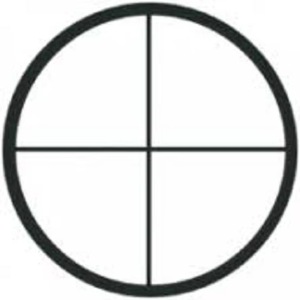
Low Maintenance Required Easy Installation Round Aluminum Windows Other Category Product, Special Shape Window Factory Price
- Material: 6063-T5 Extruded Alloy
- Gable & Loft Shed Ventilation Accent
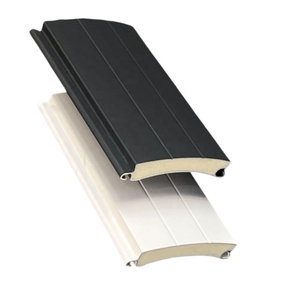
Standard Size Modern Aluminum Alloy Finished Rolling Outdoor Garage Door Thermal Insulation Soundproof White Gray Brown Colors
- PU Foam Core Thermal Interlocking Slat
- High-Clearance Workshop & Shed Entry
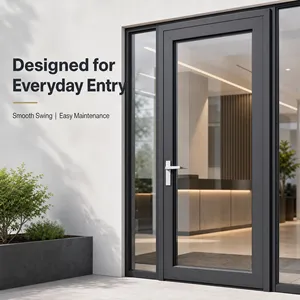
Energy Saving Waterproof Double Glazed Glass Aluminum Alloy Swing Casement Door Sound Insulation Modern Kitchen Interior Door
- Double Glazed Argon-Filled Acoustic Core
- Weatherproof Outdoor Auxiliary Door
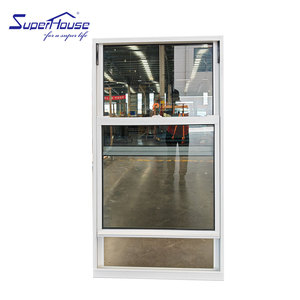
Superhouse AS2047 Australian Standard Waterproof Aluminium Double Tempered Glass Sash Window Single Hung Window
- Australian Standard AS2047 Certified
- Ultra-Durable Shed Wall Integration
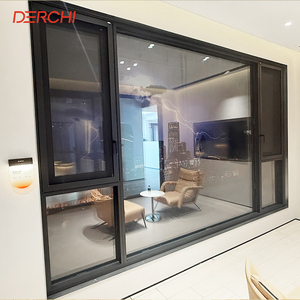
Hurricane Proof Double Laminated Glass Aluminium Frame French Casement Window With Grills
- Heavy Laminated PVB Security Glazing
- Severe Weather Coastal Shed Protection
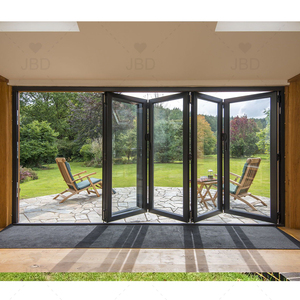
Competitive Price Custom Aluminum Bifold Doors Vertical Outdoor Folding Garage with Modern Design Grill Options Sizes
- Heavy Stainless Bearing Hinge Stacks
- Maximum Clear Opening for Large Sheds
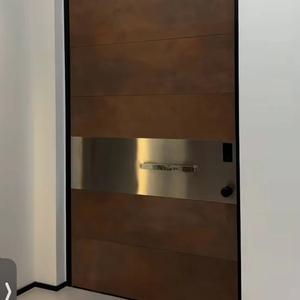
Minimalist Aluminum Pivot Door System Custom Made
- Concealed Hydraulic Axis Hinge System
- Grand Modern Studio & Outbuilding Facade
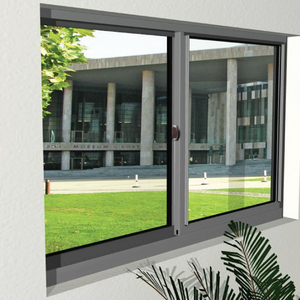
Modern Style Aluminum Alloy Vertical Opening Sliding Hurricane Impact Windows Thermal Break 5 Year Warranty Direct Factory
- Polyamide PA66 Thermal Break Profile
- High Cyclonic Wind-Load Resistance
Guangdong Dejiyoupin Doors & Windows Co., Ltd. (DERCHI)
Top 10 Chinese fenestration enterprise operating from Foshan, Guangdong. Engineered for global procurement leaders across North America, Australia, Europe, and Southeast Asia.
As a verified premier supplier among global aluminum shed doors manufacturers, DERCHI integrates precision CNC machining lines, automated electrostatic fluorocarbon (PVDF) powder coating, and robotic insulating glass fabrication under one standardized quality regime.
Our products hold official certification under AS 2047 (N6 Cyclone Rating), CE European Conformity, ISO 9001:2015, and UL Fire-Rated Specifications, validating exceptional performance in high wind-load coastal zones, aggressive salt-spray environments, and demanding industrial applications.
Having earned international recognition at prestigious architectural expositions such as WORLDBEX in Manila, DERCHI supplies turn-key architectural assemblies for multi-unit storage facilities, industrial warehouses, modern agricultural developments, and luxury estate ancillary structures.
1. The Strategic Role of Aluminum Door Systems in Modern Shed Architecture
Auxiliary outbuildings, storage facilities, workshops, and commercial sheds have historically been treated with secondary architectural priority, frequently outfitted with low-gauge roll-up steel or preservative-treated wood. However, modern industrial design, agricultural modernization, and high-end residential barndominiums demand a severe departure from obsolete methodologies. As extreme weather patterns intensify and corporate facility managers target 30- to 50-year building lifecycles without structural maintenance overhead, high-tensile aluminum shed doors have emerged as the paramount fenestration standard.
Specifying high-performance aluminum shed doors addresses three fatal vulnerabilities native to alternative materials: environmental corrosion, hygroscopic structural movement, and thermal bridging. Unlike steel, which requires perpetual galvanic defense against oxidation and rust perforation in humid or marine macro-climates, marine-grade aluminum alloy (6063-T5 and 6061-T6) forms a self-healing native oxide barrier that resists airborne salinity, sulfuric industrial particulate, and chemical exposure.
Furthermore, timber shed doors undergo substantial dimensional shrinkage and volumetric swelling due to cyclical ambient relative humidity. This hygroscopic expansion induces hinge binding, track racking, latch misalignment, and perimeter gasket failure. Extruded architectural aluminum maintains zero moisture absorption, guaranteeing dimensional tolerances down to ±0.5 mm throughout severe seasonal climate swings from -30°C sub-zero environments to +55°C high-solar-irradiance conditions.
2. Comparative Structural Metallurgy: Aluminum vs. Cold-Rolled Steel vs. Solid Timber
To provide objective data clarity for facade consultants, structural engineers, and commercial buyers, the following performance matrix establishes critical engineering parameters for typical outbuilding and shed door apertures:
| Evaluation Parameter | Architectural Aluminum (6063-T5) | Cold-Rolled Galvanized Steel | Solid Hardwood / Engineered Timber |
|---|---|---|---|
| Strength-to-Weight Ratio | Exceptional (Low Hinge Strain) | Moderate (Heavy Dead-Load) | Low (Prone to Sagging) |
| Marine / Coastal Corrosion (ASTM B117) | Resistant (>3,000h Salt Spray) | Prone to Edge/Weld Rust | Fungal Rot & Biological Decay |
| Moisture Absorption & Dimensional Swell | 0.00% Absolute Dimensional Stability | 0.00% Absolute Stability | 5.0% - 12.0% Volumetric Expansion |
| Thermal Insulation Capability | U-Value < 1.4 W/m²K (PA66 Thermal Break) | U-Value > 3.8 W/m²K (Thermal Bridge) | U-Value ~ 1.8 W/m²K (Natural Insulator) |
| Wind Pressure Rating (AS 2047) | N6 Category (>4,000 Pa Ultimate Load) | N5 - N6 Category | N2 - N3 Category (Panel Deflection) |
| 30-Year Lifecycle Maintenance Cost | Negligible (Wash Down Only) | High (Repainting, Rust Grinding) | Severe (Biocide, Varnish, Re-hangs) |
3. Forward-Looking B2B Procurement Trends in Commercial Shed Openings
Global architectural procurement in the fenestration and outbuilding sector is undergoing rapid transformation, propelled by net-zero building regulations, heightened supply chain traceability, and automated smart-facility management. Discerning commercial procurement directors evaluate suppliers across five next-generation procurement vectors:
Thermal Break Decoupling
Sheds are transitioning from passive uninsulated cold storage to temperature-controlled workshops, EV garages, and automated inventory hubs. The requirement for polyamide PA66 GF25 thermal breaks within aluminum door profiles is now standard in LEED and Passive House specifications.
AS 2047 & Typhoon Resiliency
Extreme cyclonic storms along Southeast Asia, Australasia, and the Caribbean have mandated independent N6 wind-load verification. Specifiers insist on structural engineering validation capable of resisting design pressures exceeding 4.5 kPa without air/water breach.
Turnkey Hardware Consolidation
Developers are eliminating multi-vendor fragmentation. Procurement agreements now require factory-calibrated door leaf packages complete with pre-milled multipoint European deadbolts, heavy-duty 3D adjustable hinges, pneumatic closers, and smart IoT access control.
Furthermore, environmental compliance mandates (such as Europe's CBAM and US EPD certifications) require manufacturers to supply certified low-carbon recycled aluminum content (utilizing hydroelectric smelting) and non-toxic powder coating processes free of volatile organic compounds (VOCs). Selecting a trusted supplier with documented provenance is critical for meeting regional green building quotas.
4. Technological & Material Innovations Transforming Aluminum Shed Doors
The manufacturing technology behind commercial aluminum shed doors has progressed from elementary mechanical screw joining to aerospace-grade automated production methodologies. Leading enterprise manufacturers like DERCHI incorporate breakthrough metallurgical and structural innovations:
A. Micro-Alloy Chemistry and Structural Extrusion Wall Thickness
Standard retail shed doors frequently utilize sub-specification 1.0 mm to 1.2 mm wall extrusions, resulting in torsion instability over large portal spans. DERCHI utilizes primary architectural 6063-T5 aluminum extrusions with nominal wall thicknesses calibrated between 2.0 mm and 3.0 mm for structural mullions. Corner joints are engineered utilizing high-tensile cast aluminum corner cleats with hydraulic crimping and automated dual-component polyurethane sealant injection, eliminating joint movement and air leakage over decades of cyclic torque.
B. Advanced Surface Passivation and Architectural Fluorocarbon Coatings
To resist hyper-saline coastal climates, desert ultraviolet exposure, and acid precipitation, our door profiles undergo a rigorous 14-stage zirconium pre-treatment process followed by AkzoNobel or PPG certified PVDF fluoropolymer electrostatic spraying. This process complies with AAMA 2605 specifications, guaranteeing color retention, anti-chalking integrity, and scratch resistance backed by rigorous salt spray chambers operating past 3,000 continuous hours.
C. High-Acoustic and Hurricane Impact Glazing Integration
Where natural illumination is required within secure shed or workshop structures, monolithic fragile glass has been superseded by engineered impact-resistant assemblies. Double-glazed units (6mm + 12Ar + 6mm) featuring argon gas spacers and laminated security interlayers (PVB or SentryGlas) provide dual advantages: sound attenuation ratings surpassing STC 38dB (critical for noisy generator or power tool sheds) and certified missile-impact resilience against flying storm debris.
5. Technical & B2B Procurement FAQ: Aluminum Shed Doors
Authoritative engineering answers compiled by DERCHI's senior technical sales directors to streamline your bid specification, submittal review, and port logistics planning.
Why choose an aluminum shed door over conventional PVC or galvanized roll-up steel?
Aluminum offers an unrivaled strength-to-weight ratio, structural rigidity, and innate chemical corrosion immunity. Unlike PVC, it will not turn brittle or warp under high thermal UV exposure; unlike steel, it will never develop rust staining or track binding, significantly reducing lifecycle operating expenses.
What wind load standards and test reports do DERCHI aluminum doors hold?
Our aluminum door and window systems have undergone rigorous N6 testing under Australian Standard AS 2047 and AS 1170, withstanding ultimate design wind pressures exceeding 4,000 Pascals. Full independent test laboratory reports and CE declarations are provided for submittal verification.
Can you manufacture oversized pivot, bifold, or high-clearance rolling configurations?
Yes. Equipped with our 180,000 ㎡ production facility, our engineering department designs custom aperture widths up to 8 meters and heights surpassing 4.5 meters, engineered with internal steel sub-reinforcements and heavy-duty concealed track hardware.
What are your standard export packaging protocols to prevent maritime transport damage?
Every door leaf and subframe is wrapped in protective low-tack surface film, cushioned with multi-layer high-density pearl cotton corner bumpers, strapped with polymer tension banding, and enclosed within fumigated plywood crating with internal desiccant bags.
What is the typical production lead time for containerized OEM/ODM door orders?
Standard architectural color profiles (matte black, architectural bronze, anthracite grey) require approximately 20 to 25 business days from CAD drawing sign-off. Bespoke custom RAL powder-coating or anodized finishes are scheduled in 30 to 35 days.
How does DERCHI support foreign general contractors during site installation?
Every commercial consignment includes comprehensive 3D step-by-step installation manuals, video guides, exploded hardware assembly schematics, and direct engineer-to-engineer remote video conferencing during field installation milestones.
6. B2B Specification Checklist for Aluminum Shed Door Procurement
Before issuing requests for quotation (RFQs) to aluminum shed doors suppliers, ensure your structural and procurement documents define these eight mandatory engineering variables:
- 1. Clear Aperture Dimensions: Structural rough opening (RO) width × height, including required floor sill threshold recess depth.
- 2. Cyclic Wind Load Compliance: Regional wind velocity zone (m/s) and positive/negative design pressure thresholds (Pascal / PSF).
- 3. Alloy Specification & Temper: Verification of primary 6063-T5 or 6061-T6 metallurgical grade with certified wall thicknesses.
- 4. Thermal Performance: Target U-Factor / Solar Heat Gain Coefficient (SHGC) requiring polyamide thermal isolation barriers.
- 5. Hardware & Security Protocols: Multipoint anti-lift latching, cylinder master key requirements, or smart biometric credentials.
- 6. Surface Coating Class: AAMA 2604 / 2605 powder coat specifications or minimum 20-micron architectural anodization for sea-front projects.
- 7. Acoustic Attenuation: Required Sound Transmission Class (STC) ratings for industrial workspace sound containment.
- 8. Port Logistics & IncoTerms: Delivery terms (FOB Shenzhen/Guangzhou, CIF destination port, or DDP jobsite delivery).
Connect Directly with DERCHI's Engineering Team
Submit your architectural drawings or door schedules. Receive precision CAD shop submittals and factory-direct wholesale pricing within 24 business hours.