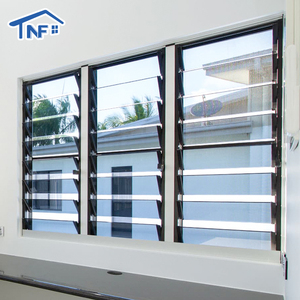
Engineered Portfolio
High-Performance Aluminum Fenestration Systems
Explore our heavy-duty, factory-direct structural window and patio door units engineered with multi-chamber thermal breaks, airtight EPDM perimeter barriers, and acoustic isolation suited for Central European architecture.
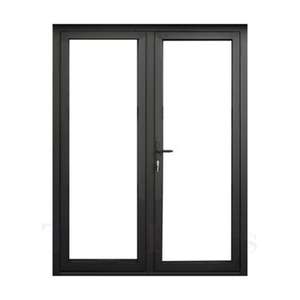
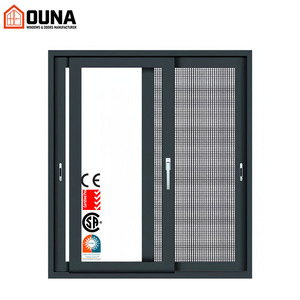
House Main Door Aluminium Security Door with Mesh System Doors and windows Catalogue
Reinforced Security RC2/RC3
Get Catalog
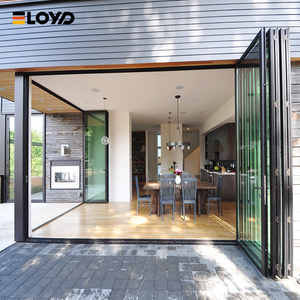
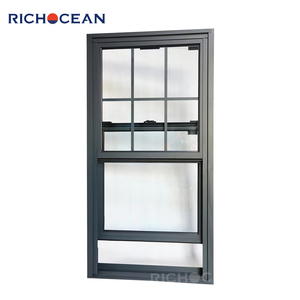
RICHOCEAN Factory Custom Black Aluminum Double Hung Windows Double Pane Insulated Tempered Glass Window
Argon Insulated / Soundproof
Get Catalog
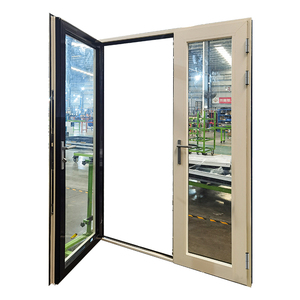
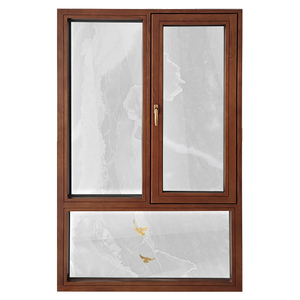
Black Exterior and White Interior Aluminium 10mm Tempered French Glass Casement Door
Dual-Tone Architectural Sash
Get Catalog
Industrial Benchmark
Integrated Engineering & Global Sourcing Scale
Operating from our intelligent production campus in Foshan, Guangdong (Dejiyoupin Doors & Windows), we supply structural envelope systems to major construction contractors, architects, and fenestration distributors in Slovakia and across Central Europe.
180,000㎡
Intelligent Manufacturing Base
600+
Specialized Engineers & Technicians
100+
Patents & Global Certifications
25+
Years of Fenestration Mastery
Engineering Architectural Fenestration for the Slovak Climate
The Slovak Republic features a pronounced continental climate demanding rigorous fenestration engineering. From the sub-zero alpine conditions of the High and Low Tatras (Poprad, Žilina, Banská Bystrica) to the hot, humid summer extremes of the Danubian Lowland (Bratislava, Trnava, Nitra), exterior big windows face heavy thermal expansion cycles and wind pressures.
Under Slovak national standard STN 73 0540-2 (Thermal Performance of Buildings), contemporary residential construction and deep retrofits mandate primary thermal transmittance values ($U_w$) typically reaching below $0.85\, \text{W}/(\text{m}^2\cdot\text{K})$ to fulfill Energy Class A0 benchmarks. To achieve this, our bespoke large-format aluminum windows integrate multi-chamber polyamide thermal barriers (PA66 GF25), triple-pane low-E insulated glass units (IGU) backfilled with 90%+ Argon gas, and warm-edge composite spacers.
Furthermore, structural rigidity remains critical for modern Slovak architectural styles favoring floor-to-ceiling panoramic sliding panels (HS Portal) and oversized glass walls. Our factory employs premium aviation-grade 6063-T6 and 6061-T6 aluminum alloys with reinforced wall thicknesses (up to 3.0mm in load-bearing transoms), enabling architects to design uninhibited glazing heights exceeding 3.5 meters while meeting EN 12210 Wind Load Resistance Class C5 standards.
Localized Architecture
Regional Application Scenarios Across Slovakia
Targeted aluminum envelope systems designed to resolve the microclimatic and structural dynamics of Slovak building typologies.
Suburban Villas & Estates
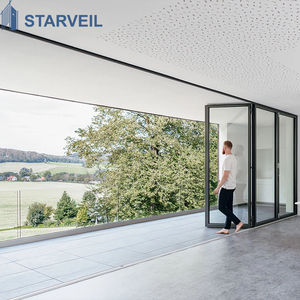
Common in Bratislava-Záhorská Bystrica, Senec, and Košice suburbs. Minimalist big lift-and-slide doors maximize solar heat gain in winter while providing seamless indoor-outdoor transition to patios and landscaped gardens.
Alpine & Foothill Chalets
Demanded across the High Tatras, Liptov, and Orava regions. Heavy snow load tolerances, robust triple-pane tempered glass, and thermal-break profiles withstand driving mountain blizzards, wind gusts, and wide temperature swings.
Urban Brownfield Conversions
Prevalent in industrial redevelopments in Bratislava (Ružinov, Staré Mesto). Slim industrial-profile big windows maintain heritage aesthetics while dramatically enhancing acoustic isolation (up to Rw 45dB) against urban rail and traffic noise.
Commercial & Hotel Atriums
Boutique hotels, thermal spas (Piešťany, Rajecké Teplice), and corporate headquarters. Engineered curtain walls and high-dimension casements with solar-control low-E coatings maintain structural integrity under continuous foot traffic.
Macro Perspectives
Emerging Architectural & Market Trends in Slovakia
Understanding shifting regulatory directives, energy mandates, and architectural preferences defining the Slovak construction landscape.
Strict Energy Class A0 Mandates
Since 2021, all newly constructed residential and public buildings in Slovakia must adhere to nearly Zero-Energy Building (nZEB) standards. As a result, standard double glazing is practically obsolete for new permits, driving the rapid adoption of deep structural profiles (80mm to 105mm depth) that accommodate warm multi-layer IGUs reaching Passive House standards.
Shift to Concealed & Floor-Level Sills
Universal design and barrier-free living are driving widespread demand across Slovakia for zero-threshold lifting-sliding systems. Architects consistently specify embedded ground frames where interior parquet and exterior composite decking sit at identical elevations, requiring precision-extruded aluminum sub-frame drainage and high-durability stainless guide tracks.
Integrated Shading & Dynamic Ventilators
With summer temperatures in Southern Slovakia frequently surpassing 35°C, external aluminum venetian blinds (žalie) and integrated roller shutters (rolety) are standard inclusions. Modern aluminum big window profiles are engineered to integrate concealment boxes and lintel guides directly into the head frame, preventing air leakage and thermal bridges.
Technical Comparison: Standard European Glazing vs. DERCHI High-Span Systems
To help Slovak developers, general contractors, and specifiers make data-backed procurement choices, the matrix below outlines engineering metrics across key structural parameters:
| Engineering Attribute | Standard UPVC Window | Conventional Standard Alu | DERCHI Slovakia Specification Alu |
|---|---|---|---|
| Frame Thermal Insulation ($U_f$) | 1.1 – 1.4 W/(m²K) | 1.6 – 2.0 W/(m²K) | 0.85 – 1.1 W/(m²K) (Polyamide Barrier) |
| Overall Window Metric ($U_w$) | ~1.0 – 1.2 W/(m²K) | ~1.3 – 1.5 W/(m²K) | 0.75 – 0.85 W/(m²K) (Passivhaus Capable) |
| Maximum Sash Height | Up to 2.3 m | Up to 2.7 m | Up to 3.8 m (Reinforced T6 Alloy) |
| Air Permeability (EN 12207) | Class 3 | Class 3 / Class 4 | Class 4 (Continuous EPDM Vulcanized Gaskets) |
| Watertightness (EN 12208) | Class 7A – 9A | Class 8A | Class E1050 / E1200 (Severe Storm Proof) |
| Acoustic Isolation ($R_w$) | 32 – 36 dB | 34 – 38 dB | Up to 45 dB (Laminated Acoustic Core) |
Direct Manufacturer Advantage
Why Slovak Contractors & Importers Partner With Our Factory
Eliminate intermediary markups while gaining full access to high-capacity engineering, rapid prototyping, and international certification compliance.
Foshan Industrial Cluster
Situated in the capital of aluminum manufacturing in China, our 180,000㎡ factory benefits from immediate supply chains of premium billets, anodizing plants, and automated CNC extrusion centers, guaranteeing unbeatable production timelines.
Free CAD & BIM Engineering
Our dedicated engineering department converts your architectural tender drawings, structural opening schedules, and static calculations into precise CAD fabrication drawings and BIM models without preliminary drafting fees.
European Hardware Integration
We seamlessly integrate European hardware systems including Siegenia, GU, Roto, and Savio locking gears, alongside our heavy-duty proprietary hardware, ensuring intuitive maintenance, operation, and local parts compatibility in Slovakia.
Containerized Export Cradles
Oversized glazing units are secured within customized steel A-frames and fumigated solid timber crates, wrapped with desiccant protection against maritime moisture during transit to European container hubs (Koper, Hamburg) and onward rail to Slovakia.
Frequently Answered Questions
Slovakia Procurement & Technical FAQ
Detailed insights into customs, logistics, certifications, and technical parameters common to Slovak commercial developers and distributors.
Do your aluminum big windows meet Slovak building code STN 73 0540-2?
Yes. We engineer thermal break window systems specifically configured to reach $U_w$ values ranging between $0.78\, \text{W}/(\text{m}^2\cdot\text{K})$ and $0.85\, \text{W}/(\text{m}^2\cdot\text{K})$. When paired with our 48mm–52mm triple-pane insulated glass packages with warm-edge spacers, our systems easily meet and exceed Slovak Energy Class A0 requirements for both newly built residential units and commercial envelopes.
What is the standard shipping transit time and delivery route to Slovakia?
Ocean freight shipments departure from Shenzhen or Guangzhou ports directly to the Port of Koper (Slovenia) or Hamburg (Germany), which takes approximately 26 to 32 days on water. From Koper or Hamburg, intermodal containerized rail or road freight transfers goods directly to customs terminals and consolidation sites in Bratislava, Žilina, or Košice within 3 to 5 business days.
Are CE Certificates and Declarations of Performance (DoP) provided?
Absolutely. All windows and door systems supplied to European Union member states carry official CE marking conforming to harmonized standard EN 14351-1. We provide full Declarations of Performance (DoP), airtightness, wind-load resistance (EN 12210), and water tightness (EN 12208) test reports to ensure seamless sign-off by Slovak regional building control authorities (Stavebný úrad).
Can you provide custom surface powder coating matching Qualicoat standards?
Yes. Our electrostatic powder-coating lines are Qualicoat certified, utilizing AkzoNobel and Tiger Drylac architectural powders. For Slovakia, the most commonly requested options include RAL 7016 (Anthracite Grey), RAL 9005 (Jet Black), and textured DB 703 metallic finishes with specialized UV-resistance and a minimum 15-to-25 year finish guarantee against chalking and fading.
How are replacement components and broken glass panes handled post-handover?
We archive every project’s fabrication drawings, glass cut schedules, and hardware serials in our digital ERP repository. Furthermore, our frame systems are engineered using standard European glazing bead channels and universal euro-groove hardware dimensions. This permits local glazing teams in Slovakia to effortlessly source or replace hardware gear or IGU panes on-site if ever required.
Can we combine entry doors, interior systems, and big windows in a single container?
Yes, full consolidation is one of our key competitive advantages. As an integrated manufacturer, we allow Slovak contractors to mix architectural big windows, luxury pivot entrance doors, cast aluminum gates, interior wooden doors, and garage doors into a single coordinated shipment, optimizing shipping volume and saving considerable local handling costs.
Start Your Architectural Window Project in Slovakia
Whether you require tender pricing, complete CAD engineering calculations, or physical sample corners delivered to your office in Bratislava, Košice, or Žilina, our senior bilingual engineering desk is ready to support your timeline.