High-Performance Main Entrance & Architectural Door Systems
Manufactured under rigorous ISO 9001 and AS 2047 quality frameworks, our door assemblies integrate advanced polyamide thermal breaks, multi-point tamper-proof locking mechanisms, and fluorocarbon weather coatings engineered to withstand Japan's demanding seasonal typhoons and seismic movements.
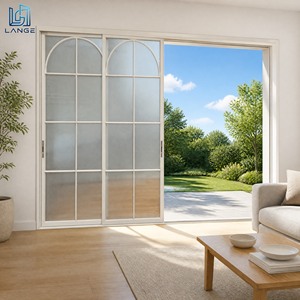
LANGE Aluminium Alloy Doors AS2047 Certified Wind Load & Water Tight
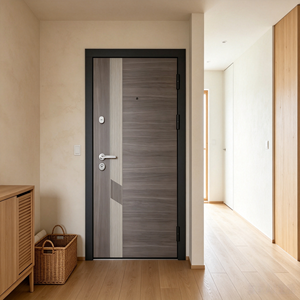
Modern Aluminum Villa Front Entry Security Door Insulated Swing System
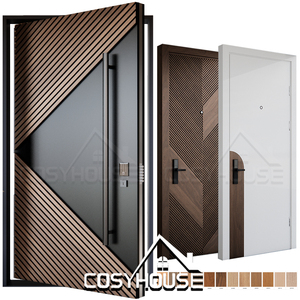
Luxury Modern Pivot Front Door Exterior Entrance System for High-End Villas
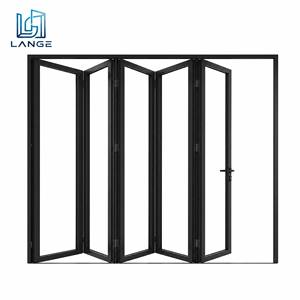
LANGE Thermal Bifold Folding Glass Doors Windproof & Energy Efficient
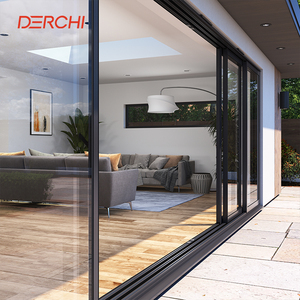
Luxury Heavy-Duty Slim Frame Panoramic Glass Panel Sliding Door
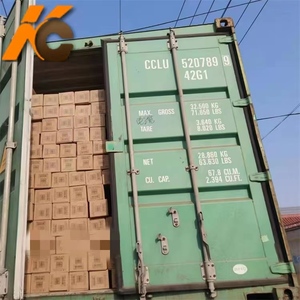
Heavy-Duty Architectural Aluminium Security Mesh & Insect Barrier Net
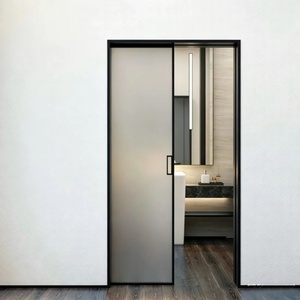
Frosted Tempered Glass Pocket Sliding Door Waterproof Aluminium System
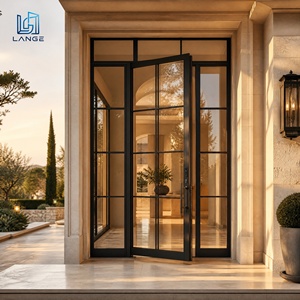
Architectural Grid Aluminum Entrance Swing Glass Door Slim Profile
Engineering Aluminium Main Doors for the Japanese Architectural Landscape
Procuring exterior entrance systems for Japan requires strict compliance with domestic building philosophies, stringent climate variations, and hyper-precise construction standards. Unlike standard commercial export assemblies, an entrance portal destined for Tokyo, Osaka, Sapporo, or Naha must harmonize high seismic resilience (Taishin), barrier-free thresholds (Bariafuri), and superior thermal envelope ratings compliant with the revised Building Energy Efficiency Act (Kenchiku-butsu Shōene-hō).
As an OEM/ODM manufacturing facility possessing over 25 years of engineering heritage and an expansive 180,000 m² automated production complex in Foshan, Guangdong, our factory bridges international mass-scale manufacturing efficiencies with the micro-millimeter precision demanded by Japanese general contractors (Zenekon), architectural design ateliers, and housing developers.
Hokkaido Grade-1 Thermal Isolation
Projects across Northern Japan necessitate ultra-low U-values to prevent interior condensation (Ketsuro) and thermal bridge bleed during harsh sub-zero winters. We utilize multi-chamber extruded 6063-T6 aluminum profiles decoupled by 34mm German Technoform polyamide (PA66GF25) thermal breaks, paired with triple-glazed argon-filled Low-E glass units, easily meeting Japan's Region 1 & 2 insulation thresholds (U-value ≤ 1.3 W/m²·K).
Typhoon Wind Pressure & Salt Spray Guard
Southern maritime prefectures face severe annual typhoons carrying ocean salt spray and torrential horizontal rains. Our exterior entrance doors and pivot assemblies are pressure-tested to AS 2047 N6 and JIS A 4702 standards, resisting wind pressure loads up to S-6 (3000 Pa) with dynamic EPDM co-extruded gaskets that achieve watertightness ratings exceeding W-5 (500 Pa), treated with 25-micron Qualicoat-certified fluorocarbon (PVDF) anti-saline finishes.
Genkan Culture & Barrier-Free Thresholds
The traditional Japanese entrance hall (Genkan) requires absolute flush floor continuity without sacrificing wind and water blockages. We engineer sub-flush drainage sills and drop-down acoustic sealing fins that integrate directly into mortar floors, offering barrier-free access compliant with universal design standards while providing class-leading STC 38 sound attenuation against urban street reverberation.
Technical Specification & Japanese Market Trend Analysis
The Japanese Ministry of Land, Infrastructure, Transport and Tourism (MLIT) has accelerated mandates for Net Zero Energy Houses (ZEH) and high-durability housing frameworks. Sourcing teams require transparent engineering metrics that withstand technical audits by local Kenchiku-shi (first-class architects).
| Performance Parameter | Japanese Benchmark (JIS / MLIT) | Factory Baseline Specification | Structural Advantage |
|---|---|---|---|
| Wind Pressure Resistance | JIS A 4702 Grade S-4 to S-6 (1600 – 2800 Pa) | AS 2047 N6 / JIS S-6 (3000 Pa tested) | Resists deformation under extreme typhoon-level shear vectors. |
| Watertight Performance | JIS A 4702 Grade W-3 to W-5 (350 – 500 Pa) | Grade W-5+ (500 Pa static, zero ingress) | Multi-tiered drainage weep valves and vulcanized seamless corners. |
| Thermal Transmittance (U-Value) | ZEH Standards: U ≤ 1.6 to 2.3 W/m²·K | Custom 1.1 – 1.5 W/m²·K configurations | Isobaric thermal-break cavities filled with aerogel insulation foams. |
| Air Permeability | JIS A 4702 Grade A-4 (2 m³/h·m²) | Grade A-4 compliant hermetic seals | Reduces unconditioned air infiltration, directly lowering HVAC loads. |
| Acoustic Insulation | JIS T-2 to T-3 (30 – 35 dB drop) | STC 38 / Rw 39 dB (Laminated acoustic glass) | Deadens metropolitan railway and heavy traffic high-frequency noise. |
| Surface Anodizing / Coating | JIS H 8602 Composite Oxide Films (≥ 16µm) | Qualicoat Class 2 Anodized / PVDF 3-coat | 3,000-hour accelerated salt fog test verified; zero blistering or chalking. |
ZEH 2030 Mandate
As Japan moves toward universal mandatory ZEH standards by 2030, our factory provides documented thermal calculation models and infrared thermography validation for seamless green-building loan approvals.
Smart IoT & FeliCa Integration
Pre-channeled concealed conduits accommodate smart home ecosystems popular in Japan, including FeliCa NFC access, Akerun electronic deadbolts, and motorized electric mortise locks with hidden power hinges.
Japandi & Wabi-Sabi Finishes
Architects frequently reject standard high-gloss finishes in favor of hyper-tactile matte fluorocarbon textures, dark charcoal anodizing, and ultra-durable heat-transfer sublimated Hinoki/Sugi woodgrain surfaces.
Rapid Pre-Fab Modular Fit
With Japan facing skilled framing labor shortages, our entrance frames feature modular sub-casing designs, snap-on architectural architraves, and laser-slotted mounting brackets that cut on-site installation by 40%.
25+ Years of Precision Engineering and International Project Delivery
Guangdong Dejiyoupin Doors and Windows Co., Ltd. (DERCHI) stands among the elite Top 10 architectural door and window manufacturers in China. Our massive automated production campus in Foshan, Guangdong houses advanced European CNC profile machining centers, robotic welding arrays, and computerized extrusion test jigs designed to fulfill large-scale institutional contracts and bespoke residential schedules.
Having successfully supplied landmark residential high-rises and luxury resorts throughout the United States, Canada, Australia (certified AS 2047 N6), Southeast Asia, and the Middle East, our technical team works natively in your time zone with end-to-end bilingual CAD/BIM engineering capabilities.

Frequently Asked Questions by Japanese Procurement Teams
Direct answers addressing Japanese import compliance, structural verification, shipping schedules to major Japanese ports, and custom hardware integration.
Connect Directly with Our Facade Engineering Team
Send your door schedules, CAD plans, or project bill of quantities (BOQ). Our senior bilingual technical engineers will evaluate your wind-load, thermal, and dimensional criteria and deliver a tailored quotation within 24 hours.
Send an Inquiry