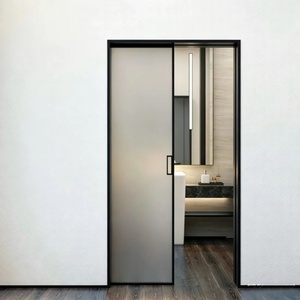
Precision Engineered Lineup
Engineered Aluminium Openable Systems
Explore our top-performing aluminum door solutions configured for high sound insulation, extreme climatic stability, and smooth mechanical integration.
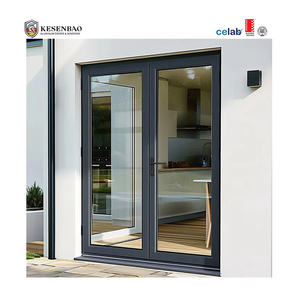
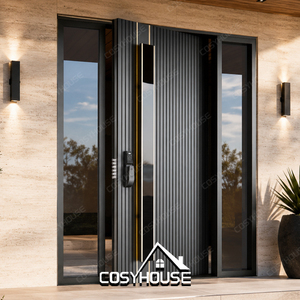
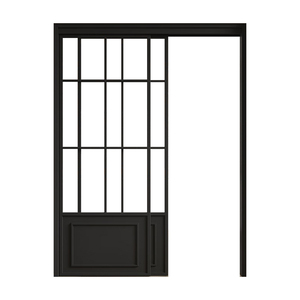
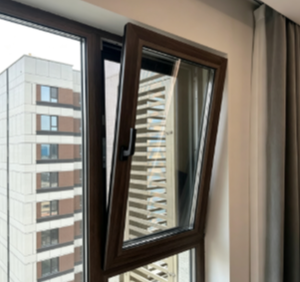
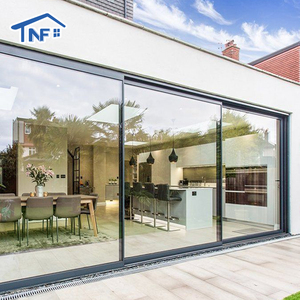
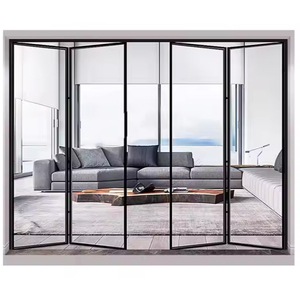
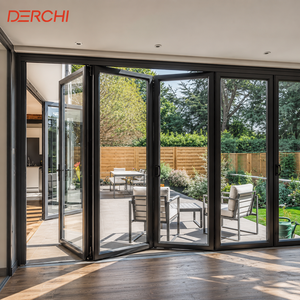
180,000㎡
Integrated Production Base
600+
Direct Technical Staff
100+
Global Patents & Certs
25+ Yrs
Manufacturing Track Record
Architectural Localization
Application Scenarios Across South Korea's Built Environment
South Korea presents unique architectural demands: severe sub-zero winters in the central and northern territories contrast with heavy typhoon-driven rainfall along southern coastal zones. Our systems are engineered to address these localized structural dynamics.
Metropolitan High-Rise (Seoul & Gyeonggi)
Urban high-density residential towers and mixed-use commercial projects in Seoul, Incheon, and Pangyo Techno Valley require exceptional acoustic dampening against city transport networks, paired with ultra-low thermal transmittance to prevent interior heat loss during sub-zero winters.
- Acoustic decoupling seals achieving STC ratings above 42 dB
- PA66 GF25 thermal breaks stopping condensation on inner jamb profiles
- High wind pressure resistance configured for higher-elevation floors
Coastal Commercial Hubs (Busan & Ulsan)
The maritime exposure of Busan, Ulsan, and Gwangyang port areas subjects building facades to abrasive marine salt spray, corrosive sea breezes, and severe late-summer typhoons demanding rigorous water-tightness and structural stability.
- AS 2047 N6 and KS-aligned structural structural load certification
- Qualicoat Seaside powder coating and fluorocarbon PVDF surfaces
- Multi-point compression perimeter locking defying extreme wind-driven rain
Luxury Private Villas & Resorts (Jeju Island)
Premium low-rise residences and boutique resorts across Jeju require expansive visual openings that preserve scenic ocean or volcanic vistas without compromising on thermal isolation and typhoon wind load resilience.
- Heavy-duty concealed hinge systems handling leaf weights up to 450 kg
- Double and triple low-E argon tempered glass configurations
- Flush threshold details engineered with hidden sub-drainage channels
Industry Foresight
Emerging Trends in the South Korean Door & Window Market
Strategic investments in South Korea's construction sector are driven by regulatory tightening around carbon footprints, modern smart-home convergence, and a distinct aesthetic movement toward minimalist architectural profiles.
Zero-Energy Building (ZEB) Mandates
As South Korea enforces phased Zero Energy Building (ZEB) certification for public and multi-unit residential projects, the threshold for fenestration thermal performance continues to heighten. Specifiers actively reject standard aluminium in favor of multi-cavity thermal break extrusions, warm-edge spacers, and triple-glazed units that deliver overall U-values below 0.9 W/(m²·K).
Smart Door Lock Ecosystem Integration
South Korea boasts one of the world's highest adoption rates for digital door access. Modern projects demand that factory-machined aluminium openable doors support concealed motorized locking systems, mortise cutouts for Korean digital locks (Push-Pull, Biometric, Zigbee/Z-Wave networks), and embedded sensor wiring channels without weakening profile integrity.
Slim-Frame Architectural Minimalism
Architects in Gangnam and Pangyo have led a strong aesthetic shift toward ultra-narrow visible sightlines. Openable doors must eliminate chunky outer framing while retaining heavy-duty structural load capabilities. Designers favor dark anodized, micro-matte, or custom fluorocarbon finishes that blend seamlessly with interior architectural stone and exposed concrete.
Manufacturing Rigor
Why Engineering Teams Choose Our Production Base
Operating under Guangdong Dejiyoupin Doors and Windows Co., Ltd. (DERCHI), our facility stands among the top-tier manufacturing hubs in South China, offering international procurement channels with verified technical reliability.
Top-Tier Industry Standing
Recognized as one of the Top 10 premium manufacturers in China's fenestration sector, leveraging 25+ years of specialized R&D for worldwide export.
International Validations
Tested and certified to AS 2047 N6 (highest wind/water resistance), CE, ISO 9001, and UL fire standards, with over 100 patents and formal test reports.
Logistics to Korean Ports
Direct consolidated sea freight routing from South China to Busan, Incheon, and Gwangyang ports, with crate-level barcode labeling matching client schedules.
CAD & BIM Engineering Support
Complimentary CAD shop drawings, structural wind load calculations, and BIM integration provided by our in-house engineering team prior to production.
Buyer Knowledge Base
Frequently Asked Questions by Korean Contractors & Specifiers
Direct answers covering import certification, thermal criteria, packaging integrity, and custom architectural integration for South Korea.
Do your aluminium openable doors satisfy Korean KS F 3117 and airtightness standards?
Yes. Our aluminium profiles utilize precision multi-chamber thermal breaks and continuous EPDM automotive-grade gasket vulcanization. These designs align with KS F 3117 (Aluminium Alloy Windows and Doors) and deliver Class 1 or Class 2 airtightness performance under KS F 2292 testing methodologies.
How do you handle condensation during freezing Korean winters (Ondol floor heating)?
The stark contrast between Korean underfloor heating (Ondol) and winter outdoor temperatures can cause interior framing condensation. We employ reinforced polyamide (PA66 GF25) thermal insulation bars (24mm–34mm width) paired with argon-filled warm-edge Low-E insulated glass units to eliminate cold bridging across the door frame.
Can the door frames be prefabricated for Korean smart lock systems?
Yes. We regularly pre-machine CNC cutouts for leading Korean digital mortise lock brands (such as Samsung, Yale Korea, and Gateman). All mortise slots, wire passage cavities, and magnetic strike plates are pre-milled in the factory according to your verified architectural door schedule.
What is the typical shipping lead time and customs preparation for Incheon or Busan?
Production lead times run 25–35 days depending on profile finish customization. Direct sea transit from South China to Busan or Incheon takes approximately 4–7 days. We provide complete commercial invoices, packing lists with Korean floor/room demarcations, certificates of origin, and test documentation to ensure clear customs clearance.
What export packaging is used to prevent ocean freight surface scratching?
Every door panel undergoes a 5-layer protective wrapping protocol: electrostatic surface scratch film, thick pearl foam corner bumpers, high-density corrugated wrap, and heavy-duty fumigated wooden crates with moisture-absorbent desiccant packs to endure maritime humidity and rough handling.
Do you provide CAD shop drawings and structural test data for project submittals?
Yes. Once your door schedule and project specifications are submitted, our engineering department produces detailed CAD fabrication drawings detailing perimeter anchoring, flashing interfaces, thermal barriers, and hardware schemes for sign-off by your structural engineer.
Plan Your Korean Architectural Project With Certified Experts
Submit your door schedules, CAD blueprints, or structural performance requirements. Our bilingual engineering specialists will return an itemized, code-compliant commercial quote and CAD submittal package within 24 hours.
Get a Quote