Acoustic Rw 42dB
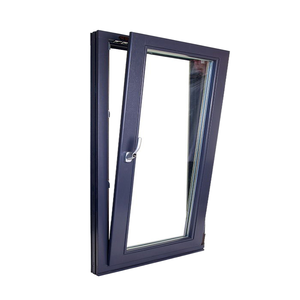
Factory-direct dual-action tilt and turn windows, panoramic glass sliders, and thermal curtain systems configured for Hungarian architectural envelopes and high U-value performance.
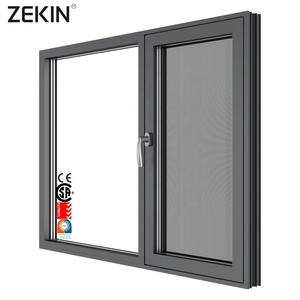
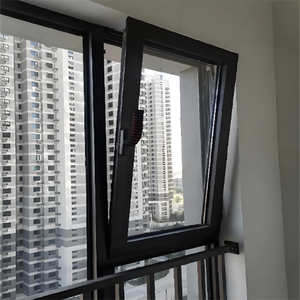
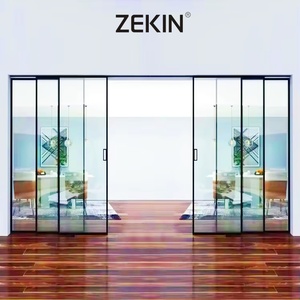
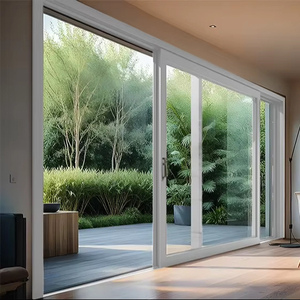
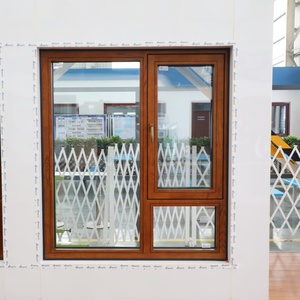
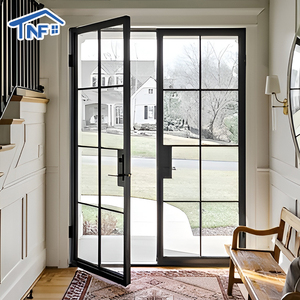
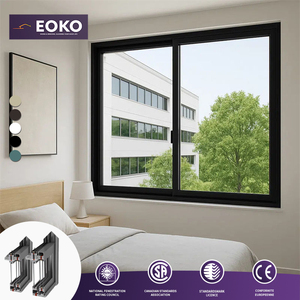
In the architectural landscape of Central Europe, Hungary represents a demanding microclimatic environment categorized by the Pannonian continental climate. Buildings located across Budapest, Debrecen, Szeged, and the Lake Balaton basin experience severe thermal swings: harsh, sub-zero winters with temperatures dipping to -15°C, countered by arid, intensive summer heatwaves exceeding 38°C. Consequently, fenestration specification within Hungary cannot rely on standard Mediterranean profiles or sub-standard non-insulated aluminium sections. To satisfy Hungarian building regulations—specifically Decree 7/2006 (V. 24.) TNM and the tightened Hungarian Energy Performance of Buildings directives aligned with the EU Energy Performance of Buildings Directive (EPBD 2024 recast)—exterior window systems must strictly comply with stringent overall thermal transmittance metrics ($U_w \le 1.0 - 0.85\ \text{W/m}^2\text{K}$).
Aluminium tilt and turn windows (locally known in Hungarian procurement as bukó-nyíló alumínium ablakok) have evolved from an architectural luxury into a fundamental requirement for commercial developers, general contractors (Fővállalkozók), and residential developers across Pest and surrounding counties. By leveraging multi-chambered 6063-T6 architectural aluminium extrusions separated by low-conductivity polyamide (PA66 GF25) thermal barrier strips, modern tilt turn systems prevent cold-bridging, eliminate indoor dew condensation risks, and provide exceptional torsional rigidity capable of handling large structural glass dimensions spanning floor-to-ceiling heights.
| Performance Characteristic | European / Hungarian Standard | DERCHI Engineering Specification | Project Impact in Hungary |
|---|---|---|---|
| Thermal Transmittance ($U_w$) | MSZ EN ISO 10077-1 / TNM Decree | 0.82 – 1.1 W/m²K (Triple Glazed Argon 4LowE-16Ar-4-16Ar-4LowE) | Complies with Near-Zero Energy Building (Közel nulla energiaigényű) standards |
| Air Permeability | MSZ EN 12207 | Class 4 (600 Pa) Triple EPDM Continuous Gasket Matrix | Prevents infiltration drafts during severe winter Danube wind chill events |
| Watertightness | MSZ EN 12208 | Class E900 / E1200 (Internal drainage & weep-hole baffles) | Guarantees zero leakage during severe summer Pannonian rainstorms |
| Acoustic Attenuation ($R_w$) | MSZ EN ISO 717-1 | 38 dB to 46 dB (Acoustic PVB Laminated Configurations) | Blocks urban transport noise along Budapest transit corridors (Nagykörút) |
| Burglar Resistance | EN 1627 - EN 1630 | RC2 / RC3 Compliant Perimeter Multi-Point Mushroom Cam Locking | Satisfies insurance underwriter security mandates for Hungarian luxury villas |
Retrofitting classical inner-district apartments (District V, VI, and VII) demands custom structural profiles that preserve perimeter facade aesthetics while inserting acoustic-laminated tilt turn openings. Our ultra-slim sash designs balance historic compliance with 42dB urban acoustic reduction against streetcar and traffic noise.
Lakefront properties along Balatonfüred, Siófok, and Tihany encounter intense microclimatic moisture and high wind pressures. Heavy-duty powder-coated tilt turn casements paired with corrosion-resistant multi-slide glass walls prevent seal degradation and structural deflection under heavy frontal storms.
Corporate headquarters and institutional facilities in Debrecen and Győr require verifiable thermal envelope certifications. Our engineered tilt turn systems integrate seamlessly with building automation systems (BMS), motorized tilt venting hardware, and low-solar-gain double/triple insulating glass units.
Three primary driving forces are shaping procurement decisions among Hungarian facade engineers, master builders, and real estate investment trusts:
Following strict enforcement of national energy classifications, commercial permits require envelope elements that minimize heating kilowatt-hours during prolonged sub-zero Danubian winter spells, accelerating the replacement of uPVC with durable, thermally separated structural aluminium.
Architects in Buda hill residential enclaves consistently specify fully concealed hinges (Rejtett pántos vasalat) with flush interior profiles. Integrated multi-point perimeter locks provide certified RC2/RC3 anti-burglary defense without compromising refined architectural minimalism.
Hungarian buyers increasingly favor Qualicoat-certified powder coatings in RAL 7016 (Anthracite Grey) and architectural dark bronze. These finishes endure severe seasonal UV exposure without chalking, color drift, or frame warping—surpassing plastic composite lifespans by decades.
Operating as a premier Top 10 door and window manufacturing enterprise with more than 25 years of international engineering pedigree.
Our massive intelligent manufacturing facility in Foshan features fully automated CNC cutting, corner crimping, and computerized silicone injection equipment for industrial scale and micrometric tolerances.
With an engineering team dedicated to structural wind-load calculation, thermal boundary simulation, and technical shop drawing generation, we provide fluent bilingual project coordination.
Our tilt turn profiles and architectural systems carry verified CE marks, AS2047 hurricane and wind testing, ISO9001 quality audits, and UL listings, fulfilling all official documentation required by Hungarian building authorities.
Integration of multi-cavity PA66 GF25 insulating struts, cellular EPDM co-extruded center gaskets, and warm-edge spacer technology ensures our windows reliably achieve passive-house-level thermal performance.
We manage direct sea-rail container shipments from South China ports directly to BILK rail terminals in Budapest or through Koper/Rijeka ports, fully protected in reinforced fumigated steel-frame crates.
Our dedicated structural engineering unit prepares precise shop drawings, perimeter anchorage details, and static wind load validations tailored to your window schedule, eliminating on-site installation discrepancies.
Addressing regulatory compliance, logistics pathways, hardware compatibility, and customs clearances for importing architectural window systems into Hungary.
Send us your architectural window schedules, CAD elevations, or project bill of quantities. Our experienced facade engineering specialists will provide a complete technical proposal and factory-direct quotation within 24 hours.
Contact Us