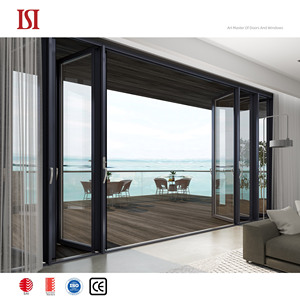
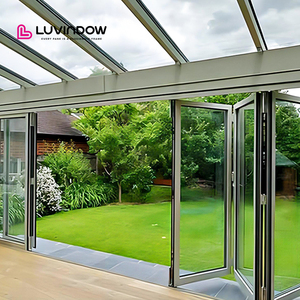
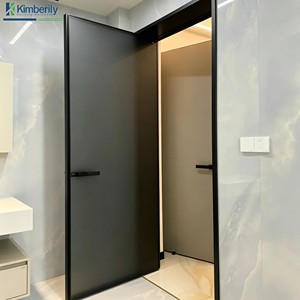
Factory-direct fenestration profiles specified for high-end residential luxury estates, private villas, corporate towers, and high-security installations across Nigeria.
Specifying exterior fenestration and entrance systems in Nigeria requires an in-depth understanding of extreme microclimates. The federal geography presents two stark architectural challenges: the aggressive high-salinity marine environment of the Guinea Coast (stretching through Lagos, Delta, and Rivers States) and the intense dry heat, ultraviolet irradiance, and abrasive particulate dust of the Harmattan winds across Northern and Central Nigeria (including Abuja FCT, Kaduna, and Kano).
Conventional imported fenestration often fails prematurely in Nigeria due to substandard alloy formulations, poor surface powder-coating microns, and degraded single-layer rubber weather seals. When standard 1.2mm commercial aluminum doors are exposed to the atmospheric corrosion of Victoria Island or the Atlantic breeze of Lekki Phase 1, galvanic degradation occurs rapidly, freezing roller tracks and pitting exterior finishes.
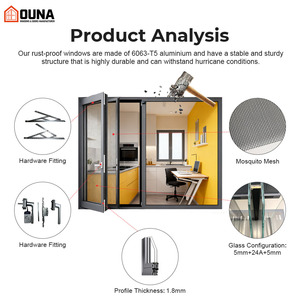
As an authoritative industrial manufacturer with over 25 years of fabrication expertise, our export-grade aluminum glass swing doors utilize high-tensile 6063-T6 virgin primary aluminum extrusions featuring minimum profile wall thicknesses of 2.0mm to 3.0mm. Engineered with continuous thermal barrier cavities (polyamide PA66 reinforced with 25% fiberglass), our swing doors eliminate conductive heat transfer, lowering indoor solar heat absorption and drastically slashing commercial chiller loads.
Coated with AkzoNobel Interpon D2525 fluorocarbon PVDF or architectural seaside anodized coatings (25μm+ layer thickness). Tested to 3,000 hours of accelerated neutral salt-spray (NSS) under ASTM B117 standards, preventing surface bubbling and pitting across Lagos Lagoon and coastal port properties.
Equipped with quadruple-lip co-extruded automotive-grade EPDM compression gaskets that never crack or shrink under 45°C ambient heat. Complete air tightness tested up to Class 4 (EN 12207), hermetically isolating interior environments from dry Saharan dust storms.
Independent power generation is widespread throughout Nigerian commercial and private hubs. Our double- and triple-glazed units integrate acoustic PVB laminated glass interlayers that attenuate persistent 50Hz low-frequency generator drone, achieving sound reduction levels up to STC 42dB.
Tailored structural profiles matching the distinct zoning codes, architectural aesthetics, and operational demands of Nigeria's primary urban corridors.
Waterfront residences in Lagos face extreme humidity and high structural wind loading from the Atlantic Ocean. For main entrances, ocean-facing living salons, and private balconies, our heavy-duty thermal break aluminum glass swing doors serve as primary barriers. Utilizing 316-grade stainless steel multi-point mortise locks and 8mm+12A+8mm argon-filled double-tempered Low-E glass, these doors withstand heavy monsoons, maintain crystal-clear visibility, and guarantee perimeter security against unauthorized entry.
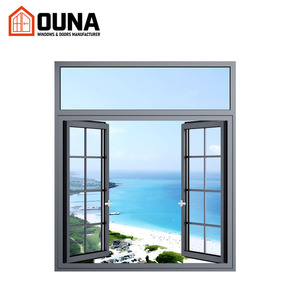
In the Federal Capital Territory (FCT), residential and institutional architecture demands commanding scale, modern monumental aesthetics, and elite blast/impact security. We export oversized glass swing entrance doors featuring concealed hydraulic self-closing systems, biometric smart lock integration, and certified anti-bandit glazing. These doors maintain tight alignment over spans up to 3.5 meters in height without sash sag.
Commercial bank branches, oil & gas corporate offices, and boutique shopping plazas require heavy-duty pivot and swing mechanisms engineered for over 500,000 opening cycles. Fitted with German-manufactured concealed overhead transom closers, continuous floor springs, and narrow-sightline structural aluminum framing, our assemblies ensure effortless accessibility and full compliance with public egress safety standards.
| Building Typology | Target Region | Recommended Profile & Hardware | Acoustic / Thermal Rating | Primary Functional Advantage |
|---|---|---|---|---|
| Luxury Private Villa | Banana Island, Lekki, Lagos | 75mm Thermal Break + 316 Stainless Multi-Point Hinge | U-value: 1.6 W/m²K | STC: 40 dB | Zero corrosion from saline air; total resistance to coastal rain infiltration. |
| Diplomatic Compound | Maitama, Abuja FCT | 85mm Heavy Security Casement Swing + Triple Lami Glass | U-value: 1.3 W/m²K | STC: 44 dB | Forced-entry deterrence, ballistic/impact ratings, Harmattan dust barrier. |
| Corporate Headquarters | Victoria Island, Lagos | Commercial Heavy Pivot Swing + Concealed Floor Spring | U-value: 1.8 W/m²K | STC: 38 dB | High duty cycle (500k+ operations), seamless card/biometric access control. |
| Industrial Admin Complex | Port Harcourt, Rivers State | Anodized Aluminum Frame + Double Glazed Low-E Glass | U-value: 1.7 W/m²K | STC: 39 dB | Resistant to acid rain and industrial particulates; low maintenance. |
Key architectural, economic, and regulatory forces driving the commercial pivot away from local artisanal fabrication toward certified factory-built fenestration systems.
With volatile diesel prices and constrained national grid electricity, Nigerian real estate developers are shifting toward passive cooling architectures. Thermal-break swing doors with warm-edge spacers drastically minimize the loss of air-conditioned air, reducing generator fuel consumption by up to 28% across mixed-use multi-floor projects.
Historically, property developers in Nigeria relied heavily on heavy wrought-iron burglar bars that compromised modern architectural elegance. Modern developers now favor high-strength aluminum glass swing doors featuring laminated burglar-resistant glass (P6B / P7B standards) and five-point deadbolt locks, blending luxury transparency with fortress-grade physical deterrence.
Site-assembled artisanal doors made from thin scrap-aluminum extrusions frequently suffer from alignment failure, rattling during windstorms, and water leakage. Modern project contractors specify certified factory-extruded systems that comply with Standards Organisation of Nigeria Conformity Assessment Program (SONCAP) protocols, complete with CNC corner crimping and injected structural adhesive.
As the industrial parent manufacturer behind international fenestration brand DERCHI, Guangdong Dejiyoupin Doors and Windows Co., Ltd. stands as one of China's top-tier manufacturers. Headquartered in Shishan Town, Nanhai District, Foshan City—the global epicenter of high-end aluminum extrusion—our manufacturing base encompasses over 180,000 square meters of intelligent production facilities supported by more than 600 master technicians, structural engineers, and QA specialists.
With an unbroken legacy of 25+ years in fenestration R&D, our brand holds over 100 international patents and technical certifications, including ISO 9001:2015 quality assurance, CE mark conformity, American NFRC energy ratings, CSA safety certifications, UL fire resistance, and Australian AS 2047 N6 cyclone-load testing. Having delivered custom projects across North America, Australia, and the Middle East, we are primed to serve Nigeria’s premier real estate developments.
Every door exported to Nigeria is fully dry-fitted and tested for dimensional squareness, hinge deflection, gasket compression, and lock-cylinder smoothness prior to crating. We supply contractors and import merchants with full CAD shop drawings, glass stress analysis, structural wind-load calculations, and complete export documentation to streamline customs clearance at Lagos ports.
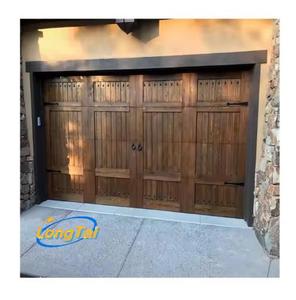
We analyze your architectural schedules, door elevations, and wind load parameters, generating accurate 2D/3D fabrication drawings for developer approval within 48 hours.
Extrusions are processed on four-axis German Elumatec CNC milling centers, ensuring hinge recesses, drain weeping slots, and corner lock mortises achieve 0.1mm tolerances.
Heavy extruded cast aluminum corner brackets are mechanically crimped with two-component German structural adhesive injected into interior chambers for lifetime rigidity.
Each unit is shrink-wrapped with protective film, foam edge caps, and packed in fumigated heat-treated solid plywood crates with silica desiccant bags for long-haul sea freight.
Practical, technical, and regulatory answers addressing SONCAP compliance, shipping to Apapa/Tin Can ports, foreign exchange mechanisms, and on-site assembly.
Connect directly with our Foshan engineering headquarters. Send us your architectural drawings, door schedules, or opening dimensions to receive a comprehensive, itemized technical proposal and factory-direct quotation within 24 hours.
Send an Inquiry