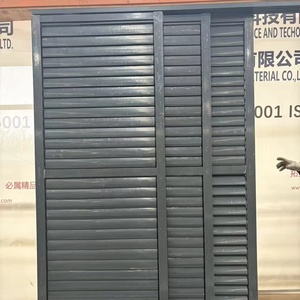
 AS2047 / NFRC
Engineered Fenestration Portfolio
Certified Aluminium Burglar-Proof Window Systems
Engineered to resist mechanical forced entry while maintaining structural durability against coastal salinity, wind pressures, and intense solar radiation across Colombia's diverse microclimates.
AS2047 / NFRC
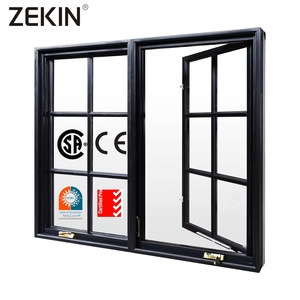 RC2 / Multi-Lock
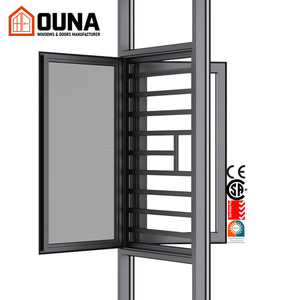 CSA / NFRC
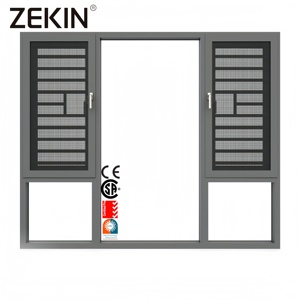 CE Certified
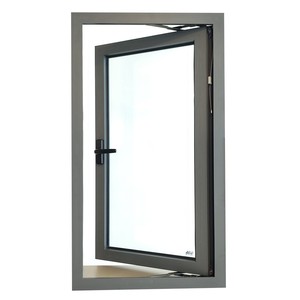 High Security
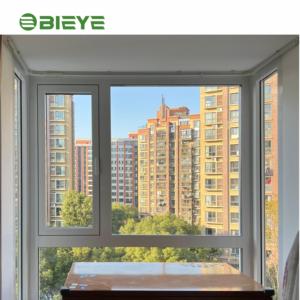 Acoustic Rated
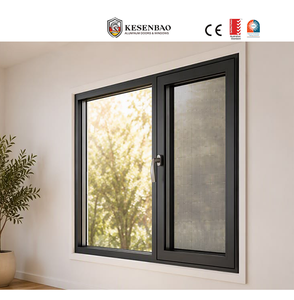 NFRC / AS2047
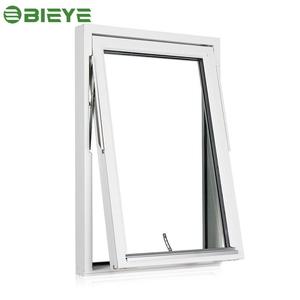 Direct Factory
Engineering Whitepaper & Strategic Insight
The Technical Dynamics of Aluminium Burglar Windows in Colombia
In Colombia's evolving urban, suburban, and coastal landscapes, window fenestration represents far more than an aesthetic frame; it is an active physical barrier against forced intrusion, acoustic disturbance, and extreme climate variance. From the high-density vertical towers in Bogotá D.C. sitting at 2,600 meters above sea level to the high-humidity, marine environments of Cartagena, Barranquilla, and Santa Marta, fenestration profiles must address conflicting physical demands: resisting structural intrusion, limiting thermal dissipation, preventing galvanic corrosion, and resisting severe cyclic wind gusts.
Historically, Colombian residential developments addressed security by fabricating external wrought-iron or tubular steel bars (rejas). While providing a mechanical deterrent, traditional bars compromise architectural sightlines, restrict emergency egress under seismic or fire emergencies (NSR-10 compliance), and suffer rapid oxidative degradation in humid or coastal environments. Today, modern architectural specifications throughout Colombia’s Estrato 4, 5, and 6 developments require integrated burglar-proof fenestration. By integrating 6063-T6/T5 architectural aluminium alloy extrusions, multi-point perimeter gear drives, and laminated security glass (PVB/SentryGlas®), Chinese original design manufacturers provide Colombian developers with certified protection without sacrificing clean visual profiles.
180,000㎡
Integrated Production Facility
600+
Fenestration Craftsmen & Engineers
100+
Patents & Global Certifications
AS 2047N6
Wind & Water Ingress Rating
Structural Anatomy: Multi-Point Locking & Anti-Pry Engineering
Traditional sliding and casement assemblies fail under burglary attempts primarily due to single-latch slippage or sash lifting off the sill. Certified burglar-proof fenestration eliminates these vulnerability vectors by adopting multi-point European groove hardware systems. Heavy-duty zinc-alloy or stainless-steel shoot bolts engage hardened mushroom-head cams into perimeter frame strike plates every 400mm to 600mm. When locked, the sash acts as a monocoque unit locked within the rough structural opening.
Furthermore, external glazed profiles incorporate internal security beading. In standard residential windows, external glazing beads can be unclipped with a simple chisel or lever, allowing burglars to remove the glass panel silently within seconds. Our Colombia-dedicated systems employ structural internal beading backed by high-tensile structural silicones (Dow Corning 995) or internal security pressure plates, ensuring that glass retention remains intact even if outer gaskets are compromised.
| Performance Vector | Traditional Colombian "Rejas" | Standard Local Aluminium Window | DERCHI Heavy-Duty Burglar System |
|---|---|---|---|
| Forced Entry Resistance | Medium (Prone to hydraulic jacks) | Low (Fails in < 30 seconds via pry bar) | Certified RC2 / RC3 (Withstands 5-15 min continuous attack) |
| Corrosion & Coastal Durability | Poor (High maintenance, rust streaks) | Moderate (Thin anodizing < 10 microns) | Superior (Qualicoat Class 2 Powder / >25μm Anodized) |
| Acoustic Isolation (STC / Rw) | None (Window acoustic limits apply) | Rw 22–26 dB (Single 4mm or 5mm float) | Rw 35–42 dB (Laminated Acoustic PVB + Double Glaze) |
| Seismic & Emergency Egress | Hazardous (Traps occupants during fire) | Compliant but easily defeated | NSR-10 Friendly (Single-motion internal emergency egress) |
| Thermal Efficiency (U-Value) | No thermal impact | 5.8 W/m²·K (Non-thermal raw frame) | 1.8–2.4 W/m²·K (Polyamide PA66 Thermal Break System) |
Regional Application Framework
Tailored Deployment Across Colombian Topographies
Colombia does not possess a uniform building climate. Fenestration systems must be engineered specifically for altitude thermal drops, coastal humidity, or urban acoustic noise.
Bogotá D.C. & High-Altitude Sabana
Characterized by significant diurnal temperature swings (5°C to 20°C within 12 hours) and severe urban vehicular noise. Window assemblies deploy thermal break polyamide strips (PA66 GF25) paired with double-glazed laminated acoustic glass (6mm Toughened + 0.76mm PVB + 6mm Low-E), eliminating interior condensation while neutralizing urban transmission across Chapinero, Usaquén, and Santa Ana.
Medellín & The Aburrá Valley
Known as the "City of Eternal Spring," Medellín’s contemporary architectural villa designs demand expansive panoramic glass walls with slimline aluminium sightlines in El Poblado, Envigado, and Llanogrande. Micro-ventilation multi-point tilt-turn systems allow constant natural airflow while preventing intruders or wildlife from entering through ground-floor openings.
Cartagena, Barranquilla & Caribbean Coast
Exposure to relentless airborne maritime chlorides, extreme solar UV index, and coastal trade winds requires Qualicoat Class 2 fluorocarbon (PVDF) surface treatments. Coupled with 304/316 marine-grade stainless-steel anti-theft insect wire mesh screens, these installations withstand both corrosion and high-velocity wind-borne debris.
Industry Trajectory & Regulatory Shifts
Emerging Fenestration Trends in the Colombian Construction Sector
The Colombian architectural and construction sector is experiencing a structural modernization driven by international certification adoption, urban densification, and updated sustainability frameworks.
1. Transition Toward EDGE and LEED Certified Fenestration
Instituted by CAMACOL (Cámara Colombiana de la Construcción), the widespread adoption of EDGE (Excellence in Design for Greater Efficiencies) building certification across Bogotá, Barranquilla, and Medellín has forced builders to re-evaluate their facade envelopes. Traditional uninsulated frames and single-pane annealed float glass lead to severe solar heat gain in warm regions and excessive heat loss in cold Andean altitudes. Chinese manufacturers with automated thermal barrier assembly lines (utilizing high-precision CNC injection and polyamide bar inserting) allow developers to achieve Solar Heat Gain Coefficients (SHGC) under 0.32 and U-values below 2.0 W/m²·K, scoring critical points for EDGE Advanced verification.
2. Convergence of Physical Security and Minimalist Aesthetics
Discerning property owners in gated suburban communities (condominios campestres) across Cundinamarca, Antioquia, and Valle del Cauca increasingly reject the prison-like look of wrought-iron grills. The market demand has swung decisively toward concealed burglar-proof hardware. Sub-frame structural integration, anti-lift interlocks on multi-track sliders, and flush-mounted lock receivers preserve uninterrupted 90-degree vistas while delivering structural resistance compliant with European EN 1627-1630 (RC2/RC3) standards.
3. Direct Manufacturer Sourcing by General Contractors and Consorcios
Fluctuating currency values and inflationary pressures on local distribution channels have caused Colombian general contractors (constructoras) to bypass regional middlemen. By directly sourcing containerized fenestration shipments from our Foshan production base, tier-one developers realize cost efficiencies of 28% to 42% on project bill-of-quantities (BOQs). Factory-direct crating organized by building floor schedules (despiece por nivel) significantly reduces on-site material sorting and construction delays.
Manufacturing Authority
Why Colombian Developers Partner with Our Foshan Facility
Operating from our 180,000 square meter modern manufacturing hub in Foshan, Guangdong—the global capital of architectural aluminium extrusion—we deliver engineering excellence backed by 25+ years of verified international export history.
Advantage 01
Industrial Extrusion & Deep Processing
We utilize prime 6063-T6 virgin aluminium billets. Our integrated plant features automated extrusion presses, anodizing lines, vertical powder coating towers, and automated 5-axis CNC machining centers that guarantee 0.1mm milling tolerances for precision multi-point locking alignment.
Advantage 02
AS 2047 N6 & CE Certified Envelopes
Our structural door and window systems have undergone rigorous testing to international standards, achieving AS 2047 N6 cyclone-rated pressure levels, CSA certification, and CE compliance. Every export lot comes with verifiable mill test certificates and third-party laboratory performance reports.
Advantage 03
Dedicated Latin America Project Engineering
Our bilingual technical engineering desk works directly from architectural CAD and Revit drawings. We convert Colombian imperial and metric project schedules into production shop drawings, confirming jamb details, wind deflection limits, and anchorage configurations before cutting a single profile.
Advantage 04
Standardized Sea-Freight Logistics
Shipping to Puerto de Buenaventura (Pacific) or Puerto de Cartagena / Barranquilla (Atlantic) demands export packaging that resists maritime humidity. Windows are individually film-wrapped, corner-protected with high-density EVA, and crated in fumigated solid plywood cases engineered for direct off-loading.
Advantage 05
Comprehensive Facade Consolidation
Beyond burglar casement and sliding windows, our factory produces matching cast-aluminium estate main gates, entrance pivot doors, soundproof commercial systems, and hurricane-rated glass doors—allowing single-source supply and unified project aesthetics.
Advantage 06
Long-Term Hardware Reliability Guarantee
We pair our aluminium extrusions exclusively with world-class multi-point hardware brands (including Hoppe, Siegenia, and certified internal high-torque drives), backed by 10-year mechanical operational warranties and accessible replacement component inventories.
Procurement & Import Guide
Frequently Asked Questions by Colombian Buyers
Clear, direct answers regarding Colombian customs compliance, shipping lead times, hardware ratings, and seismic building code coordination.
How do your windows comply with Colombia's NSR-10 seismic and safety regulations?
Under NSR-10 (Norma Sismo Resistente), non-structural facade components must withstand seismic drift without glass fallout or frame displacement. Our sub-frame fixing brackets and flexible EPDM perimeter acoustic seals accommodate building movement while keeping the main frame anchor points structurally sound.
What shipping ports do you deliver to in Colombia, and what is the transit time?
We ship full container loads (20GP, 40HQ) directly from Shenzhen, Guangzhou, or Foshan ports to Puerto de Buenaventura (typically 28 to 35 days at sea) for interior destinations like Cali, Medellín, and Bogotá, or to Puerto de Cartagena / Barranquilla for Caribbean coastal deliveries.
How do these burglar windows compare with standard local glass fabricators?
Local small-scale workshops in Colombia generally cut open-back profiles with basic single-point latches and un-tempered float glass. Our windows integrate structural thermal breaks, anti-lever multi-point gear drives, factory-cured structural silicone, and laminated glass tested to resist concentrated blunt-force impacts.
What glass configurations are recommended for hot coastal regions like Santa Marta or Cartagena?
For coastal settings, we specify a double-glazed configuration: 6mm Solar-Control Low-E Tempered Outer + 12mm Argon Spacer + 6.76mm (3mm+0.76mm PVB+3mm) Clear Laminated Inner. This combination reflects intense solar infrared radiation, blocks 99% of UV fading, and provides intruder protection.
Can you accommodate custom opening dimensions from architectural elevations?
Yes. Every unit is manufactured to order. Our engineering department prepares shop drawings based on your architectural schedules, confirming structural tolerances, flashing requirements, and hardware clearance before extrusion cutting begins.
What import documentation is supplied for Colombian DIAN customs clearance?
We provide full documentation for smooth clearance through the DIAN (Dirección de Impuestos y Aduanas Nacionales), including Commercial Invoices, detailed Packing Lists with itemized marks, Bills of Lading (B/L), Certificate of Origin (Form A / Non-Preferential), and certified factory test compliance letters.
Ready to Elevate Your Project's Security and Architectural Value?
Connect with our senior fenestration engineers for a free bill-of-quantities takeoff, custom shop drawings, and competitive direct factory pricing for your residential or commercial development in Colombia.
Send an Inquiry