1. Engineering Aluminum-Wood Hybrid Doors for Central Russian Microclimates
Moscow and the surrounding Moscow Oblast (Podmoskovye) experience extreme temperature variations, oscillating from -35°C during peak Arctic fronts to +32°C during high continental summers. This substantial Delta T (ΔT ≥ 65°C) creates critical demands on building envelope components. Standard aluminum doors suffer severe conductive heat loss and interior frost buildup along perimeter profiles, while unclad natural timber suffers surface cracking, warping, and finish degradation due to prolonged snow contact, ice crystallization, and intense UV exposure during dry summer periods.
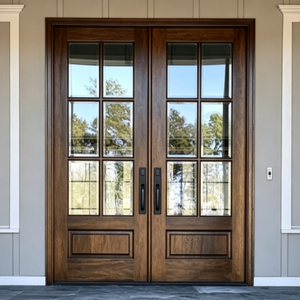
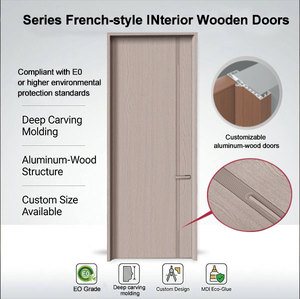
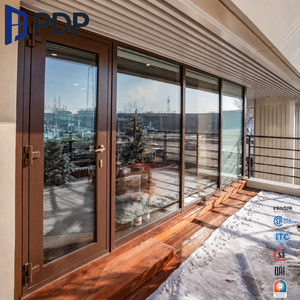
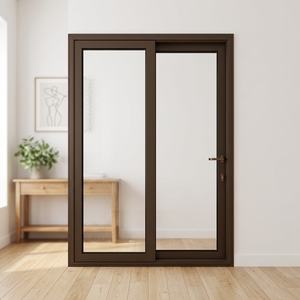
Our Foshan manufacturing facility resolves this environmental dichotomy through advanced aluminum-clad wood (Alu-Wood) architectural engineering. By utilizing solid multi-ply laminated timber (knot-free European Oak, Siberian Larch, or Russian Pine) on the interior living space and mechanically disconnected, extruded aluminum profiles (6063-T5 or 6060-T6 alloy) on the exterior facade, our systems decouple environmental exposure from interior comfort. The aluminum cladding acts as a maintenance-free shield against sleet, snowmelt, and atmospheric moisture, while the dense natural timber provides a massive thermal barrier and classic architectural warmth.
Differential Expansion Clips
Aluminum expands at approximately 23×10⁻⁶/K, whereas timber expands at roughly 5×10⁻⁶/K along the grain. We utilize independent, high-strength nylon snap-clips that permit unimpeded longitudinal sliding between materials, preventing bowing or delamination under sudden ±30°C temperature shifts.
PA66 GF25 Thermal Barriers
Profiles incorporate 25% glass-fiber reinforced polyamide (PA66 GF25) thermal break struts. This engineering isolates the outdoor metal shell from the indoor core, eliminating cold bridging and exceeding the heat transfer resistance values mandated by GOST 30970-2014.
Triple EPDM Vulcanization
Three-tier continuous sealing gaskets molded from cellular EPDM rubber retain elasticity at -45°C. This multi-barrier design blocks draft infiltration, stops wind-driven snow entry at class 4 tightness, and delivers superior sound deadening against suburban highway noise.
2. Localized Application Scenarios Across Moscow & Moscow Oblast
Architectural typologies across the Moscow metropolitan area vary widely, ranging from private suburban residences in prestigious forest belts to ultra-dense luxury penthouses and high-foot-traffic commercial destinations. Sourcing custom-dimensioned doors from our Chinese production hub gives architects and developers tailored solutions adapted to precise spatial constraints.
Luxury Countryside Estates
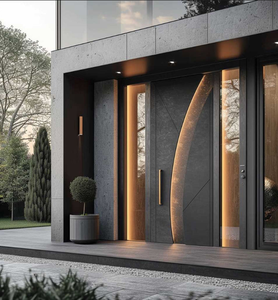
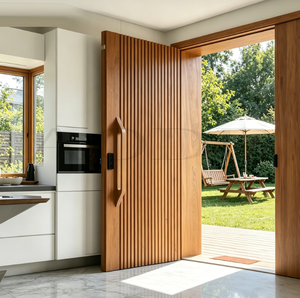
Private cottages (kottedzhi) in elite townships require oversized exterior pivot and casement doors. Featuring triple-pane low-E glass with warm TGI spacers, our doors maintain thermal efficiency without compromising panoramic views of pine woodlands.
Modern Low-Rise Subdivisions
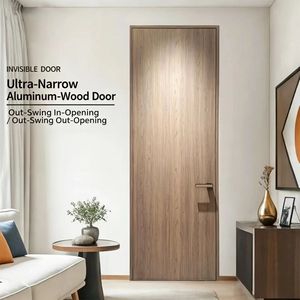
Contemporary suburban developments prioritize Scandinavian minimalism. Flush-faced aluminum-clad doors with concealed European hardware match crisp geometric facades while preventing winter thermal loss through structural thresholds.
High-Rise Penthouses
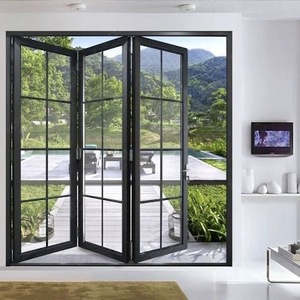
Balcony, terrace, and private access doors in central Moscow high-rises face high wind loads. Structural aluminum exteriors provide the rigidity to resist gale-force wind suction, while timber interiors harmonize with fine parquet flooring.
Historic Commercial Entrances
High-end boutiques, restaurants, and private offices need acoustic attenuation against heavy traffic noise (MKAD / Garden Ring). Laminated soundproof glass coupled with dense timber cores cuts ambient city noise by up to Rw 45 dB.
3. Comprehensive Engineering Matrix: Performance vs. Standards
Under Russian building regulations (SP 50.13330.2012 "Thermal Protection of Buildings" and GOST 23166-99), entrance enclosures in Moscow must achieve a minimum heat transfer resistance (R₀) of 0.80 to 1.0 m²·°C/W. Below is an engineering benchmark of our export-grade systems compared against standard market alternatives.
| Performance Characteristic | Standard Non-Thermal Aluminum | Conventional Solid Timber Door | DERCHI Clad Aluminum-Wood System |
|---|---|---|---|
| Heat Transfer Resistance (R₀, m²·°C/W) | 0.35 - 0.45 (Severe Condensation) | 0.65 - 0.75 (Marginal in Deep Frost) | ≥ 1.05 - 1.25 m²·°C/W (Exceeds GOST) |
| Acoustic Attenuation (Rw Rating) | 28 - 32 dB | 34 - 38 dB | 42 - 48 dB (Triple Laminated Infill) |
| Dimensional Stability (-30°C to +30°C) | High thermal contraction risk | Moisture absorption & frame binding | Absolute Stability (Floating Clip Joinery) |
| Exterior Maintenance Interval | 5 - 8 Years (Powder degradation) | 1 - 2 Years (Sanding, Re-varnishing) | 25+ Years (Fluorocarbon PVDF Cladding) |
| Air Permeability (EN 12207 / GOST) | Class 2 (Leakage at high winds) | Class 3 (Perimeter seal shrinkage) | Class 4 (Highest Tightness Rating) |
| Burglary Resistance Rating | RC1 - RC2 | RC2 | RC3 - RC4 (Anti-pry Mushroom Cam Pins) |
4. Emerging Architectural & Procurement Trends in the Russian Federation
The Moscow construction sector has undergone a fundamental transformation over recent years. Supply chain realignments have led prominent Russian real estate developers, facade contractors, and private homeowners to move past European intermediaries and establish direct ties with top-tier Chinese manufacturing operations. Three primary trends define current project specifications:
Shift toward Passivhaus-Grade Energy Efficiency: Rising heating costs and elevated ecological benchmarks in suburban developments (such as Millennium Park, Agalarov Estate, and Greenfield) have turned high insulation into a baseline expectation. Russian specifiers increasingly require warm-edge Technoform spacers, Low-E soft coatings on multiple glass surfaces, and krypton-gas-filled triple-glazed units to eliminate floor chills near large front door configurations.
Biophilic Interiors with Industrial Armor: Architectural aesthetics in Moscow favor warm, organic interiors using FSC-certified natural woods (American White Oak, German Beech, and Alpine Larch) combined with ultra-minimalist, architectural-bronze or carbon-grey fluorocarbon exteriors. This combination creates a natural indoor atmosphere while maintaining a rugged, weather-resistant outer facade.
Smart Access Control Integrated with Multi-System Smart Homes: Standard key entry is quickly being replaced across Moscow projects. Modern orders frequently require concealed electromagnetic multi-point locksets (such as Siegenia, Winkhaus, or KFV systems) integrated with 3D facial recognition, biometric fingerprint scanners, and automation systems compatible with Yandex Smart Home (Alice) and KNX automation protocols.