Engineered Architectural Solutions for Brazilian Development Schedules
Explore our precision-milled aluminum-wood casements, acoustic-rated clad fenestrations, heavy-duty commercial storefronts, and cyclonic weather-rated architectural entries.
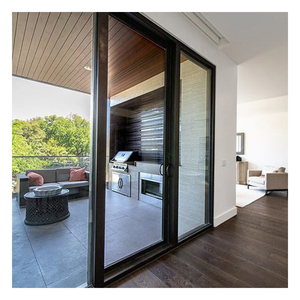
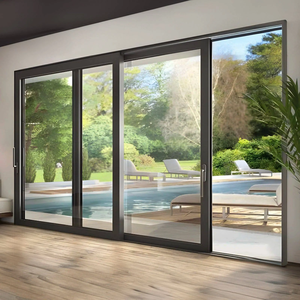
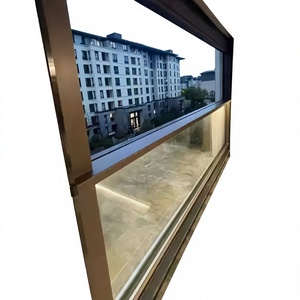
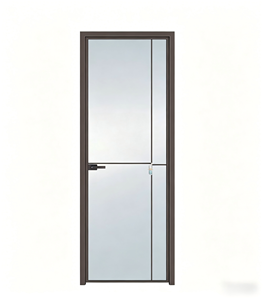
Technical Whitepaper: Precision Aluminium-Wood Composite Systems for the Brazilian Market
Specifying premium external joinery in the Federative Republic of Brazil requires balancing contradictory engineering demands. Brazilian architects and builders manage high relative humidity, intense ultraviolet radiation, severe oceanic chloride attack along the coastline, and high external noise indices across major metropolitan cores like São Paulo and Rio de Janeiro.
Traditional tropical hardwoods (such as Ipê, Cumaru, and Jatobá) have long served as primary luxury materials across South America. However, when exposed to direct weathering, thermal variation, and driving rains, monolithic timber structures experience volumetric expansion, warping, fiber delamination, and microbial decay. Standard uninsulated aluminum extrusions, while stable, act as thermal bridges that transmit outdoor heat directly into air-conditioned interior zones, accelerating HVAC operating costs.
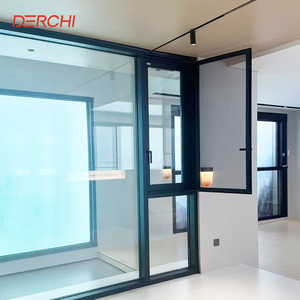
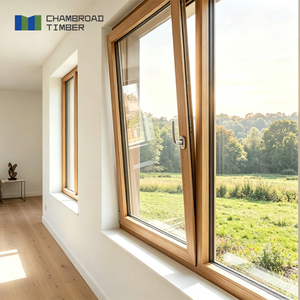
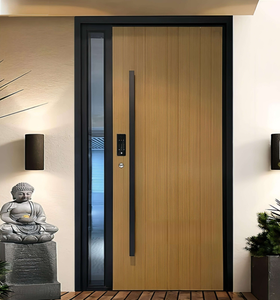
As an internationally recognized custom OEM/ODM architectural systems manufacturer, DERCHI operates a 180,000 square-meter specialized production facility in Foshan, China. We manufacture advanced Aluminium Wood Doors and Windows (Janelas e Portas de Madeira com Alumínio) engineered to resolve these issues. Our systems combine the warmth of internal structural wood profiles with an external, independent, back-ventilated exterior shield made from extruded aluminum alloys (6063-T5/T6).
Regional Applications Across Brazilian Microclimates
Brazil spans multiple distinct bioclimatic zones outlined in standard ABNT NBR 15220. Standard imported doors designed for temperate regions often fail when deployed without regional engineering adjustments. We customize frame cross-sections, timber species, surface treatments, and glazing matrices to suit individual macro-regions:
Litoral Paulistano & Rio de Janeiro (Maritime Marine)
Exposed to constant airborne salt spray (maresia) and driving Atlantic monsoons. Exterior aluminum extrusions are anodized to Class 20/25 (minimum 20-25 microns) or coated with AkzoNobel Interpon fluoropolymer PVDF systems, paired with marine-grade 316 stainless-steel locksets.
São Paulo Urban Center (High Acoustic Stress)
Dense vehicular traffic creates constant acoustic disturbance. Our clad wood door designs use multi-chambered EPDM synthetic vulcanized seals paired with asymmetric laminated acoustic glass assemblies (e.g., 6mm + 1.52PVB + 8mm Soundproof Low-E), achieving field noise reductions exceeding 42 dB.
Amazon Basin & Pantanal (Tropical Super-Humid)
Relative humidity regularly surpasses 90%. Solid timber receives vacuum multi-cycle anti-fungal impregnation, followed by water-based micro-porous breathable elastomeric coatings that prevent swelling, decay, and insect attack.
Planalto Central & Cerrado (Solar Radiation & Heat)
Characterized by intense solar incidence and dry seasons. Outer aluminum profiles protect inner wood from direct UV radiation, while structural thermal breaks keep frame thermal transmittance low, reducing residential cooling demands.
Sul / Curitiba & Serra Gaúcha (Thermal Cycling)
Wide temperature variations between sub-zero winter nights and warm summer afternoons. Thermal-break joinery prevents internal condensation on interior timber framing, protecting room-side structural and finish integrity.
Market Trends Shaping Brazilian Architectural Fenestration
The luxury real estate landscape in Brazil—anchored by developments in Alphaville, Jardins, Leblon, and private enclaves in Trancoso—is experiencing a structural shift away from pure timber doors toward hybrid, high-durability solutions:
1. Stringent Enforcement of ABNT NBR 10821: Building regulatory bodies and major construction firms (such as Cyrela, JHSF, and Multiplan) require certified compliance with performance standard ABNT NBR 10821 parts 1 through 5. Testing parameters cover wind pressure resistance, air permeability, water tightness, structural deflection, and ongoing acoustic performance. DERCHI tests all door assemblies beyond AS2047 and CE benchmarks, satisfying NBR 10821 load requirements.
2. Biophilic Design in Condomínios Fechados: High-end residential architecture emphasizes natural stone, clear glass, and natural timber. Aluminum-wood doors allow interior designers to preserve internal wood finishes (such as White Oak, Walnut, and Teak) without exposing structural woodwork to external tropical weathering.
3. Demand for Large-Span Pivot Systems: Architectural briefs in modern Brazilian villas call for monumental main entrances, often measuring up to 3.0 meters wide and 6.0 meters high. Heavy timber slabs of this scale often warp under solar heat. DERCHI reinforces its aluminum-wood pivot doors with concealed internal steel stabilization frameworks, continuous vertical thermal breaks, and heavy-duty concealed German pivot hinges rated for up to 1,000 kg.
Engineering Matrix: Comparison of Fenestration Systems for Brazil
| Performance Dimension | DERCHI Clad Aluminium Wood | Monolithic Solid Hardwood | Standard Non-Thermal Aluminum |
|---|---|---|---|
| Dimensional Stability | Stable (Floating clip decoupling) | Prone to seasonal warping & swelling | High expansion, frame-stable |
| Coastal Salt Spray Resistance | PVDF / Qualicoat Seaside certified | Requires regular sanding & re-varnishing | Prone to pitting if anodizing is low |
| Thermal Insulation (U-Value) | 0.8 – 1.4 W/(m²·K) (Energy efficient) | 1.6 – 2.2 W/(m²·K) (Moderate) | 3.5 – 5.8 W/(m²·K) (Thermal bridge) |
| Acoustic Attenuation (Rw) | 38 dB – 48 dB (Multi-gasket sealed) | 28 dB – 34 dB (Seal deterioration common) | 26 dB – 32 dB (Thin hollow walling) |
| Maintenance Cycle | 10–15 years for external finishes | Annual sanding, oiling, and lacquering | Regular cleaning needed |
Manufacturing Strengths: Foshan Production Base Serving Brazil
Guangdong Dejiyoupin Doors and Windows Co., Ltd. (DERCHI) operates from Foshan, the center of China's aluminum extrusion and precision manufacturing sector. We supply Tier-1 construction firms, developers, and private architectural clients worldwide:
Production Scale: Our 180,000-square-meter facility houses four dedicated extrusion and CNC machining centers, automated German timber processing equipment, a dust-free finishing shop, and computerized insulated glass lines. With over 600 full-time specialists, we manage high-volume commercial schedules alongside bespoke luxury villa orders.
R&D and Intellectual Property: DERCHI holds over 100 patents across structural profile design, acoustic dampening chambers, concealed drainage systems, and water-repellent joints. Our testing facility subjects completed door and window units to rigorous wind, water, and mechanical endurance tests before shipping.
Global Certifications: We build our systems to satisfy CE, ISO 9001, AS 2047, and UL fire-rating standards, providing technical test reports that support local engineering submittals and code inspections in Brazil.
Export Logistics for South American Ports: We regularly ship containerized door systems from Shenzhen and Guangzhou to major Brazilian ports, including Port of Santos (São Paulo), Port of Paranaguá, Itaguaí / Rio de Janeiro, and Suape (Pernambuco). Shipments use fumigated solid timber crates lined with waterproof films, desiccant charges, and structural corner guards to ensure zero damage during oceanic transit.
Frequently Asked Questions for Brazilian Importers & Developers
Request our technical engineering catalog, structural frame cross-sections, and sample finishes. Our technical team works alongside your design group to deliver custom door packages directly to your project site.