Curated Villa Entrance & Architectural Envelope Systems
Architecturally synchronized systems engineered to withstand West African atmospheric extremes. Every opening configuration undergoes rigorous cycle testing, structural wind-load certification, and marine salt-spray surface passivation.

Engineering Durability: Sourcing Villa Main Gates for Ghana's Micro-Climates
Procuring exterior perimeter main gates and building envelope elements for prime residential developments in Ghana involves distinct metallurgical, mechanical, and architectural challenges. The Gulf of Guinea creates an intensely aggressive C4 to C5 coastal marine environment spanning Greater Accra, Tema, and Takoradi. Concurrently, northern seasonal weather patterns drive the dust-laden Harmattan winds across Kumasi and the inland plateaus, exposing moving mechanical assemblies and painted surfaces to severe particulate abrasion.
1. Metallurgy & Chemical Resistance: Cast Aluminum vs. Mild Steel
In standard real estate specifications across Ghana, mild steel or forged wrought iron has historically served as the default material choice for villa main gates. However, Ghana's pervasive atmospheric humidity (averaging 75% to 90% year-round in coastal sectors) initiates electrochemical galvanic rust rapidly through standard paint layers. Solid cast aluminum alloys (primarily A356 and ADC12) eliminate this failure mode entirely. Aluminum naturally oxidizes to generate an impervious, self-passivating alumina barrier film. When combined with our automated 7-stage pre-treatment wash and marine-grade AkzoNobel powder coatings, the finished gates endure 3,000+ hours of continuous neutral salt spray (NSS) testing per ASTM B117 without blistering, peeling, or delamination.
2. Structural Integrity & Wind Pressure Resistance
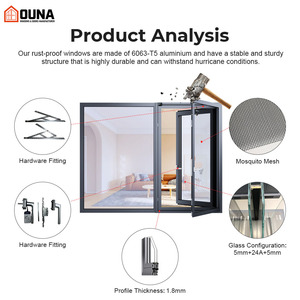
West African seasonal monsoon squalls generate rapid, localized pressure deltas with peak wind velocities exceeding 120 km/h. Main gates constructed with excessive sheet dimensions without underlying internal structural ribbing experience torque distortion, hinges binding, and automatic operator motor burnouts. Our villa entrance gates are engineered with internal reinforced multi-chamber aluminum structural skeletons (wall thicknesses ranging from 3.0mm to 5.5mm at critical load anchors), certified to withstand structural pressures equivalent to AS 2047 N6 structural criteria. This structural rigidity ensures that motorized dual-swing and cantilever sliding gates track smoothly year after year without sag.
3. Harmattan Infiltration Defense and Mechanical Resilience
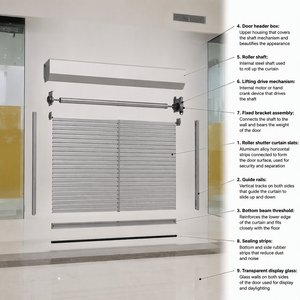
Between November and March, the dry, dust-heavy northeastern Harmattan wind carries ultra-fine quartz particles that settle into traditional gate tracks, lock cylinders, and exposed rolling gearboxes. For motorized sliding gate installations, our engineering configurations recommend overhead cantilever systems or fully enclosed recessed track profiles fitted with self-cleaning nylon brushes. Bearing units utilize German-engineered IP67 sealed stainless steel bearings, preventing particulate contamination and ensuring zero-maintenance reliability regardless of seasonal dust loading.
Precision Deployment Across Prestigious Ghanaian Enclaves
From the oceanfront residential tracts of Greater Accra to the rolling estate expanses of Ashanti, our entrance gate systems are tailored to the architectural typologies and environmental exposures of Ghana's premium real estate sectors.
Cantonments, Airport Hills & East Legon, Accra
These ultra-luxury enclaves require monolithic contemporary gates and high-security architectural pivot entries. Homeowners prioritize monumental scale, seamless biometric access integration, and complete privacy shielding via solid cast aluminum panels.
Ada Foah, Labadi & Kokrobite Coastal Estates
Beachfront properties exposed to direct airborne salt spray from the Atlantic. Every component—from internal fasteners and 316-grade stainless steel pivots to PVDF electrostatic coatings—is calibrated to counteract rapid marine corrosion.
Kumasi (Ridge, Ahodwo) & Sekondi-Takoradi
Extensive country villas and expansive multi-generational family compounds require heavy-duty automated cantilever sliding gates with widths reaching up to 10 meters, offering seamless vehicular transit and anti-harmattan mechanical protection.
Emerging Architectural & Procurement Trends in Ghana
Structural evolution in Ghana's high-end residential construction sector is accelerating. As institutional developers and diaspora returnees invest heavily, gate procurement specifications have evolved substantially.
Solar-Integrated Automation Systems
Given localized grid voltage fluctuations in sub-urban Accra and Kumasi, forward-thinking builders require gate automation equipped with integrated 24V DC battery backups directly coupled to dedicated micro-solar panels. This guarantees operational security during unexpected municipal power interruptions.
Shift from Wrought Iron to Solid Cast Aluminum
Ghanaian estate managers are actively calculating the total cost of ownership (TCO). While traditional iron gates initially appear budget-friendly, the continuous annual expense of manual scraping, anti-rust priming, and repainting makes maintenance-free cast aluminum the preferred lifecycle investment.
Unified Envelope Architectural Language
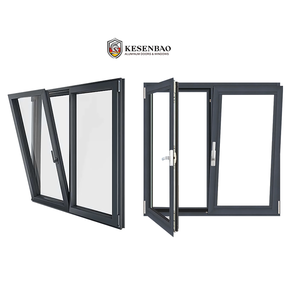
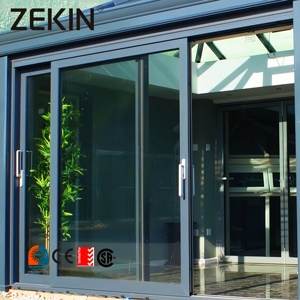
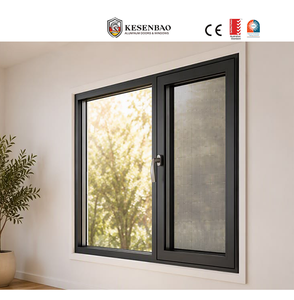
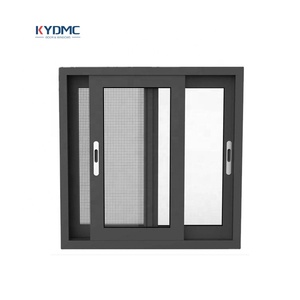
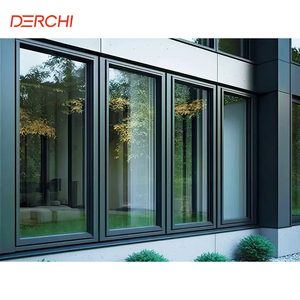
Architects are dispensing with mismatched perimeter and structural elements. Current design practices mandate that exterior gates match the bronze, matte black, or champagne anodized finishes of the villa's high-performance thermal-break sliding doors and casement windows for cohesive visual harmony.
Engineered by Guangdong Dejiyoupin (DERCHI)
Headquartered in the global aluminum hub of Foshan, Guangdong, we represent one of China's Top 10 luxury door and window manufacturers, commanding over 25 years of specialized export excellence.
180,000 ㎡ Manufacturing Hub
Integrated state-of-the-art aluminum extrusion, precision casting, CNC fabrication, and robotic automated coating lines under one unified quality management standard.
Global Testing Certifications
All structural door and window systems meet stringent international testing: CE, ISO 9001, AS 2047 N6 cyclone certification, and UL fire-rating benchmarks.
Free CAD & BIM Engineering
Our dedicated engineering department drafts full 1:1 CAD shop drawings, connection detail blueprints, and electrical layout guides tailored to your civil gate piers.
Seaworthy Export Crating
Heavy-duty, fully enclosed fumigated wooden crates with interior moisture barriers, desiccant packs, and steel strap reinforcements built for transit directly to Tema Port.
Frequently Asked Questions: Sourcing & Importing to Ghana
Comprehensive answers addressing common questions regarding international logistics, customs clearance, electrical compatibility, and installation support.
Q1 What shipping terms do you offer for deliveries to Ghana?
We routinely supply on FOB (Foshan/Guangzhou/Shenzhen), CIF Tema, or CIF Takoradi terms. For private villa owners building residences while living abroad in the UK, USA, or Europe, we can also coordinate with local freight forwarders in Accra to assist in handling port clearance and door-to-site trucking.
Q2 How does cast aluminum stand up to the coastal salt air in Greater Accra?
Cast aluminum is immune to ferrous rust. We use high-purity alloy ingots with negligible copper content. Finished units receive an industrial chemical conversion wash followed by Qualicoat-certified fluorocarbon (PVDF) powder coating, ensuring total resistance to peeling and salt corrosion in high-salinity shoreline zones.
Q3 Can your motorized gate automation cope with local electricity specifications?
Yes. Our motorized operators are configured for Ghana's electrical standard: 230V AC at 50Hz. All systems integrate broad-range voltage regulation transformers and high-joule surge suppressors to shield the delicate PCB control logic against power surges and brownouts.
Q4 Can you fabricate bespoke gate sizes for custom concrete perimeter piers?
All systems are 100% custom-built. Once your on-site civil contractor completes the concrete boundary piers, you share the finished clear opening width, height, and grade variations. Our engineering team prepares detailed CAD approval drawings showing mounting brackets, cable conduits, and clearances before production.
Q5 What is the standard production and shipping lead time to Tema Port?
Bespoke gate engineering and factory production typically requires 25 to 35 business days depending on design complexity. Direct ocean freight from South China ports to Tema Port, Ghana, generally ranges between 35 and 45 days. We advise factoring this timeline into your structural roof and perimeter wall construction phases.
Q6 How does our local Ghanaian contractor install these heavy gates?
Every gate is fully pre-assembled, aligned, and test-operated in our Foshan factory prior to crating. We supply step-by-step CAD installation guides, video instructions, and color-coded wiring schematics. Additionally, our English-speaking technical engineers are available for live video coordination with your civil contractor during installation.
Begin Your Architectural Consultation for Ghana
Send your site dimensions, architectural sketches, or structural opening schedules today. Our structural engineering team will review your specifications and supply a comprehensive technical quote and preliminary CAD drawing within 24 hours.
Contact Us