Precision-Engineered Aluminum Windows & Architectural Openings
Engineered to withstand extreme cyclical pressure differentials, coastal salt-fog exposure, and rigorous energy building envelopes across Australia, North America, Southeast Asia, and Europe.
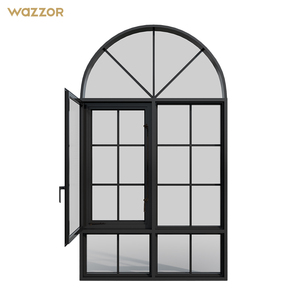
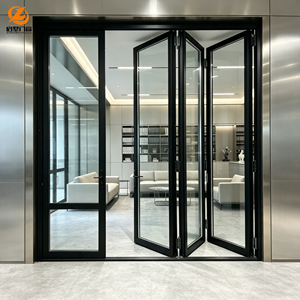
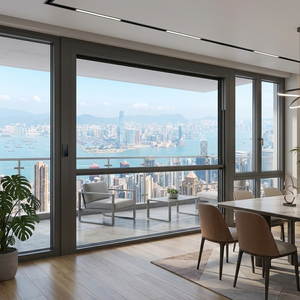
Evolutionary Engineering in High-Performance Aluminum Fenestration
Modern building envelope standards require fenestration systems to act not merely as transparent barriers, but as active thermodynamic and structural envelopes. China's leading manufacturers have transitioned from basic profile extrusion to precision structural system engineering.
Multi-Chamber Polyamide PA66 Thermal Barriers
The historical vulnerability of aluminum—its high thermal conductivity of approximately 160-200 W/(m·K)—is completely mitigated by polyamide 66 reinforced with 25% glass fiber (PA66 GF25). By engineering multi-cavity thermal break extrusions with polyurethane or aerogel foam filling, systemic profile U-values (Uf) are routinely reduced below 1.4 W/(m²·K).
- Co-extruded low-emissivity radiation insulation strips
- Isothermal line optimization across frame profiles
- Zero-condensation risk at -20°C ambient temperatures
Severe Atmospheric & Cyclone Structural Engineering
Fenestration destined for cyclone-prone coastlines (such as Florida, Northern Australia, the Philippines, and the Caribbean) undergoes static and dynamic pressure validation. Profile wall thicknesses have advanced to 2.0mm–3.0mm primary structural extrusions utilizing virgin 6063-T6 or 6061-T6 metallurgical billets.
- AS 2047 Ultimate Limit State wind pressure exceeding 4500 Pa (N6 class)
- Large missile impact compliance (ASTM E1886 / ASTM E1996)
- EPDM continuous co-extruded gasket matrix preventing marine wind-driven water ingress
Advanced IGU Glazing & Spectral Selectivity
Insulated Glass Units (IGUs) exported from premier Chinese fenestration plants incorporate triple silver magnetron sputtering Low-E coatings, warm-edge silicone structural composite spacers, and 95% argon gas filling to maximize visible light transmission while arresting solar infrared heat gain.
- Solar Heat Gain Coefficients (SHGC) engineered down to 0.22
- Sound Transmission Class (STC) ratings above 42 dB with acoustic PVB interlayers
- Desiccant-integrated warm edge technology eliminating edge-seal condensation
Fluorocarbon (PVDF) & Qualicoat Class 2 Finishes
Coastal architectural projects encounter aggressive saline deterioration. Leading exporters utilize automated 3-coat fluorocarbon PVDF systems containing a minimum of 70% Kynar 500 / Hylar 5000 resin, withstanding over 4,000 hours of continuous ASTM B117 neutral salt spray testing without blistering or chalking.
- Qualicoat Class 2 super-durable thermosetting architectural powder coating
- Hardcoat architectural anodizing conforming to AAMA 611 Class I standards
- Resistance against industrial chemical atmospheric pollution and extreme UV exposure
Integrated Smart Mechatronics & Motorized Automation
The rapid convergence of architectural façade systems with Building Automation Networks (BMS) has propelled motorized vertical guillotine windows, smart sliding sensors, and conceal-axis pivot operators to the center of procurement specifications for luxury estates and commercial hospitality.
- Heavy-duty concealed electric drive actuators concealed within the head profile
- Direct integration with smart rain, anemometer, and thermal sensors
- KNX, RS485, and Zigbee protocol compatibility for total home automation
Future Aluminum Window Procurement Trends (2025–2030)
Procurement directors, general contractors, and overseas developers are re-evaluating risk models, cost-benefit curves, and factory qualification matrices when contracting Chinese fenestration suppliers.
Unitized Pre-Glazed Window Systems Over Knock-Down (KD)
Rising overseas jobsite labor rates in North America, Australia, and the UK make field-glazing economically non-viable. Project developers increasingly mandate pre-glazed, factory-assembled and sealed unitized window systems shipped in steel racks, ensuring factory-controlled silicone adhesion and reducing site labor by over 60%.
Direct BIM Digital Twins & Shop Drawing Interoperability
Tier-1 Chinese exporters no longer quote from paper architectural elevations. Procurement teams now expect native Revit / IFC BIM models and parametric parametric drafting, enabling collision checks with structural steel or precast concrete before extrusion dies are even cut.
Verified EPD & Low-Carbon Recycled Aluminum Feedstock
With cross-border carbon regulations (such as the EU CBAM) gaining traction, international tenders now prioritize manufacturers utilizing hydroelectric-smelted low-carbon primary aluminum billets or certified scrap-recycled content backed by ISO 14025 Environmental Product Declarations (EPD).
Third-Party Audits & Factory VR Verification
Remote site audits and cloud-based 360-degree VR factory inspections have replaced routine multi-stop vendor evaluation flights. Overseas clients routinely require live stream dimensional verifications, pull-tests on structural silicone seals, and verified test certificates from NATA- or AAMA-accredited laboratories.
Engineered Heavy-Duty Shipping Logistics & Crate Design
Freight survival is an engineering discipline. Procurement contracts increasingly specify fumigated A-frame steel shipping pallets, desiccant saturation calculation metrics for container ocean humidity fluctuations, and corner-impact damping to completely eradicate sea-transit glass breakage.
International Fenestration Performance Standards Matrix
Benchmark comparison across primary export standards engineered and tested at our Foshan manufacturing base.
| Performance Vector | Australian Standard (AS 2047 / AS 1288) | North American Standard (AAMA / WDMA / NFRC) | European Standard (EN 14351-1 / CE) |
|---|---|---|---|
| Structural Deflection | Span / 250 under Serviceability Limit State (SLS); Span / 180 design parameter | L / 175 span deflection limit under specified positive/negative design load | Class 1 to Class 5 (relative frontal deflection within span limits) |
| Water Penetration Resistance | Static pressure up to 450 Pa (Residential) and 600+ Pa (Commercial / N6) | Zero leakage at minimum 15% of positive design load (e.g. 580 Pa to 720 Pa) | Class 1A through Class 9A (unprotected); Class Exxx (custom test above 600 Pa) |
| Air Infiltration Rating | Level 1: ≤ 1.0 L/s·m² for air-conditioned envelopes | ≤ 0.3 cfm/ft² (1.5 L/s·m²) standard; high-efficiency ≤ 0.1 cfm/ft² | Class 3 (≤ 9 m³/h·m²) to Class 4 (≤ 3 m³/h·m²) airtight performance |
| Thermal Envelope U-Factor | Uw ≤ 2.2 W/(m²·K) for standard; thermally broken triple glaze down to 1.1 | NFRC certified U-factor ≤ 0.28 BTU/(hr·ft²·°F) (~1.59 W/m²K) | Uw down to 0.80 W/(m²·K) for Passivhaus / nZEB certified assemblies |
| Impact & Security Validation | AS 5041 cyclonic projectile impact & screen knife shear verification | ASTM E1886/E1996 Large Missile 'D' impact (50 ft/s timber missile + 9000 cycles) | EN 1627 RC2 to RC3 resistance against forced physical intrusion attempts |
Guangdong Dejiyoupin Doors and Windows Co., Ltd. (DERCHI)
Founded in Foshan, Guangdong—the global epicenter of precision aluminum extrusion—DERCHI stands as a Top 10 premium architectural door and window manufacturing enterprise. Operating across a monolithic 180,000 square-meter intelligent manufacturing facility, we unite advanced German CNC profiling, automated double-head mitering saws, robotic robotic glass processing lines, and full-spectrum in-house testing laboratories.
For more than 25 years, our specialized research, engineering, and export teams have delivered complex fenestration solutions across the United States, Canada, Australia, the United Kingdom, the Middle East, and Southeast Asia. Highlighted by our technical presentation at WORLDBEX 2025 in the Philippines, our building systems are celebrated for surviving typhoons, heavy monsoon cycles, and harsh coastal humidity without structural degradation.

Frequently Asked Questions by Overseas Contractors & Specifiers
Direct technical answers addressing window engineering, building code verification, tariffs, packaging, and factory warranties.
Q1 How does DERCHI ensure windows comply with local building codes like AS 2047, NFRC, or CE?
Every window series exported to Australia, the United States, or Europe undergoes rigorous destructive and cyclical testing at accredited independent testing bodies (including NATA-accredited labs for AS 2047 N6 wind/water tests, and NFRC/AAMA testing protocols for North America). We supply authentic test certificates, stamped calculation reports, and engineering shop drawings demonstrating project-specific wind load (SLS/ULS) and U-factor conformity.
Q2 What is the standard structural alloy grade and wall thickness of your profiles?
We extrude strictly from virgin 6063-T5, 6063-T6, or 6061-T6 architectural aluminum alloy billets. Our standard residential thermal break profiles possess a minimum wall thickness of 1.4mm to 1.8mm, whereas commercial curtain walls, heavy sliding doors, and high-windload hurricane window profiles feature heavy-duty 2.0mm to 3.0mm primary structural walls conforming to ASTM B221 and GB/T 5237 standards.
Q3 What are the lead times for custom bespoke shop drawings and production?
Upon receiving your schedule or CAD elevations, our in-house engineering team issues full CAD shop drawings within 48 to 72 hours for client sign-off. Following approval of drawings and color swatches, standard production runs require 25 to 35 calendar days. Complex custom extrusions or specialized anodizing finishes require 40 to 45 days.
Q4 How does the factory eliminate transit breakage for ocean container freight?
We deploy export-grade heavy timber or reinforced steel A-frame packing pallets. Glass surfaces are protected with static peelable PE films, while frame members feature closed-cell foam wrapping and corner protectors. Desiccant bags inside shrink-wrapped crates prevent condensation fogging across ocean voyages through equatorial climates.
Q5 Can you engineer hurricane-rated windows for coastal velocity zones (HVHZ)?
Yes. Our hurricane series utilizes structural multi-point locking systems, strengthened mullion chambers, and laminated architectural safety glass incorporating thick 1.52mm or 2.28mm SentryGlas (SGP) or PVB interlayers. These assemblies pass continuous positive and negative cyclical wind pressure loads up to +/- 100 PSF and withstand direct missile impact.
Q6 What surface treatment guarantees are offered for extreme saline or tropical environments?
For installations within 1 kilometer of the open ocean, we specify Qualicoat Class 2 certified thermoset powders or AkzoNobel / PPG Duranar 70% Kynar 500 fluorocarbon PVDF finishes. These treatments come with comprehensive 15- to 25-year manufacturer warranties against chalking, fading, peeling, or filiform corrosion.
Q7 What hardware systems and multi-point locks do you incorporate?
We partner with premier global hardware manufacturers such as German Siegenia, Roto, Hoppe, and G-U, alongside top-tier custom stainless steel hardware systems tested beyond 100,000 opening cycles. Stainless steel SUS304 and SUS316 hardware ensures smooth mechanics and extreme corrosion resilience.
Q8 How does DERCHI handle project variations, punch lists, and on-site replacement glass?
All delivered crates are barcoded by building floor, unit number, and window tag to accelerate site sorting. For large projects, we furnish 1-2% critical hardware spares, extra weather-strips, and backup installation components. If unexpected dimension mismatches occur on-site, our rapid-response line fabricates and air-expresses replacement extrusions directly.
Accelerate Your Fenestration Procurement With DERCHI
Submit your architectural elevations, opening schedules, or window specifications. Our senior fenestration engineers will provide structural calculations, optimal profile configurations, and transparent factory-direct pricing within 24 hours.