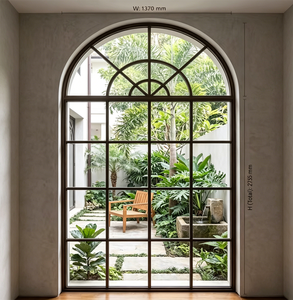
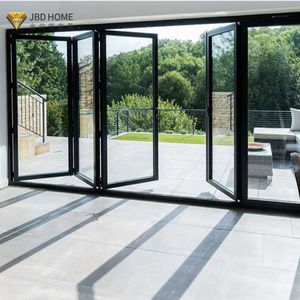
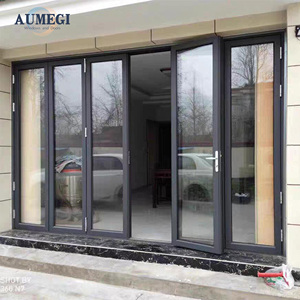
Explore our certified portfolio of heavy-duty thermal break aluminum systems, fiber-reinforced architectural doors, and cyclonic-tested impact windows engineered for high-end residential, hotel, and commercial envelopes.
Operating from Foshan, Guangdong—the world’s epicenter of precision aluminum extrusion—Guangdong Dejiyoupin Doors and Windows Co., Ltd. (DERCHI) sets the international standard for high-performance architectural systems.
DERCHI doors and windows are rigorously certified to the strictest oceanic and European benchmarks, including AS 2047 N6 cyclonic testing, CE EN 14351-1, and ISO 9001. Our systems withstand typhoon-force wind gusts exceeding 4,500 Pascals without permanent structural deflection.
Long-term partners of major international commercial developers recognize our engineering parity with top German systems. Utilizing automated 5-axis CNC machining, structural corner crimping, and PA66-GF25 reinforced polyamide strips, we deliver micron-level joint accuracy.
We provide full shop drawing generation, thermal simulation (U-value modeling), and acoustic resonance testing prior to extrusion. From WORLDBEX 2025 showcases to prestigious beachfront developments in Manila, Sydney, and Vancouver, we bridge design intent and site installation.
In modern architectural fenestration, standard thermal break doors often encounter mechanical and thermal limitations when deployed in oversized heights (>3.2 meters), severe cyclonic zones, or aggressive marine microclimates. The emergence of Aluminium Fiber Door systems—hybrid assemblies integrating high-tensile 6063-T6 virgin aluminum alloy skins with aerospace-grade fiber-reinforced polymer (FRP) matrices, glass-fiber reinforced polyamide (PA66-GF25) structural thermal struts, and multi-layer composite internal cores—has redefined building envelope durability.
Unlike conventional doors that rely solely on hollow aluminum extrusions or timber sub-frames, aluminium fiber composite doors exploit the anisotropic mechanical advantages of continuous fiber strands embedded within a thermosetting resin matrix. This delivers a tensile strength-to-weight ratio superior to structural steel, eliminating the chronic "bimetallic bowing effect" (differential thermal expansion between interior and exterior aluminum leaves exposed to direct sunlight).
| Performance Metric | Standard Aluminum Door | Solid Hardwood Door | uPVC Steel-Core Door | DERCHI Aluminium Fiber Door |
|---|---|---|---|---|
| Thermal Transmittance (U-Value) | 3.8 - 4.5 W/m²K | 2.1 - 2.8 W/m²K | 1.8 - 2.2 W/m²K | 0.85 - 1.25 W/m²K |
| Cyclonic Resistance (AS 2047) | N3 (1500 Pa) | N2 (1000 Pa) | N3 (1500 Pa) | N6 Cyclonic (≥ 4500 Pa) |
| Salt Spray Corrosion Resistance | 480 Hours (ASTM B117) | Degrades / Rots | Yellows / Chalks | 3,000+ Hours (C5-M Marine) |
| Dimensional Swelling / Warping | Low (Prone to Bowing) | Severe (> 4.5% moisture) | Moderate (Thermal Creep) | Zero (< 0.02% Linear Drift) |
| Acoustic Attenuation (STC / Rw) | 28 - 32 dB | 30 - 34 dB | 32 - 36 dB | 42 - 48 dB (Acoustic Infill) |
For coastal villas in Southeast Asia (Manila, Da Nang, Phuket, Bali) and hurricane-prone oceanic territories, atmospheric salt particulates create aggressive galvanic corrosion. DERCHI implements a three-tier surface passivation process:
First, multi-stage chemical pretreatment eliminates surface oxides; second, an electrostatically applied PVDF (polyvinylidene fluoride) fluorocarbon coating compliant with AAMA 2605 specifications guarantees resistance to color fade (ΔE ≤ 5 across 10 years); third, all hinges, multi-point lock rods, and mechanical pivot pins are forged from non-magnetic grade 316 austenitic stainless steel.
Our internal core formulations combine expanded ceramic aerogel boards with dense mineral wool fiber matrices. This configuration achieves an acoustic transmission loss (Rw) exceeding 42 dB, insulating interiors from airport corridors, urban traffic, and monsoon squalls. Furthermore, the non-combustible fiber composite core adheres to UL-10C and EN 1634-1 fire safety integrity up to 90 minutes, halting heat propagation across egress boundaries.
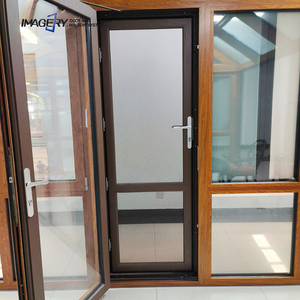
B2B importers, EPC contractors, and master developers are shifting procurement strategies toward higher carbon transparency, extreme aperture engineering, and intelligent access systems.
Architects are eliminating conventional panel divisions in favor of floor-to-ceiling pivot entrance doors exceeding 2.2 meters in width and 4.0 meters in height. These structural panels require fiber-reinforced internal trusses to maintain squareness without sagging, paired with heavy-duty oil-bath concealed pivot hardware supporting over 500 kg.
Architecture Shift • Grand EntrancesBuilding codes in North America, Europe, and Australasia now mandate overall envelope U-values under 1.0 W/m²K. Procurement teams are moving away from traditional cold-bridge aluminum frames toward multi-cavity thermal break systems equipped with aerogel-infused fiber cores and triple-glazed Low-E argon assemblies.
Sustainability • DecarbonizationSpecifiers increasingly demand turnkey integrated smart hardware: multi-point motorized solenoid drop-bolt locks, concealed biometric fingerprint scanners, facial recognition cameras, and integration with KNX/Zigbee building automation protocols, eliminating unsightly aftermarket retrofitting on project sites.
Technology • Smart SecurityGlobal developers bidding for LEED Platinum or BREEAM Outstanding certifications require documented Environmental Product Declarations (EPD). Modern procurement demands extruded profiles produced using hydroelectric green aluminum with certified recycled billet ratios over 60% to curtail embodied carbon.
ESG Standards • EPD ComplianceSkyrocketing job-site labor costs in Australia, Singapore, the US, and Europe have stimulated procurement of completely pre-hung, factory-glazed door packages. Factory-calibrated systems arrive with sub-frames, sill flashing trays, and perimeter acoustic seals pre-installed, reducing on-site installation labor by up to 65%.
Efficiency • Labor OptimizationHeightened frequency of super typhoons and extreme barometric pressure differentials has pushed AS 2047, ASTM E330, and Miami-Dade hurricane standards to the forefront of global tenders. Façade contractors now require verified dynamic water penetration resistance up to 700 Pa and high-velocity debris impact ratings.
Safety • Extreme WeatherAuthoritative guidance addressing the critical technical, logistical, and compliance considerations required by international procurement officers, facade consultants, and general contractors.
Standard aluminum doors utilize extruded hollow alloy profiles with simple thermal breaks, making them vulnerable to deflection under extreme wind loads and prone to bimetallic warping in tall formats. Aluminium fiber composite doors integrate high-modulus continuous fiber-reinforced matrices and PA66-GF25 structural polyamide struts within an insulated composite core. This delivers 300% greater rigidity, prevents thermal warping, and eliminates condensation in coastal and alpine climates.
Our door systems undergo physical chamber testing certified by NATA-accredited laboratories. Testing encompasses structural deflection under positive/negative air pressure up to 4,500 Pa (Serviceability and Ultimate Limit State), air infiltration testing (AS 4420.4), water penetration resistance up to 700 Pa (AS 4420.5), and cyclic wind fatigue loading simulating category 5 cyclonic events.
For oceanfront installations within 500 meters of salt spray (ISO 12944 C5-M environment), we specify 3-coat PVDF fluorocarbon coatings (AAMA 2605 compliant) with a minimum dry film thickness of 40 microns, or 25-micron architectural hard-coat anodizing. All fastening hardware, internal pivot arms, and strike plates are grade 316 stainless steel to prevent galvanic corrosion.
Yes. Our engineering department provides complete 2D CAD shop drawings (DWG/PDF), structural wind load calculations, anchor bolt placement guides, and 3D Revit BIM models. Production commences only after architectural sign-off on extrusion profiles, opening schedules, glass build-ups, and perimeter flashing interfaces.
Standard production cycles range from 25 to 35 business days following final CAD sign-off and deposit receipt. Products are packed for long-distance maritime transit using multi-layer PE surface protective wrap, shock-absorbing corner caps, honeycomb heavy board, and fumigated steel-strapped plywood crates compliant with ISPM-15, ensuring zero container-transit damage.
DERCHI delivers identical structural integrity, thermal performance, and hardware refinement—frequently utilizing matching European hardware from Siegenia, GU, and Roto—at a 30% to 45% competitive value advantage. Our 180,000 ㎡ production plant in Foshan ensures complete supply chain integration from ingot casting to final QC, verified in over a dozen British and Australian luxury villa projects.
Whether you require custom oversized pivot doors for an ultra-luxury residence or full unitized fenestration packages for multi-story hotel developments, our engineering team in Foshan provides CAD proposals, wind load assessments, and factory-direct pricing within 24 hours.