Engineered Architectural Window & Door Solutions
Explore precision-engineered acoustic fenestration systems combining heavy-gauge 6063-T6 extruded aluminum profiles, multi-chamber thermal breaks, acoustic PVB/SGP interlayers, and multi-point perimeter seals.
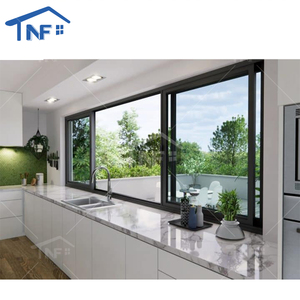
Foshan NF Modern Custom Made Aluminum Sliding Windows
Engineered with acoustic track silencers, double-glazed laminated glass units, and heavy-duty smooth glide mechanisms.
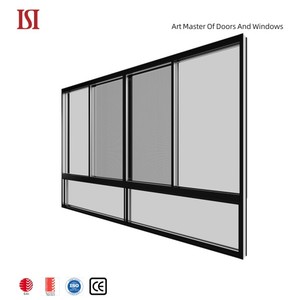
Hurricane-Proof Aluminum Storm Windows Horizontal Sliding
Combines structural wind load resistance with high-mass acoustic insulation designed for extreme weather and urban density.
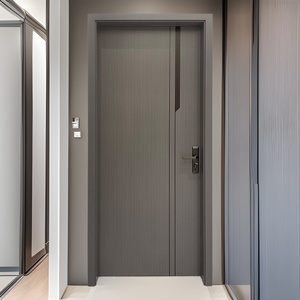
Anti-Theft Acoustic All-Aluminum Interior Bedroom & Study Door
Heavy honeycombed core with perimeter acoustic drop-down bottom seals achieving STC 38+ performance for residential quiet zones.
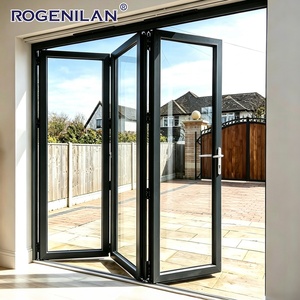
Thermal Insulation Triple Glass Aluminum Accordion Folding Doors
Engineered with polyamide PA66 thermal barriers, argon gas fills, and triple-layer laminated acoustic damping panels.
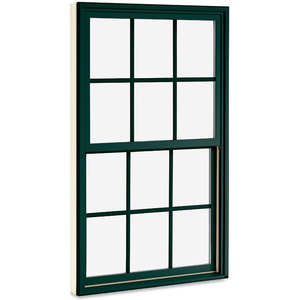
Arch Australia Standard Aluminium Double Glazed Vertical Sliding Window
Custom curved architectural design compliance with AS 2047 structural and acoustic performance parameters.
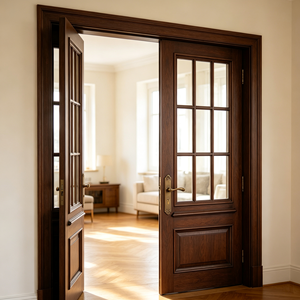
Sound Insulated Aluminum Double Tempered Glass Swing Door for Urban Villas
Architectural grade multi-point compression locking hardware creating airtight perimeter seals against environmental decibels.

Customized Insulated Front Entry French Casement Doors
Thermal barrier frames coupled with dual-seal continuous EPDM gaskets to attenuate high-frequency street noise.
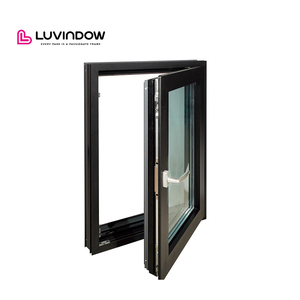
Hurricane Impact Tilt-Turn Smart Glass Aluminum Windows
Multi-axis German compression hardware with switchable PDLC smart glass and laminated acoustic interlayers up to STC 45.
White Paper: The Physics of Acoustic Windows & Fenestration Decibel Attenuation
Modern architectural acoustic design demands strict adherence to sound transmission physics. Unwanted environmental noise—originating from aviation routes, heavy rail, metropolitan highway traffic, and active commercial zones—spans broad frequency spectrums from 50 Hz low-frequency rumbles to 5000 Hz piercing sirens. Standard single-pane and basic double-glazed windows fail to mitigate these disturbances due to structural resonance and acoustic flanking. As an industry-leading China top aluminium soundproof windows manufacturer, our factory applies acoustic transmission loss engineering to neutralize environmental decibels before they bridge building envelopes.
Sound attenuation in fenestration is quantified primarily through the Sound Transmission Class (STC, ASTM E413) and Outdoor-Indoor Transmission Class (OITC, ASTM E1332), as well as the weighted sound reduction index (Rw, ISO 717-1). The fundamental physical mechanism governing acoustic attenuation relies on three pillars: Mass, Asymmetric Dampening, and Airtight Elastic Decoupling. Mass Law dictates that doubling the surface mass of glass increases sound transmission loss by approximately 5 to 6 dB. However, homogeneous monolithic glass exhibits a critical "coincidence dip"—a frequency threshold where the sound wave speed in air matches the bending wave speed of glass, severely compromising noise isolation.
| Glazing Specification | Overall Configuration (mm) | Acoustic Interlayer Type | Avg. STC Rating | Primary Target Frequency Range |
|---|---|---|---|---|
| Standard Insulated Glass (IGU) | 5mm + 12A + 5mm | Air / Argon Cavity | 30 - 32 dB | High Frequency (Speech, Whistles) |
| Asymmetric Acoustic Double Glazing | 6mm + 16A + 8mm | Argon Filled + Warm Edge | 35 - 37 dB | Mid-Range Traffic Noise |
| Laminated Acoustic Monolithic | 6mm + 0.76 PVB + 6mm | Acoustic Grade Polyvinyl Butyral | 37 - 39 dB | Urban Ambience & Rail Transitions |
| Heavy Asymmetric Laminated IGU | 8.76 Acoustic Lam + 16Ar + 6mm | 0.76mm Acoustic PVB / SGP | 42 - 45 dB | Highways, Dense Urban Intersections |
| Triple Glazed Multi-Cavity System | 10.76 Lam + 12Ar + 6mm + 12Ar + 8mm | Dual Acoustic PVB Layers | 48 - 52 dB | Airport Flight Corridors & Severe Noise |
To overcome the coincidence resonance frequency drop, our engineering team utilizes asymmetric laminated glass composite configurations. By combining glass panes of unequal thicknesses (for example, pairing an 8.76mm laminated outer pane with a 6mm tempered inner pane), the coincidence dip of each pane occurs at entirely distinct frequencies, canceling resonance vulnerabilities. Furthermore, our specialized acoustic PVB (Polyvinyl Butyral) resin core transforms vibrational mechanical acoustic energy into imperceptible thermal micro-energy via visco-elastic shear dissipation. This dampens structural sound bridging across frequencies where human ears are most sensitive.
Equally critical to glass chemistry is the aluminum frame profile architecture. Aluminum intrinsically possesses high tensile strength and rigid structural properties; however, without decoupling, hollow extruded aluminum can act as an acoustic resonator. Our custom acoustic window profiles incorporate multi-chamber 6063-T6 aluminum extrusions paired with high-density polyamide (PA66 GF25) thermal breaks and internal acoustic polyurethane foamed inserts. Combined with dual and triple EPDM vulcanized co-extruded gaskets and multi-point perimeter compression gearboxes, our systems systematically eliminate acoustic flanking paths, air infiltration, and resonance transmission.
Future Procurement Trends for Acoustic Fenestration
Global procurement parameters are evolving rapidly. Commercial specifiers, developers, and distributors are recalibrating their RFQ matrices based on performance-driven criteria.
Ultra-Low U-Value & Acoustic Synthesis
B2B architectural buyers no longer isolate acoustic isolation from energy efficiency. Projects across North America, Europe, and Oceania mandate fenestration providing both U-values below 1.2 W/m²K and STC metrics exceeding 40. High-performance projects now request warm-edge swisspacer bars filled with 95% argon gas alongside acoustic PVB, merging passive house criteria with acoustic tranquility.
Dual Rating: Impact & Acoustic Testing
Global climatic escalation has led to stringent building codes in tropical coastal and hurricane-prone territories (Florida NOA, Caribbean, Southeast Asia AS 2047 cyclonic regions). Importers now prioritize systems that achieve both ASTM E1886/E1996 Large Missile Impact resistance and laboratory-certified STC 42+ sound performance within a singular architectural extrusion envelope.
BIM Integration & Complete Customization
Architectural procurement has shifted from off-the-shelf catalogues to engineering-assisted B2B co-development. Large-scale developers demand complete Building Information Modeling (BIM) files, verified finite element thermal simulation data, and CAD shop-drawing revisions prior to manufacturing, favoring factories with in-house structural engineering divisions.
Emerging Engineering Innovations in Acoustic Windows
How advanced material science, automation, and micro-engineering are redefining the noise mitigation thresholds of modern architectural facades.
Vacuum Insulated Glass (VIG) Systems
Vacuum insulated glass eliminates the gas transfer medium altogether by creating a high-vacuum matrix (0.001 Pa) between two micro-spaced glass sheets. Because sound waves require a physical atomic medium to propagate, VIG technology drastically curtails acoustic bridging while offering window sash thicknesses under 30mm, revolutionizing sound attenuation in high-density high-rises.
Polyamide Multi-Chamber Damping Barriers
The standard single thermal nylon bar is being replaced by multi-cavity PA66 GF25 profiles engineered with staggered internal baffles and closed-cell acoustic foams. These chambers break sound reverberation inside the aluminum sash profile, delivering substantial acoustic isolation across airborne decibel pathways previously lost to internal frame resonance.
Active Compression Perimeter Locking
Sliding window mechanisms have traditionally underperformed casement systems due to brush seals leaking sound. The new generation of acoustic sliding systems uses active perimeter compression mechanics. When the sash engages the closed position, the gear mechanism drives the entire window leaf against continuous vulcanized EPDM gaskets, achieving casement-level acoustic tightness.
DERCHI Enterprise Authority: Foshan Manufacturing Excellence
As Guangdong Dejiyoupin Doors and Windows Co., Ltd. (DERCHI), operating from our primary industrial headquarters in Shishan Town, Nanhai District, Foshan City, Guangdong Province, we stand as one of China's most trusted manufacturers of architectural aluminium door and window systems. Foshan is globally recognized as the epicentre of precision aluminum extrusion and structural fenestration. Our facility translates this regional industrial advantage into world-class acoustic engineering.
Our expansive 180,000 square-metre integrated production facility houses automated CNC cutting centers, German extrusion line milling, laser-guided glass assembly stations, and high-precision sealant application cells. Employing over 600 specialized structural engineers, acoustic technicians, and manufacturing personnel, DERCHI maintains a daily production output capable of servicing massive commercial developments, mixed-use high rises, resort villas, and government estates.
Quality and regulatory compliance form the cornerstone of our manufacturing philosophy. DERCHI holds more than 100 certified patents and international quality accreditations, including ISO 9001, European CE, Australian Standard AS 2047 (with certified N6 structural wind resistance and water tightness performance), and American AAMA/NFRC certifications. Having showcased our engineering capabilities at prestigious international exhibitions such as WORLDBEX 2025 in the Philippines and major trade summits across the USA, Canada, and the Middle East, our technical teams possess comprehensive expertise navigating regional building codes and environmental loads.
Every fenestration assembly leaving our factory floor undergoes stringent internal inspection. We subject our acoustic units to simulated acoustic chamber testing, high-pressure water barrier tests up to 600 Pa, structural deflection tests under cyclonic loads, and cyclic opening-and-closing durability checks (over 100,000 continuous cycles). With our English-speaking engineering team operating in time-zone alignment with international hubs, we deliver end-to-end B2B technical consultations, customized CAD shop drawings, glass stress analysis, and factory-direct containerized export logistics.
Frequently Asked Questions for B2B Importers
Essential technical, manufacturing, and logistic inquiries answered directly by our senior structural fenestration engineers.
A common architectural misconception is that standard triple glazing automatically outperforms double glazing in sound reduction. In reality, adding a third glass pane of equal thickness within a narrow frame can create an internal spring-mass resonance cavity that worsens mid-frequency sound transmission. For maximum acoustic performance, an asymmetric double-glazed unit with an acoustic PVB laminated pane (e.g., 8.76mm acoustic lam + 16mm argon + 6mm tempered) often outperforms a standard symmetrical triple-glazed unit while preserving sash clearance and hardware lifespan.
Sound travels through any aperture that air can penetrate. A 1% gap in window surface sealing can degrade overall acoustic transmission loss by up to 10 dB. DERCHI addresses this through precision multi-point compression locking hardware that pulls the sash symmetrically against the frame upon handle engagement. We utilize vulcanized, non-shrinking EPDM gasket systems arranged in continuous, seamless double-to-triple barrier lines around the entire perimeter, completely eliminating air gaps.
Yes. Acoustic fenestration often requires thicker, heavier laminated glass assemblies, which inherently increases structural dead-load and wind-resistance demands. Our systems are engineered using heavy-duty 6063-T6 aluminum profiles with structural wall thicknesses ranging from 2.0mm to 3.0mm. Our product lines have officially passed AS 2047 N6 testing (the highest rating for cyclone and wind resistance) and conform to North American hurricane-impact and water-penetration specifications.
For customized commercial and residential orders, our standard manufacturing lead time is approximately 25 to 35 business days from final CAD shop drawing confirmation and technical sign-off. Because we run extensive automated fabrication cells within our 180,000㎡ plant, we accommodate both flexible container-load wholesale contracts and bespoke estate villa schedules. We support containerized consolidation with labeled packaging by elevation and opening number to facilitate on-site assembly.
We operate a dedicated overseas engineering support desk. When an inquiry is submitted, our structural team reviews architectural elevation schedules, structural wind load mandates, and specific target STC/Rw requirements. We generate free 2D/3D CAD shop drawings, provide glass deflection calculations, supply acoustic test lab documentation, and furnish custom sample corner extrusions for client and developer approval prior to volume manufacturing.