Engineered Aluminum Double Glazed Systems
Comprehensive B2B product matrix designed for residential villas, luxury developments, high-traffic hospitality, and coastal infrastructure projects worldwide.
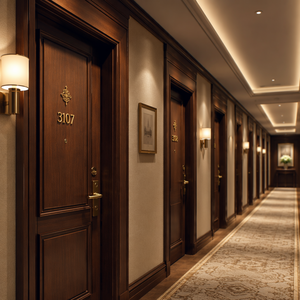
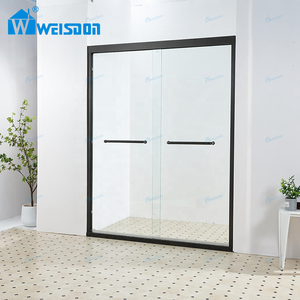
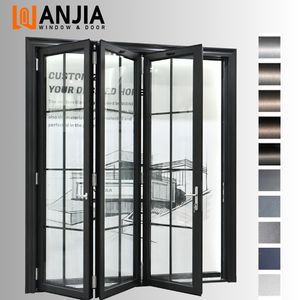
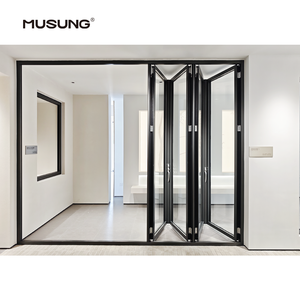
Balcony Accordion Bifold Door Design Exterior Aluminum Folding Patio Doors
Product Details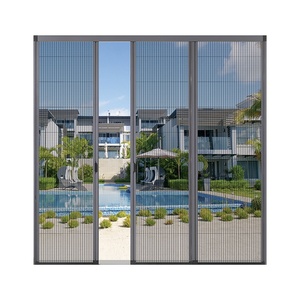
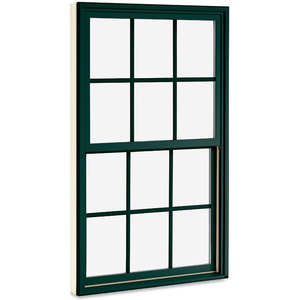
Arch Australia Standard Aluminium Double Tempered Glass Glazed Hung Vertical Sliding Window
Product Details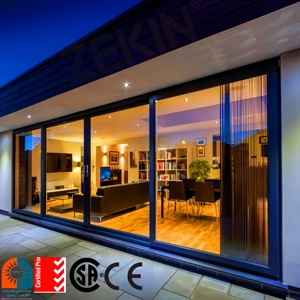
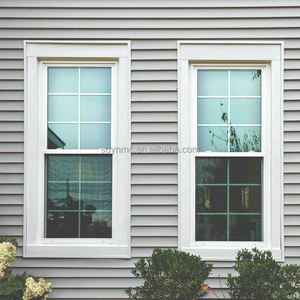
Intelligent production base located in Shishan, Foshan fenestration cluster.
Dedicated structural engineers, CAD draftspersons, and QA specialists.
Compliance tested to AS 2047 N6, CE, ISO 9001, and UL standards.
Supplying tier-1 general contractors, developers, and global importers.
Technical Specification & Thermal Performance Parameters
A deep architectural dive into the thermal, acoustic, and structural integrity of DERCHI aluminum double pane windows and fenestration systems.
Thermal Thermodynamics
Multi-chamber extruded 6063-T5/T6 architectural aluminum profiles integrated with fiberglass-reinforced Polyamide (PA66 GF25) thermal breaks disrupt continuous conductive bridging.
- Overall U-Factor (Uw): Down to 1.1 - 1.4 W/m²·K
- Solar Heat Gain (SHGC): 0.21 - 0.38 Tunable
- Thermal Strut: PA66 GF25 Insulbar®
- Air Permeability: Class 4 (EN 12207)
Acoustic Attenuation (STC)
Engineered Insulated Glass Units (IGU) utilizing asymmetrical dual-pane configurations (e.g., 6mm Outer + 12A Argon + 5mm Inner) effectively dampen low and medium-frequency decibel soundwaves.
- Sound Transmission (Rw): 36 dB - 44 dB
- Interlayer Acoustic PVB: 0.76mm - 1.52mm Acoustic
- Spacer Technology: Warm-Edge Technoform
- Gas Fill Rate: 90%+ Desiccated Argon
Structural Wind & Typhoon Load
Certified under extreme test protocols including AS 2047 N6 wind pressure ratings, DERCHI assemblies resist windward static deformation and violent cyclic pressures up to 4500 Pascals.
- Serviceability Wind (SLS): 3000 Pa (AS 4055 N6)
- Ultimate Wind (ULS): 4500 Pa Structural
- Water Penetration: 450 Pa - 700 Pa
- Hardware Cycling: 50,000+ Cycles (AAMA)
Standard Aluminum vs. High-Performance Thermal Break Fenestration
In standard architectural installations, non-thermally broken aluminum window profiles suffer from thermal transmittance values often exceeding Uw 5.8 W/m²·K. In contrasting high-humidity or freezing external conditions, this produces substantial interior condensation, frame weeping, microbial mould cultivation, and excessive HVAC energy loss.
DERCHI addresses this systemic thermodynamic flaw by integrating high-precision multi-cavity thermal break extrusions, co-extruded EPDM vulcanized sealing gaskets, and automated robotic dual-seal insulated glass units with molecular sieve desiccant cores. Below is an engineering comparison matrix indicating performance deviations:
| Performance Metric | Standard Single Glazed / Non-Break | Standard Double Pane Aluminum | DERCHI Engineered Thermal Break Double Pane |
|---|---|---|---|
| Thermal Transmittance (U-Value) | 5.8 - 6.2 W/m²·K | 2.8 - 3.4 W/m²·K | 1.2 - 1.6 W/m²·K (Passive House Verified) |
| Sound Attenuation (Rw / STC) | 20 - 25 dB | 28 - 32 dB | 38 - 44 dB (Asymmetric Laminated Core) |
| Surface Condensation Risk | Severe (Dew point > 16°C) | Moderate along aluminum edge | Negligible (Integrated Warm-Edge Spacer) |
| Typhoon & Cyclonic Resilience | Up to 1200 Pa (Deforms under wind) | 2000 - 2500 Pa (Standard Grade) | 4500 Pa (AS 2047 N6 & ASTM E1886/E1996) |
| Corrosion Resistance (C4/C5 Maritime) | Anodized < 10 Microns (Pitting in 3 yrs) | Standard Powder Coating (60 Microns) | AkzoNobel Interpon D2525 Fluorocarbon / PVDF |
Future Sourcing Trends in the Global Fenestration Market (2025–2030)
As international energy codes (such as ASHRAE 90.1, Australia NCC Section J, Title 24 in California, and European EPBD mandates) enforce stringent building envelope standards, the procurement of architectural aluminum double pane windows has evolved from a simple commodity transaction into a comprehensive engineering audit. Major general contractors, developers, and commercial importers must navigate five key macro trends driving fenestration supply chains over the coming decade:
1. Decarbonization & Circularity
Global developers are requiring Environmental Product Declarations (EPD) and low-carbon aluminum billets. Hydro-powered or recycled post-consumer aluminum extrusions are becoming mandatory to lower embodied carbon under LEED v4.1 and BREEAM certifications.
2. Ultra-Slim Sightline Engineering
Architects demand panoramic views without structural compromise. Sourcing is pivoting toward structural silicone glazed (SSG) systems and concealed sash profiles where visible frame widths drop below 28mm while handling high static wind deflections.
3. Smart Building System Integration
Modern commercial developments integrate automated fenestration with Building Management Systems (BMS). Dual-pane units now frequently feature motorized concealed multi-point actuators, electrochromic smart glass, and concealed magnetic reed security sensors.
Total Cost of Ownership (TCO) & Sourcing Optimization
Direct offshore factory procurement from verified Chinese manufacturers provides substantial cost savings (often 35% to 55% over European or domestic North American fabricators). However, savvy procurement officers focus on Total Cost of Ownership rather than ex-factory unit price alone. Mitigating risk requires partnering with fully certified facilities capable of providing:
- Dimensional Tolerances: Precision CNC cutting and 4-corner crimping within ±0.5mm tolerances to prevent expensive field remediation on jobsites.
- Container Optimization & Stillage Engineering: Heavy-duty, customized steel A-frame glass stillages that eliminate in-transit glass edge impacts and micro-cracking during sea shipping.
- Export Packaging Standards: Corner-protected, heat-shrink polyethylene wrapping combined with container desiccant rods to completely prevent glass clouding and salt-spray oxidation in humid transit lanes.
Why Tier-1 Contractors & Importers Partner with DERCHI
Guangdong Dejiyoupin Doors and Windows Co., Ltd. delivers institutional manufacturing scale, deep R&D, and complete control over the entire fabrication chain.
180,000㎡ Mega Production Base
Situated in Shishan Town, Foshan—the heart of China's primary fenestration and aluminum extrusion cluster—our facility integrates automated CNC precision extrusion lines, automated glass cutting, and robotic assembly plants producing over 350,000 square meters annually.
Full Shop Drawings & BIM Support
Our in-house design engineering department of 45+ professionals provides full technical submittal packages, detailed CAD elevations, anchor calculations, wind-load structural engineering, and Revit BIM models tailored to specific project schedules.
Rigorous Multi-Stage QA & AS 2047 Certification
Every window assembly undergoes continuous QC verification: profile wall thickness gauging, corner crimp tensile testing, glass seal vacuum checks, and calibrated chamber testing for water ingress and cyclonic wind performance.
Direct Hardware Partnerships (CMECH / Siegenia / HOPPE)
We avoid generic imitation hardware. All operable casements, awning pivots, and heavy-duty sliding rollers utilize certified multi-point locking gear from tier-one international partners, guaranteeing 50,000+ opening cycles without mechanical failure.
One-Stop Architectural Envelope Solutions
In addition to aluminum double pane windows, DERCHI consolidates architectural cast-aluminum pivot gates, commercial curtain walls, exterior hurricane bifold systems, and luxury armored entry doors into consolidated 40ft HQ container shipments.
Global Project Footprint & Exhibit Presence
With completed references spanning the United States, Australia, the Philippines (featured at WORLDBEX 2025), Thailand, Vietnam, and the UAE, our export team manages international maritime shipping, customs documentation, and door-to-port logistics seamlessly.
Frequently Asked Questions on Fenestration Procurement
Straightforward, technical answers addressing the key compliance, logistics, engineering, and warranty questions asked by institutional buyers.
What structural profile thickness is standard for export-grade double pane windows?
We engineer our aluminum extrusions with a minimum wall thickness of 1.4mm to 2.0mm for residential windows, and 2.5mm to 3.0mm for heavy-duty commercial sliding doors and curtain wall systems, adhering strictly to GB 5237, ASTM B221, and AS/NZS 1866 standards for tensile and yield strength.
How do you prevent fogging and seal degradation in double pane IGUs?
Our Insulated Glass Units utilize a dual-seal barrier system: primary polyisobutylene (PIB) seal to block moisture vapor transmission, combined with a secondary structural silicone or polysulfide seal. Spacers are filled with 3A molecular sieve desiccants in a climate-controlled cleanroom to guarantee dew points remain below -40°C.
Can DERCHI meet Australian AS 2047 and American NFRC/AAMA codes?
Yes. Our window systems have undergone accredited laboratory testing for AS 2047 (reaching cyclonic N6 ratings for deflection, water ingress up to 700Pa, and air leakage) as well as CE EN 14351-1 and relevant AAMA/WDMA/CSA 101 standards for the North American market.
What glass coatings are available for tropical versus sub-zero climates?
For warm, tropical climates (e.g., Southeast Asia, Florida, Gulf States), we configure Double Silver Low-E coatings on surface #2 to reject incoming solar infrared heat while preserving visible light. For colder zones requiring heat retention, coatings are applied to surface #3, coupled with argon gas to achieve optimum passive thermal insulation.
How is product safety ensured during long-distance ocean freight?
Products are individually protected with protective peel-off film, corner foam buffers, and heat-shrink plastic before being loaded into custom welded steel A-frames or fumigated wooden crates. Containers are packed with high-capacity silica desiccants to neutralize condensation across varying maritime humidity bands.
What is the typical production lead time for custom project schedules?
Upon approval of final CAD shop drawings and finish samples, standard custom production runs require 25 to 35 business days. Fast-track production lines are available for phased developments requiring sequential floor-by-floor container deliveries.
What warranty backing is provided for commercial contracts?
DERCHI provides a comprehensive 10-year factory warranty on aluminum frame structural integrity, 10 years against seal failure or internal fogging of insulated glass units, and 5 to 10 years on hardware mechanisms and surface coatings, backed by serial-tracked quality certificates for each shipping lot.
Ready to Engineer Your Project's Window & Door Schedule?
Connect directly with our Foshan fenestration engineering headquarters. Send your window schedules, architectural elevations, or structural requirements for free CAD shop drawings, wind load calculations, and competitive factory pricing within 24 hours.