High-Performance Architectural Fenestration Systems
Direct factory manufacturing featuring thermal break extrusion profiles, warm-edge argon-insulated double glazing, acoustic attenuation laminates, and multi-point security hardware engineered for global building codes.
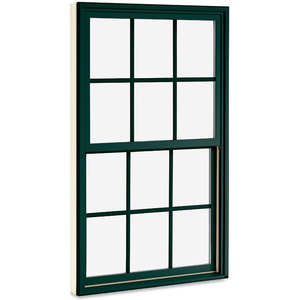
Arch Australia Standard Aluminium Double Tempered Glass Glazed Hung Vertical Sliding Window
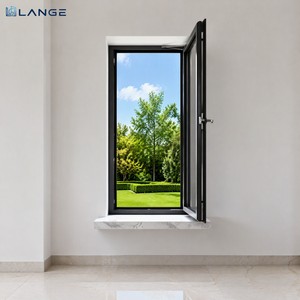
LANGE Luxury CE Certified Thermal Break Aluminum Tilt Turn Casement Windows Aluminum Alloy Windows
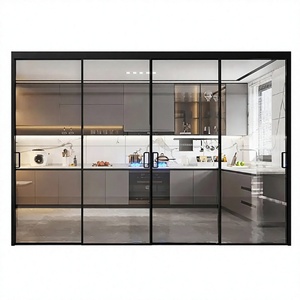
Thermal Break Aluminum Alloy Sliding Glass Door Double Glazing Kitchen Partition Door
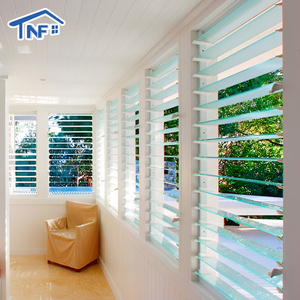
Hurricane Proof Adjustable Vertical NFRC AS2047 Venetian Blinds Aluminium DOUBLE LOW-E Louvre Window
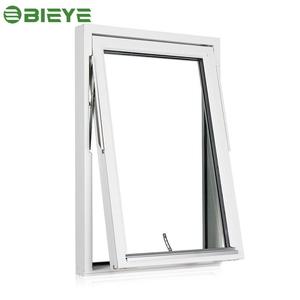
Factory Direct Price Aluminum Alloy Doors Windows Complete Set Villa Entrance Patio Thermal Break
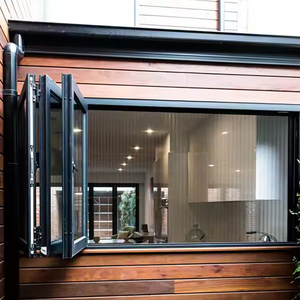
Thermal Break Modern Horizontal Aluminium Folding Windows And Doors 2.0mm Multi Panel Bi-Fold
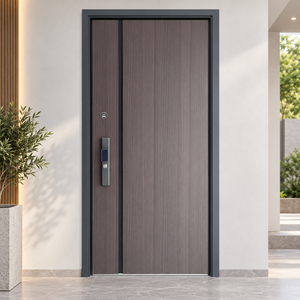
Custom Modern Pivot Style Entry Door with Smart Biometric Lock for Luxury Residential Use
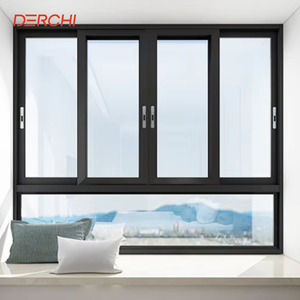
Aluminium Balcony Sliding Door & Window System Engineered for High Wind Load and Water Tightness
Architectural Whitepaper: Structural Metallurgy & Glazing Thermodynamics
Procuring architectural aluminium double glazed doors directly from China requires understanding extrusion profiles, alloy chemical composition, thermal isolation bridges, and sealed insulated glass unit (IGU) physics. As international energy conservation standards tighten—such as ASHRAE 90.1 across North America, the European EN 14351-1 directive, and the Australian AS 2047 specification—commercial facade builders and residential developers can no longer rely on uninsulated hollow extruded sections.
At our Guangdong production base (DERCHI / Guangdong Dejiyoupin Doors and Windows Co., Ltd.), profile extrusion starts with primary billet 6063-T5 or 6063-T6 structural aluminium alloy. Unlike secondary scrap melts, virgin 6063 billets yield higher tensile strength (over 160 MPa) and yield strength (over 110 MPa), ensuring profile integrity for oversized panels exceeding 3.5 metres in height. Thermal insulation is achieved through polyamide PA66 GF25 thermal break strips (reinforced with 25% glass fibre), mechanically crimped between interior and exterior aluminium extrusions. This isolation breaks the thermal conductivity bridge (λ ≈ 160 W/m·K for raw aluminium down to ≤ 0.3 W/m·K across the polyamide barrier), mitigating interior thermal condensation and slashing overall Fenestration U-values to under 1.6 W/(m²·K).
The insulated glass envelope incorporates automated secondary-seal silicone with warm-edge composite spacers filled with 4A molecular sieve desiccant. Glazing configurations range from 5mm + 12A/16A/20A + 5mm to heavy-duty laminated acoustic assemblies (6mm Low-E + 1.52PVB + 6mm Clear + 16Ar + 6mm Toughened). Argon gas filling (≥ 90% concentration) reduces intra-cavity convective currents, while magnetron sputtered dual-silver or triple-silver Low-E coatings selectively reflect long-wave infrared radiation. This allows high visible light transmittance (VLT > 65%) while controlling Solar Heat Gain Coefficients (SHGC < 0.30) to meet tropical and temperate zone HVAC load reduction targets.
| Performance Parameter | Test Standard | Engineering Specification | Architectural Impact |
|---|---|---|---|
| Structural Wind Load | AS 2047 / ASTM E330 | Serviceability: ±3000 Pa; Ultimate: ±4500 Pa (N6 Cyclonic) | Deflection limitation (< L/250) on coastal and high-rise facades |
| Water Penetration Resistance | EN 12208 / AS 4420.5 | Static: 700 Pa; Dynamic cyclic water penetration proof | Zero water ingress under extreme tropical monsoon wind-driven rain |
| Air Infiltration Rating | ASTM E283 / EN 12207 | ≤ 0.1 m³/(h·m) at 100 Pa (Class 4 Airtightness) | Prevents HVAC conditioned air leakage and micro-dust infiltration |
| Thermal Transmittance (U-Value) | ISO 10077-2 / NFRC 100 | Frame: 1.8 W/m²K; Center of Glass (Ug): 1.1 W/m²K; Overall Uw ≤ 1.5 | Conforms to LEED Gold, BREEAM, and Green Star energy criteria |
| Acoustic Attenuation (Rw / STC) | ISO 717-1 / ASTM E413 | Rw 38 dB – 44 dB with asymmetric laminated IGU sandwich | Mitigates urban transit noise, airport corridors, and exterior ambient rumble |

Guangdong Dejiyoupin (DERCHI): Foshan Manufacturing Excellence
Headquartered in Shishan Town, Nanhai District, Foshan City—the global epicentre of architectural aluminium manufacturing—Guangdong Dejiyoupin Doors and Windows Co., Ltd. (DERCHI) operates an expansive 180,000 m² integrated production complex. Backed by 25+ years of continuous R&D and over 600 skilled technicians, the company stands as a top-tier Chinese manufacturer with extensive project references across North America, Australia, the Middle East, and Southeast Asia.
At WORLDBEX 2025 in the Philippines, our heavy-duty sliding systems, slim-line panoramic bi-fold assemblies, and hurricane-rated pivot systems received critical acclaim from regional developers, structural engineers, and commercial contractors. Every batch undergo multi-stage optical quality checks, corner shear testing, hydrostatic chamber testing, and EPDM weather-strip vulcanization durability verifications.
Future Sourcing & Technological Trends in Aluminium Glazing
Stay ahead of market shifts. In-depth analysis of supply chain dynamics, decarbonisation mandates, and smart system integration impacting bulk architectural purchases through 2030.
1. Ultra-Slim Sightlines & Structural Concealment
Architectural aesthetics have moved toward minimalism. Future procurement focuses on ultra-narrow mullion sightlines (down to 18mm – 25mm interlocking profiles) capable of carrying 400kg+ glass sashes. Hidden sash frames and recessed floor track drains eliminate boundary steps while maximizing natural daylight ratios.
2. Decarbonisation & Low-Carbon Aluminium
With the phase-in of carbon border adjustment mechanisms (EU CBAM), global buyers require Environmental Product Declarations (EPD). Chinese manufacturing leaders utilize hydropower and recycled aluminium billets (≥ 75% circular content), lowering embedded carbon from 16kg CO²/kg aluminium down to under 4kg CO²/kg.
3. Smart Access & Motorised Building Automation
Entry pivot doors and heavy bi-folding walls now integrate concealed electric actuators and smart architectural access control. Systems support 24V DC brushless motorization, RS485 / KNX home automation protocols, flush face-recognition cameras, and biometric fingerprint sensors recessed into anodized pull handles.
4. Climate-Adaptive Surface Treatments (Fluorocarbon PVDF)
Tropical and marine projects (e.g., Caribbean, Florida, Southeast Asian archipelagos) demand surface treatments withstanding 3,000+ hours of continuous neutral salt spray (ASTM B117). High-grade 3-coat fluorocarbon PVDF finishes (AAMA 2605 compliant) ensure hyper-durability against extreme UV degradation, chalking, and salt mist corrosion.
5. DGU to TGU Vacuum & Triple Glazing Integration
While double glazing remains standard, cold-climate projects (Canada, Northern Europe, New Zealand) are migrating toward Triple Glazed Units (TGU) with dual argon chambers or hybrid vacuum insulated glass (VIG). These assemblies achieve ultra-low centre-of-glass U-values (Ug ≤ 0.6 W/m²K), requiring heavy-gauge hardware capable of supporting 50kg/m² panel weights.
6. Consolidated Factory Sub-Assemblies (Pre-Hung Crating)
Rising job-site labor rates in destination markets make field fabrication costly. Sourcing trends favor factory pre-hung, pre-drilled, and modularly packed door frames with pre-installed hardware. Precision CNC pocketing in China reduces on-site installation time by over 60%, mitigating installation alignment errors.
Frequently Asked Questions for B2B Importers & Contractors
Essential guidance covering quality verification, logistics packaging, structural compliance, custom millwork, and factory audits.
Q1 How can overseas buyers verify genuine AS 2047, CE, and NFRC compliance from Chinese factories?
Always demand official laboratory test reports issued by internationally accredited testing bodies (such as Intertek, TÜV SÜD, NATA-accredited labs, or Azuma Design). Verify that the test specimen dimensions match or exceed your project's proposed sash sizes, check the exact profile cross-section diagrams in the report appendix, and verify test pressures for structural deflection, air infiltration, and water resistance (e.g., AS 2047 N6 rating).
Q2 What are the key differences between non-thermal break and thermal break aluminium doors?
Non-thermal break profiles consist of a continuous aluminium extrusion, which conducts exterior heat or cold directly into the building interior, leading to high thermal transmission and condensation risk. Thermal break profiles insert an engineered polyamide nylon strip (PA66 GF25) between the outer and inner aluminium sections, reducing thermal conduction by over 80% and delivering significant energy savings.
Q3 What export packaging safeguards prevent glass breakage and frame scratching during container sea freight?
Professional B2B export packaging involves four protective layers: (1) peelable protective film on exposed powder-coated/anodized surfaces; (2) protective foam corner pads and bubble wrap; (3) fully enclosed, non-fumigation plywood crates built to ISO export specifications; and (4) desiccants and internal steel strapping inside the 40HQ container to prevent load shifting during ocean swells.
Q4 Can oversized entry pivot doors withstand high coastal typhoon wind loads without deflection?
Yes. Our heavy-duty architectural pivot series incorporates minimum 2.5mm to 3.0mm structural wall thicknesses reinforced with internal steel or aluminium stiffeners. Coupled with German-engineered heavy-duty hydraulic floor springs (rated up to 500kg sash capacity) and multi-point perimeter tongue latching, systems withstand up to 4500 Pa ultimate wind pressure without air-seal compromise.
Q5 How does argon gas filling improve insulated double glazing, and how long does it last?
Argon is an inert gas with significantly lower thermal conductivity (≈ 0.016 W/m·K) than ambient dry air (≈ 0.024 W/m·K). Filling the 12mm – 20mm spacer cavity with ≥90% argon lowers the U-value by approximately 0.2 to 0.3 W/m²·K. Utilizing robotic dual-seal polysulfide or structural silicone application ensures an annual leakage rate of less than 1%, ensuring thermal performance for over 25 years.
Q6 What information should be included in an RFQ to obtain a binding, accurate factory quote within 24 hours?
Provide: (1) Complete architectural window and door schedule with structural opening dimensions (W × H); (2) Profile series preference (thermal break wall thickness, surface finish type: Powder Coat, Anodized, or PVDF); (3) Glazing configuration (glass thickness, Low-E specification, argon requirement); (4) Hardware specifications (German Siegenia/Hoppe, Australian Doric, or high-tier domestic); and (5) Project city and target delivery port.
Partner with an Authoritative China Glazing Manufacturer
Connect directly with our Foshan engineering team. From free architectural CAD shop drawings and structural wind load calculations to full-container consolidated shipping, we deliver verified, certified fenestration systems tailored to your project timeline and budget.