Thermally Broken
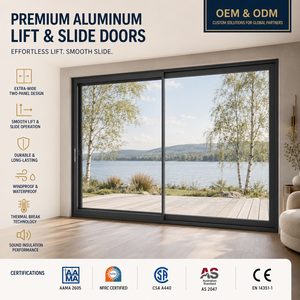
Compliant with AS/NZS testing methodologies, AS 2047 cyclonic pressure thresholds, and extreme coastal durability ratings across Australasia.
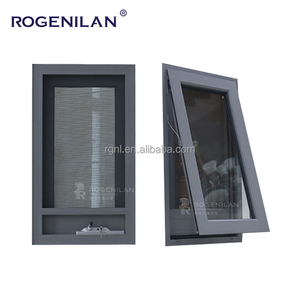
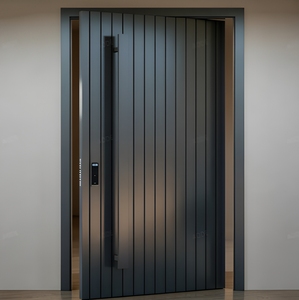
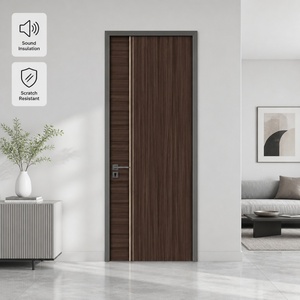
Specifying a grand architectural entrance in New Zealand involves resolving an engineering paradox: combining the dramatic scale and seamless swing of an oversized pivot door with stringent New Zealand Building Code (NZBC) Clause C (Protection from Fire) and severe weather-tightness requirements under NZBC Clause E2 (External Moisture). While conventional hinged assemblies rely on continuous perimeter rebates and mechanical latches to control positive pressure during fire exposure, pivot doors pivot on eccentric top and bottom hinges. This geometry leaves dynamic gaps that require specialized intumescent edge perimeters, drop-down acoustic/smoke seals, and heavy structural leaf stability.
In regions such as Wellington, Canterbury, and the East Coast, commercial and luxury residential properties are subject to significant seismic drift limits (NZS 4219 / NZS 1170.5). A fire-rated pivot door assembly installed in an exit stairwell, boundary wall, or multi-residential core must accommodate inter-story building movement without frame binding. If a structural seismic event distorts the jamb, the fire door leaf must still clear the rebate, swing freely under the control of its concealed hydraulic closer (such as FritsJurgens or Dormakaba BTS systems), and self-latch. Under thermal shock during a real blaze, our mineral-composite insulating cores activate graphite-based intumescent strips, which expand up to 25 times their initial volume at 180°C. This completely seals perimeter margins against toxic fire gases, meeting - / 60 / 30 SM or - / 120 / 60 SM Fire Resistance Ratings (FRR).
| Performance Parameter | Standard Non-Rated Pivot Door | Compliant NZBC Fire-Rated Pivot Door | DERCHI High-Performance Engineered Core |
|---|---|---|---|
| Fire Resistance Rating (FRR) | 0 minutes (Combustible or warp-prone) | -/30/- to -/60/30 (AS/NZS 1905.1) | Up to -/120/120 (UL 10C, AS 1530.4, BS EN 1634) |
| Perimeter Sealing Mechanism | Standard brush seals or neoprene fins | Intumescent seals + cold smoke rubber sweep | Concealed dual-action intumescent with heavy drop-seal |
| Seismic Frame Deflection Tolerance | < 5mm clearance margin | 15mm - 20mm engineered seismic expansion | Engineered sub-frame with slotted anchor channels |
| Structural Wind Load (AS 2047) | Up to 1500 Pa (Standard Residential) | 2000 Pa (Serviceability limit) | Passed AS 2047 N6 rating (> 4000 Pa Ultimate Limit) |
| Corrosion Resistance Rating | Standard polyester powder coating | Anodised 15-20 micron or Class 2 powder | AAMA 2605 / 25μm Marine Coastal fluorocarbon barrier |
Unlike internal fire doors, exterior pivot entry doors in New Zealand coastal environments—such as the Auckland Hauraki Gulf, Bay of Plenty, or Nelson—face aggressive salt-spray fog and severe pressure gradients. Moisture penetration under driving rain can rust interior pivot boxes or degrade internal mineral cores. Top-tier manufacturers resolve this through precision CNC-machined 6063-T6 architectural aluminum cladding, stainless steel 316 pivot pins, and concealed water drain sub-sills that isolate the structural fire core from external weather factors.
An unbiased architectural assessment of premier New Zealand suppliers alongside global factory-direct manufacturing powerhouses capable of fulfilling custom high-FRR pivot door schedules.
HQ & Capacity: Foshan, China | 180,000 ㎡ base | 600+ staff.
Core Capabilities: Global fenestration leader holding 100+ patents and certifications including AS 2047 N6, UL Fire-Rated, CE, and ISO 9001. Specializes in thermally broken aluminum and stainless-clad high-dimension pivot entry doors tailored to architectural specifications with factory-direct pricing and direct sea-freight to Auckland, Tauranga, and Lyttelton.
HQ: Penrose, Auckland, New Zealand.
Core Capabilities: Long-standing domestic manufacturer specializing in commercial timber and composite fire doors. Strong track record in institutional, hospital, and multi-residential builds with full testing under AS/NZS 1905.1 standards.
HQ: Lower Hutt, Wellington, New Zealand.
Core Capabilities: Specialist manufacturer of high-performance acoustic, security, and fire doors. Well-regarded for custom engineered hospital flush doors and complex fire ratings with integration into electronic access control systems.
HQ: Rangiora, Canterbury, New Zealand.
Core Capabilities: Servicing both the North and South Islands with commercial wooden fire door-sets, architectural veneered leaves, and interior acoustic separations. Renowned for custom veneer finishes and quick-ship pre-hung door packages.
HQ: Auckland, New Zealand.
Core Capabilities: Known for architectural entrance systems, custom pivot hinges, and residential metal cladding. Focuses heavily on design-led urban luxury villas requiring statement front entrances.
HQ: Wiri, Auckland (Distribution Branch).
Core Capabilities: Australasian commercial framing giant providing heavy commercial pivot hardware, center pocket framing, and tested architectural aluminum suites designed for high foot-traffic retail and educational hubs.
HQ: Highbrook, Auckland, New Zealand.
Core Capabilities: Nationwide glass processing titan supplying fire-rated ceramic and intumescent glazing (such as Pyrobel and Pyrostop) incorporated into certified fire-rated pivot steel and aluminum assemblies.
HQ: Christchurch, New Zealand.
Core Capabilities: Boutique architectural front door fabricator specializing in high-end thermally broken aluminum pivot and hinged doors. Excellent local craft capabilities with deep alpine climatic customization.
HQ: Auckland / Wellington network.
Core Capabilities: High-end fabricators utilizing imported European extrusion systems (Schüco, Forster, Jansen). Delivers premium steel fire-rated pivot units with narrow sightlines, targeted at tier-one institutional galleries and ultra-luxury estates.
HQ: Hamilton, Waikato, New Zealand.
Core Capabilities: Provides fully glazed steel-framed fire doors and partitions, achieving up to 60-minute structural integrity and insulation ratings with pivot configurations for commercial foyers.
Meeting unique regional environmental conditions—from high-density residential apartments to coastal multi-million dollar estates.
Specified for Auckland Central and Wellington CBD residential corridors. The pivot door functions as a modern acoustically sealed entrance door (STC 38+) that simultaneously provides an indisputable -/60/30 SM fire-smoke separation boundary.
Installed on beachfront cliff tops in Waiheke Island, Queenstown, or Omaha. Designed with heavy-gauge marine anodized aluminum skins and internal fire cores, protecting the home from coastal gales while maintaining architectural grandeur.
Serving Queenstown and Rotorua luxury lodges and commercial headquarters. Combines smart automated card-access locks with concealed hold-open pivot floor springs that release automatically upon central building fire alarm trigger.
Required where internal high-end garages or plant rooms directly connect to residential spaces under NZBC Acceptable Solution C/AS2, isolating carbon risks and engine fire hazards with a sleek flush pivot plane.
How evolving energy codes, embodied carbon mandates, and smart building networks are redefining modern pivot door manufacture.
With stricter H1 thermal insulation standards enforcing window and door U-values below 1.5 - 1.9 W/m²K across Climate Zones 1 to 6, fire-rated pivot assemblies must incorporate comprehensive polyamide thermal breaks alongside their fire-insulating cores without degrading structural rigidity.
Architects increasingly reject intrusive overhead closers and surface-mounted magnetic wall stops. The trend has shifted directly to floor-concealed magnetic hold-open boxes that seamlessly link to fire alarm loops (BMS), closing pivot panels with damped pneumatic deceleration during emergencies.
The standard industrial metal fire door is obsolete in luxury schemes. Emerging demands center on composite skins: sintered porcelain tiles, bronze patinas, fluted cast aluminum reliefs, and charred Accoya finishes, bonded to certified non-combustible core structures.

Recognised as one of China’s Top 10 door and window manufacturers, DERCHI operates a premier 180,000 ㎡ production hub with over 600 specialized workers and over a quarter century of structural manufacturing expertise. We provide New Zealand developers, project architects, and volume importers with:
Clear, definitive answers addressing New Zealand Building Code compliance, Producer Statements, testing parity, and logistics.
Imported fire door sets comply via NZBC Alternative Solution pathways (NZBC Clause C2/AS1 & AS/NZS 1905.1). Fire test reports conducted by accredited testing laboratories (such as UL, Intertek, or BRANZ-equivalent international labs under ILAC-MRA agreements) verify that door leaf, frame, intumescent seals, and pivot hinges functioned together as a unified system under high-heat exposure.
Yes. Compliance with smoke control doors (SM rating) requires drop-down automatic seals along the bottom edge and continuous elastomeric or silicone smoke gaskets along the dynamic perimeter rebates. Our composite fire cores concurrently provide excellent sound insulation, achieving acoustic attenuations from Rw 36 dB up to Rw 42 dB.
DERCHI systems have passed AS 2047 N6 testing, the most rigorous tier for wind load resistance and water tightness. For oversized pivot entry doors subject to New Zealand's extreme wind zones, we engineer reinforced internal steel or alloy perimeter sub-frames with high-spec multi-point locking rods to resist panel bowing under cyclic loads.
Yes. We regularly fabricate oversized pivot doors up to 3500mm high and 1800mm wide. Our engineering department verifies pivot load capacities, leaf weight distribution, and hinge placement to guarantee effortless finger-touch swing operation regardless of leaf mass.
We provide full technical documentation dossiers including structural shop drawings, raw material mill certificates, independent fire and wind-load test reports, glass compliance certificates, and technical specifications ready for inclusion in Council building consent applications.
Production typically requires 25 to 35 days depending on specification complexity. Units are export-packed in fully enclosed plywood crates with desiccants and moisture-barrier shrink wrap to prevent saltwater corrosion during trans-Tasman shipping.
Connect directly with DERCHI's senior fenestration engineers. Send us your project door schedules, elevation drawings, or FRR specifications for a comprehensive technical review and cost proposal within 24 hours.
Send an Inquiry